

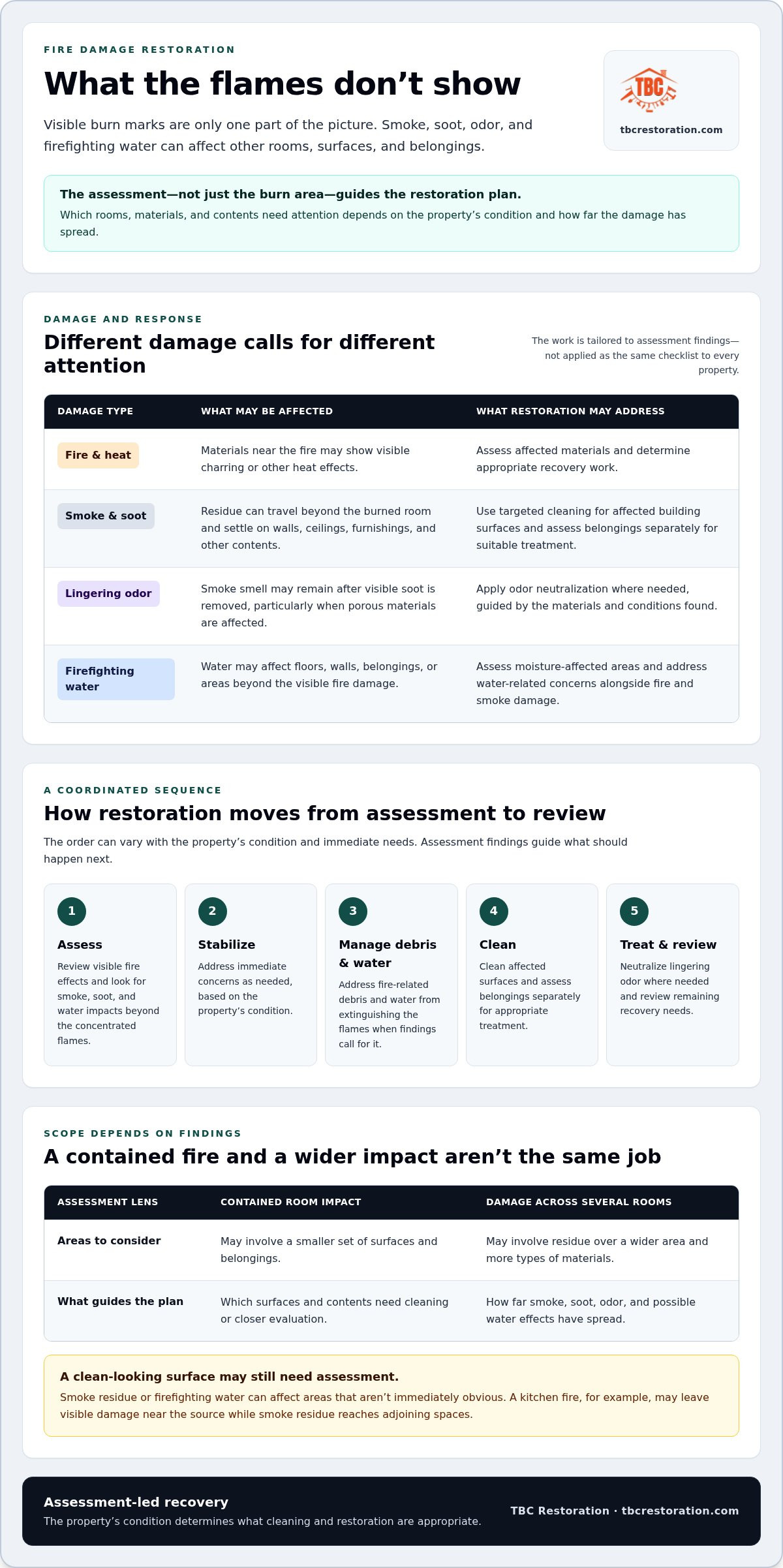
What Does Fire Damage Restoration Include? A Clear Guide

What does fire damage restoration include when the flames are out, but soot, smoke odor, and water from firefighting may have reached rooms that look untouched? Visible burn marks show only part of the damage. Recovery can also involve smoke and soot residue, affected contents, lingering odor, and moisture from firefighting efforts.
It’s understandable to want to know what can be cleaned, what needs closer assessment, and what should happen first. Fire restoration is a coordinated process: professionals assess affected areas, address smoke and soot residue, clean impacted structures and contents, and neutralize lingering odors. If firefighting water has affected the property, moisture concerns may also need attention.
This guide explains the typical stages, why each matters, and how restoration differs from replacing damaged materials. You’ll also learn what professional cleanup can address and which safe, practical steps to take before work begins. For Poconos homeowners and businesses, a clear response can bring order to a difficult situation and set recovery in motion.
Table of Contents
What Does Fire Damage Restoration Include After a House Fire?
Fire damage restoration involves assessing a fire-affected property, cleaning impacted areas and contents, and addressing damage as part of recovery. It can involve more than treating burned materials: smoke, soot, lingering odor, and water used to extinguish the flames may affect other parts of the home.
A common question is, what does fire damage restoration include when the fire was limited to one area? The answer depends on the assessment. Heat and flames may char materials near the fire, while smoke residue can settle on surfaces farther away. Firefighting water may also affect floors, walls, or belongings.
The scope depends on the rooms involved, the materials affected, and how far the damage has spread. A surface that looks clean may still need assessment, while some belongings may be suitable for specialized cleaning. The goal is to identify affected areas and choose appropriate work, not apply the same checklist to every property.
Which types of damage can restoration address?
Direct fire damage includes visible charring or heat effects. Smoke and soot create separate concerns: residue can travel beyond the burned room and settle on walls, ceilings, furnishings, and other contents. The location and type of residue help guide how affected surfaces are cleaned.
Odor may remain after visible soot is removed, particularly when smoke has affected porous materials. That can call for targeted odor treatment. Water from firefighting efforts is another possible source of damage, so affected areas and belongings may need assessment for moisture as part of the recovery plan.
Does every fire require the same restoration work?
No. A contained room fire may call for cleaning and treating a smaller set of surfaces and belongings. A fire that affects several rooms can leave residue over a wider area and involve more types of materials. The visible burn area alone doesn’t define the full scope.
An assessment helps determine which rooms, surfaces, and contents need attention and informs an appropriate cleaning and restoration plan. Don’t assume a small-looking area is safe or simple to clean without assessment. Smoke residue or firefighting water may have affected areas that aren’t immediately obvious.
For example, a kitchen fire might leave visible damage near the source while smoke residue reaches adjoining spaces. An assessment can help distinguish surfaces that need cleaning, contents that may benefit from specialized treatment, and materials whose condition needs further evaluation. It can also identify whether water-related concerns should be addressed alongside fire and smoke damage.
Fire recovery is coordinated rather than a single cleanup task. TBC Restoration provides specialized cleaning for fire-, soot-, and smoke-affected structures and contents, including residue cleanup and odor neutralization. The work is guided by the property’s condition and assessment findings, so the plan reflects the damage rather than assuming every home needs identical treatment.
How Does the Fire Damage Restoration Process Work?
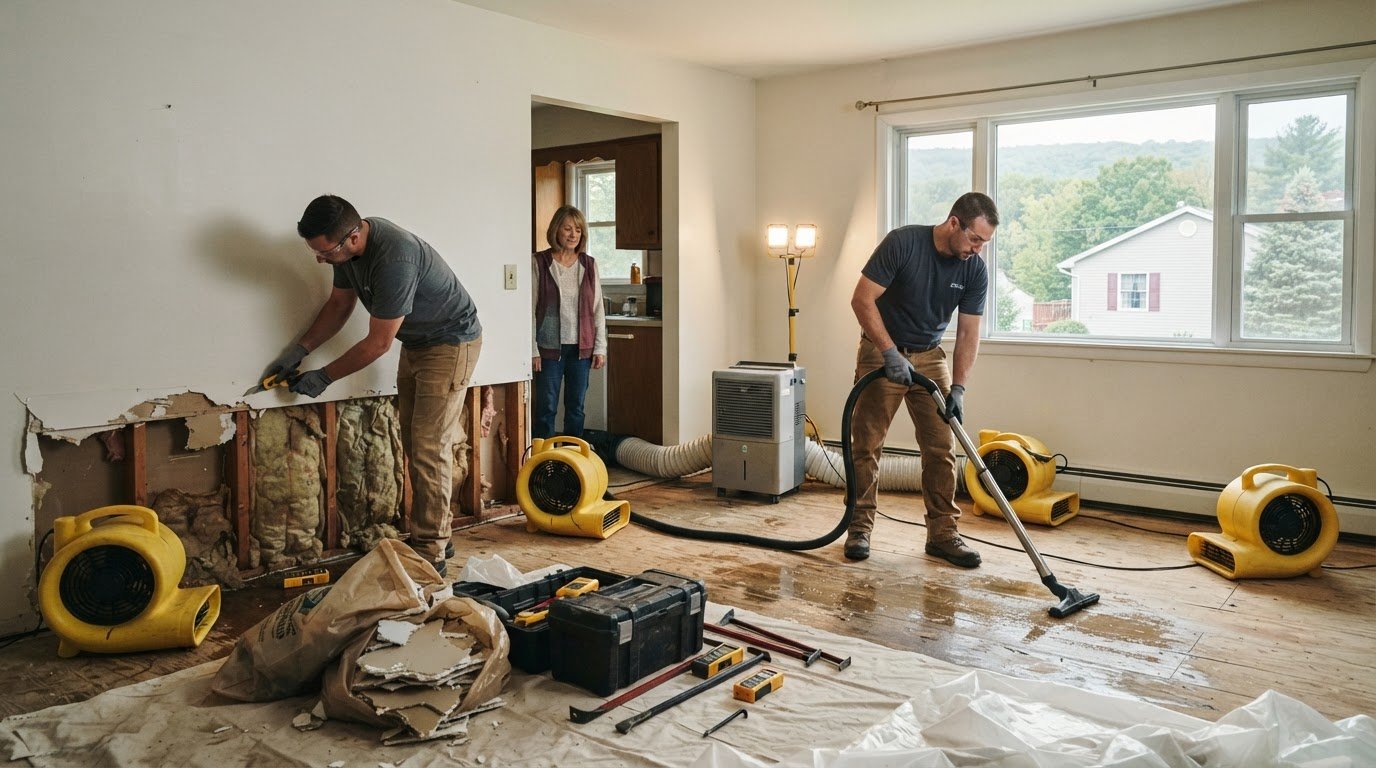
Fire recovery follows an organized sequence, but the work isn’t identical for every property. Assessment findings guide which areas need stabilization, what can be cleaned, and how to address smoke, soot, debris, or water from firefighting. Steps may happen in a different order depending on the property’s condition and immediate needs.
In brief: restoration moves from assessment and appropriate stabilization to debris or water management, targeted cleaning of affected surfaces and contents, odor treatment, and review of remaining recovery needs.
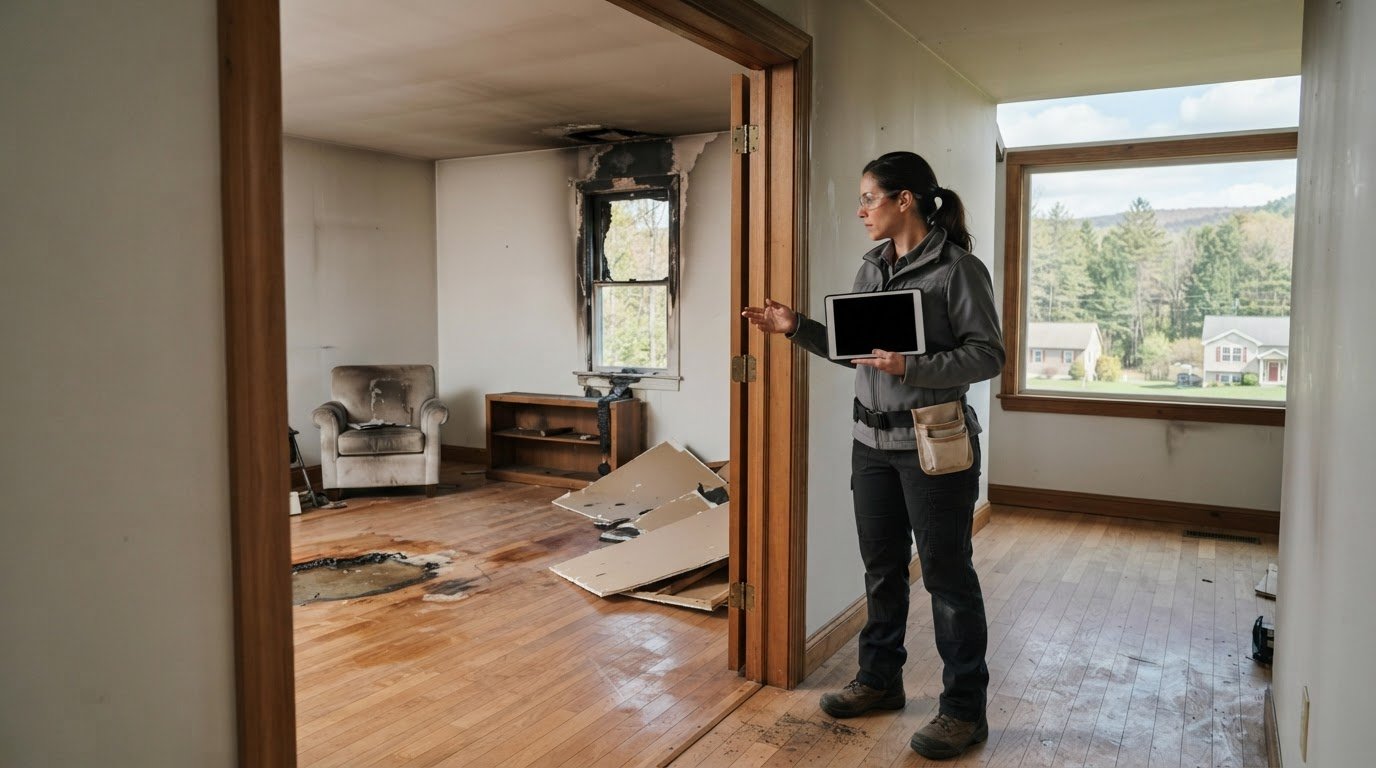
1. Assess affected areas. Review visible fire effects and look for smoke, soot, and water impacts beyond the area where flames were concentrated. This establishes what needs attention.
2. Stabilize the property as needed. Address immediate concerns based on the property’s condition before detailed cleaning begins. Stabilization priorities vary from one building to another.
3. Address debris and water. Depending on the findings, the work may include managing fire-related debris and water used to extinguish the flames. Moisture-affected areas may need attention alongside fire and smoke residue.
4. Clean structures and contents. Use targeted cleaning for soot and smoke residue on affected building surfaces. Belongings are assessed separately because their materials and condition can call for different cleaning approaches.
5. Treat lingering odor and review next steps. Odor neutralization may be included where needed. The condition of affected materials helps determine what further recovery work is appropriate.
Assessment and early property stabilization
Assessment documents visible damage and less obvious effects, including smoke residue, soot, and water. It helps clarify which rooms, surfaces, and contents are affected rather than relying only on the area that looks burned. Any stabilization is guided by the property’s condition and immediate needs. Follow emergency responders’ instructions, and don’t enter areas they’ve declared unsafe.
Cleaning, odor treatment, and recovery
Once immediate priorities are addressed, cleaning can focus on affected building surfaces and contents. These are separate tasks: a wall or ceiling may need structural cleaning, while belongings require their own assessment and treatment. Odor neutralization targets persistent smoke smell, but the appropriate treatment depends on the materials and extent of impact. United Policyholders’ Smoke Restoration Guide offers additional consumer guidance on smoke restoration and insurance claims.
For property owners asking what does fire damage restoration include, this sequence is a useful guide, not a promise that every home needs the same work. TBC Restoration provides fire and smoke damage restoration for Poconos properties, with specialized cleaning for affected structures and contents. Learn about fire damage restoration to understand TBC Restoration’s service.
What Is Included in Fire Restoration, and What Depends on the Damage?
Fire restoration can include cleaning soot and smoke residue from affected structures and belongings, treating lingering odor, and addressing firefighting water when it has affected the property. The assessment determines which components apply and how much work each requires. This separates common cleaning tasks from decisions that depend on the condition of specific rooms and materials.
Cleaning structures and belongings affected by smoke
Building surfaces and personal belongings need separate consideration. Walls, ceilings, and other affected structural surfaces may need targeted cleaning, while furnishings and other contents require assessment based on their condition and material. Smoke residue and odor can reach spaces outside the fire’s visible footprint, so the burned area alone may not show the full cleaning scope.
TBC Restoration provides specialized cleaning for fire-, soot-, and smoke-affected structures and contents, including residue cleanup and odor neutralization. The supporting guide Soot Removal Services: Restoring Your PA Property provides more information about soot removal in Pennsylvania properties.
When the work may extend beyond cleaning
Some materials may be too damaged for cleaning alone, or their condition may require a separate decision after assessment. That doesn’t make every repair or replacement part of a fire-cleaning service. TBC Restoration’s scope includes fire and smoke damage restoration and cleaning, not new construction, plumbing repair, or asbestos abatement. These are distinct types of work.
For example, a smoke-affected surface may be addressed through cleaning, while heat-damaged material may need separate evaluation to determine an appropriate next step. Water from firefighting efforts can also affect the scope if it has reached floors, walls, or contents. Assessment helps distinguish these needs without assuming all damage can be cleaned or that every property requires the same response.
The related guide Structural Cleaning After Fire Damage in PA offers more context on cleaning affected building surfaces. Together, the assessment and cleaning plan clarify what restoration can address and which damaged materials require separate decisions. Understanding that distinction helps property owners see what fire restoration includes without confusing cleanup with construction or other specialized work.
What Should You Do Before Fire Damage Restoration Begins?
After a fire, it’s natural to want to check the damage and start cleaning. Put safety first instead. Follow emergency responders’ instructions, and don’t enter a building or area they’ve declared unsafe. Keep family members, visitors, and pets away from soot, debris, standing water, and visibly damaged spaces while you wait for next steps.
Which actions are safe for property owners?
Wait for clearance before re-entering the property. If responders have restricted access, don’t cross barriers or try to retrieve belongings. Even after entry is allowed, avoid disturbing soot or handling damaged materials. A surface that looks simple to wipe down may need assessment before cleaning.
From a safe location, you can take practical steps without entering affected areas:
Photograph visible damage only if you can do so without approaching an unsafe area.
Make a list of rooms and belongings you can identify from a safe vantage point.
Keep relevant insurance policy information, claim communications, and records together.
Note questions or observations to share during the restoration assessment.
Don’t move items or begin wiping surfaces just to improve a photo or make the space look clearer. Leaving the scene undisturbed can help preserve a useful record of visible conditions. If you’re unsure whether a location is safe to approach, stay back and follow emergency responders’ guidance.
Why professional assessment matters, even after a small fire
A fire confined to one room can still leave smoke or soot effects beyond the visible burn marks. The appropriate cleaning approach depends on which surfaces and belongings are affected, their materials, and what an assessment finds. Avoid assuming a small-looking fire means surrounding areas are unaffected or safe to clean on your own.
Knowing what does fire damage restoration include can help you understand why assessment is useful before cleanup begins. It gives restoration professionals a chance to identify affected areas and determine how to address them, while you focus on keeping people and pets away from the damage and organizing information about the property.
For a Stroudsburg-area home or business, clear next steps can make a difficult situation easier to manage. TBC Restoration provides fire and smoke damage restoration for Poconos properties, including specialized cleaning for affected structures and contents. Learn about restoration support from TBC Restoration as you plan the next safe steps.
How Can TBC Restoration Help Poconos Properties Recover From Fire Damage?
After a fire, property owners need a clear picture of what was affected and a practical way to begin addressing it. TBC Restoration provides fire and smoke damage restoration for residential and commercial properties across the Poconos region, including Stroudsburg. Its work includes specialized cleaning of affected structures and contents, soot and smoke residue cleanup, and odor neutralization.
The question “what does fire damage restoration include” has a property-specific answer. An assessment helps identify where fire, soot, smoke, or odor has affected the building and belongings, then guides cleaning priorities. If firefighting water has also affected the property, those areas may need attention as part of the recovery plan. The findings shape the scope of work rather than applying a fixed checklist to every home or business.
What to expect from a local restoration response
TBC Restoration offers 24/7 emergency restoration services. A response starts by understanding the property’s condition and identifying immediate priorities. From there, the team organizes cleaning around affected surfaces and contents, including less obvious smoke or soot impacts. TBC Restoration serves property owners in Stroudsburg, East Stroudsburg, Marshall’s Creek, Bushkill, Crescent, Mount Pocono, Bangor, Tannersville, Snydersville, and Saylorsburg. A methodical assessment helps make the work easier to understand and keeps recovery focused on the damage found.
Clear communication matters during a stressful event. A useful restoration plan explains which areas and belongings are included in the cleaning work and how identified damage informs priorities. The scope may differ between a commercial property with several affected spaces and a home with damage concentrated in one area. Assessment gives the work a property-specific starting point.
Take the next step toward property recovery
No two fire-affected properties are exactly alike. The right plan should reflect the conditions observed at the site, including affected materials and the spread of residue or odor. TBC Restoration’s fire and smoke damage services address cleaning for impacted structures and contents, helping property owners move forward with a focused local response.
You don’t need to have every question answered before taking the next step. Sharing what happened and what you can safely observe helps start a conversation about the property’s restoration needs. TBC Restoration serves communities throughout the Poconos region, with emergency restoration services available around the clock.
For local guidance on fire and smoke damage recovery, Contact TBC Restoration for fire damage help.
Take the Next Step Toward a Clear Recovery Plan
After a fire, it can be hard to know which decision should come first. You don’t need to solve every issue at once. Focus on keeping people safe, following responder guidance, and getting a clear assessment of the property. That conversation can turn uncertainty into practical priorities, so you can understand what needs attention and make decisions one step at a time.
If you’re still asking what does fire damage restoration include for your home or business, start with the conditions at your property rather than assumptions about what every fire requires. A restoration plan should reflect the damage found and give you a clearer basis for moving forward.
TBC Restoration supports Poconos property owners with fire and smoke damage restoration. Contact TBC Restoration for fire damage help to discuss the next step for your property. Recovery takes time, but a clear plan can help make the way forward more manageable.
Frequently Asked Questions
How long does fire damage restoration usually take?
There’s no single timeline because the work depends on the extent of fire, smoke, soot, and water damage, along with the materials affected. Cleaning a limited area differs from treating multiple rooms and contents. Assessment helps establish the scope and order of work. Ask for a clear explanation of the expected stages, and remember that newly identified damage can affect the plan.
Can smoke damage affect parts of a house the fire did not reach?
Yes. Smoke can spread beyond the room where the fire started and leave residue or odor in other parts of a home. For example, a hallway or nearby room may be affected even if flames never reached it. A visible burn mark isn’t a reliable boundary for smoke impact. In a Stroudsburg-area property, assessment can help identify which spaces and belongings need attention.
Is it safe to stay in a house after a fire?
Don’t assume it’s safe to stay inside just because the fire is out or some rooms look undamaged. Follow instructions from emergency responders and stay out of any area they’ve restricted. If you’re uncertain about access or occupancy, ask the officials managing the scene for guidance. Keep children and pets away from the property until you know which areas are safe to approach.
Does homeowners insurance cover fire damage restoration?
Coverage depends on the terms of your policy, including its limits, exclusions, and deductible, so there isn’t one answer for every homeowner. Notify your insurer and ask how to document the loss and proceed with the claim. Keep notes of conversations and save claim-related messages. A restoration assessment can describe observed damage, but your insurer determines coverage under your policy.
What should I document for a fire damage insurance claim?
From a safe location, photograph or record visible damage by room and note the date. Make an itemized list of affected belongings, including brief descriptions and any available proof of purchase or ownership. Save receipts for related expenses and keep copies of messages, claim references, and insurer instructions. Don’t enter a restricted area or handle damaged items just to collect documentation.
Does fire damage restoration include rebuilding?
Fire damage restoration generally focuses on assessing and cleaning affected areas and contents, including soot and smoke residue and odor. Rebuilding or replacing damaged building materials is a separate type of work and may require its own scope. Clarify which tasks involve cleaning and restoration and which involve construction, so responsibilities and next steps are clear for your property.
Should I clean soot myself before restoration professionals arrive?
Avoid wiping or otherwise disturbing soot before affected surfaces are assessed. Cleaning attempts can spread residue or make it harder to understand the original condition. Don’t apply household cleaners or handle affected belongings unless it’s necessary for immediate safety. Instead, keep people and pets away, follow responder instructions, and document visible damage from a safe place.
Comments