

Frozen Pipe Water Damage Cleanup and Repair in Tannersville

You can cautiously thaw an accessible frozen pipe with gentle heat, but never use an open flame or blowtorch. If you suspect the pipe has burst, shut off the main water supply to limit flooding. For frozen pipe water damage in Tannersville, act promptly to help limit damage and prevent moisture from lingering.
A pipe that starts flowing again may still be split or leaking. Watch for puddles, water stains, dripping sounds, or reduced pressure. If water has reached electrical outlets or switches, stay out of the affected area.
It’s understandable to want to handle a frozen pipe yourself and avoid a bigger repair. This guide explains when careful thawing may be appropriate, when water damage calls for professional cleanup, what affects repair costs and timelines, and how homeowners insurance may apply. You’ll also learn what to document and what steps can help protect your home while the damage is assessed.
Table of Contents
How long does it take to fix water damage from a burst pipe?
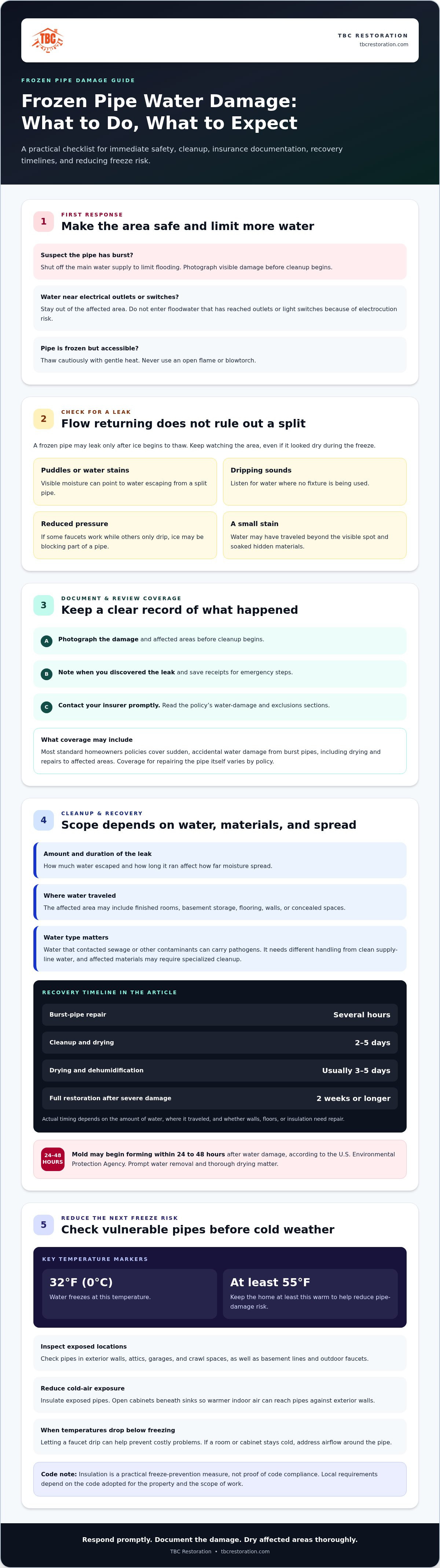
Repairing a burst pipe can take several hours, depending on its location and severity. Cleanup and drying after a burst pipe can take two to five days. Drying and dehumidification usually take three to five days, while full restoration may take two weeks or longer after severe damage. The timeline depends on how much water escaped, where it traveled, and whether walls, floors, or insulation need repair. For frozen pipe water damage in Tannersville, prompt action can limit how far moisture spreads.
If a frozen pipe may have burst, shut off the main water supply to limit flooding. Don’t enter floodwater that has reached outlets or light switches because of electrocution risk. Photograph visible damage and contact your insurance provider promptly before cleanup begins. Water stains, dripping sounds, unexpected puddles, or reduced pressure can signal a burst pipe. If some faucets flow normally while others only drip, a frozen pipe section may be blocking water.
Cold temperatures can freeze water inside pipes in crawl spaces, exterior walls, garages, and attics. Water freezes at 32°F (0°C), according to the National Institute of Standards and Technology. Ice can increase pressure until the pipe splits. After thawing, water may escape through the crack and soak materials beyond the visible puddle. A burst pipe can release hundreds of gallons in a short period, so a small stain may point to hidden damage.
Mold can start forming within 24 to 48 hours after water damage, according to the U.S. Environmental Protection Agency. Prompt water removal and thorough drying matter, especially when moisture reaches drywall, flooring, or insulation. If water has contacted sewage or other contaminants, don’t treat it like clean supply-line water. Contaminated water can carry pathogens, and affected materials may need specialized cleanup.
Most standard homeowner’s insurance policies cover sudden and accidental water damage from burst pipes, including drying and repairs to affected areas. Coverage for the pipe repair itself varies by policy. Keep photographs, note when you discovered the leak, and save relevant records. These details can help document frozen pipe water damage in Tannersville for an insurance claim.
When comparing water damage restoration companies near Tannersville, look for a clear process that covers water removal, moisture assessment, drying, and repairs to affected areas. Ask how damage is documented and how the cleanup process accounts for the water involved. For frozen pipe water damage in Tannersville, these steps clarify the restoration work planned.
Is Water Damage from Frozen Pipes Covered by Insurance?
Most standard homeowner’s insurance policies cover sudden, accidental water damage from burst pipes, including drying and repairs to affected areas. Coverage for repairing the pipe itself varies by policy. Read the water-damage and exclusions sections, then contact your insurer promptly after discovering a leak. Keep photographs, note when you found the damage, and save receipts for emergency steps. Clear records help show what happened and which areas were affected.
Prevention starts with understanding how freezing affects plumbing. Water freezes at 32°F (0°C), according to the National Institute of Standards and Technology. Ice forming inside a pipe can increase pressure until the pipe splits. The pipe may leak only after ice begins to thaw, so a dry-looking area during a freeze doesn’t rule out damage. Pipes in exterior walls, attics, garages, and crawl spaces are especially exposed to cold air.
Before Tannersville winter temperatures fall, inspect vulnerable supply lines and outdoor faucets. Keep the home at least 55 degrees to help reduce the risk of pipe damage. Open cabinets beneath sinks so warmer indoor air reaches pipes against exterior walls. When temperatures drop below freezing, letting a faucet drip can help prevent costly problems. Insulate exposed pipes to reduce heat loss, and include basement lines in your winter preparation.
There isn’t one insulation rule that can safely be applied to every Tannersville property. Local code requirements depend on the code adopted for the property and the scope of the work. Treat insulation as a practical freeze-prevention measure, not as proof of code compliance.
Insurance coverage and prevention are separate issues. A policy may cover resulting water damage while treating the pipe repair differently, so review both when checking your coverage. If a pipe freezes, thaw it gradually with gentle heat. Never use a blowtorch or open flame. If you suspect a burst, shut off the main water supply to limit further flooding, then document visible damage before cleanup begins.
Winter prevention works best as a routine, not a last-minute response. Before a hard freeze, check basement pipes and outdoor faucets, and insulate exposed lines. If a room or cabinet stays cold, address airflow around the pipe rather than relying on a single faucet. These steps can reduce freeze risk, but they don’t replace reviewing your policy or responding quickly when a leak appears.
How Much Does Cleanup and Repair Cost?
Estimating frozen pipe water damage in Tannersville means looking beyond the broken pipe. The cleanup scope depends on how much water escaped, which materials absorbed it, and whether moisture spread into concealed spaces. A leak contained near a utility area is different from water reaching finished rooms, basement storage, and flooring. Identify the full affected area before judging the repairs involved.
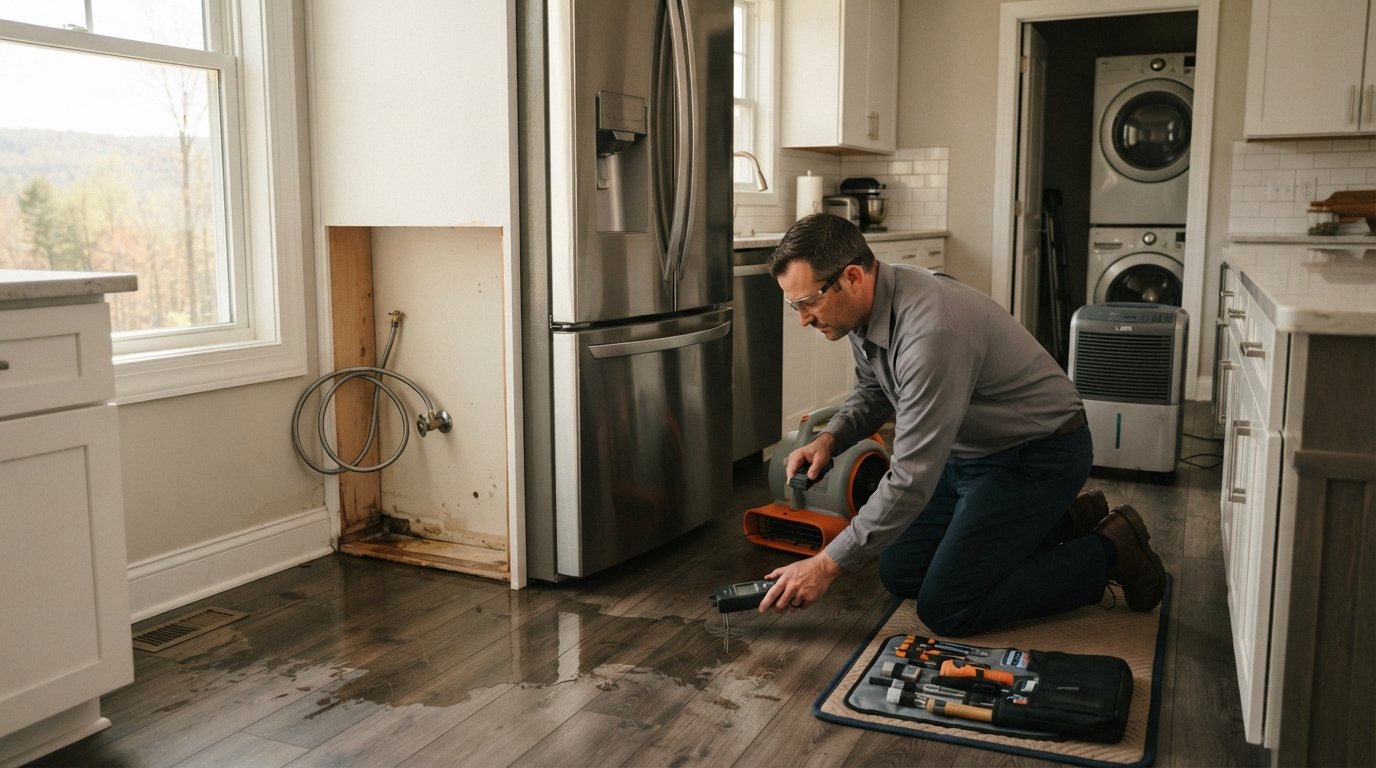
Several factors shape the work and resulting quote. The amount of water and how long it ran affect how far moisture spread. Drywall, insulation, flooring, and stored belongings each need a separate assessment. Access matters too: water beneath cabinets or inside a wall may require opening materials to locate damp areas. Water from a clean supply and contaminated water call for different cleanup precautions and handling.
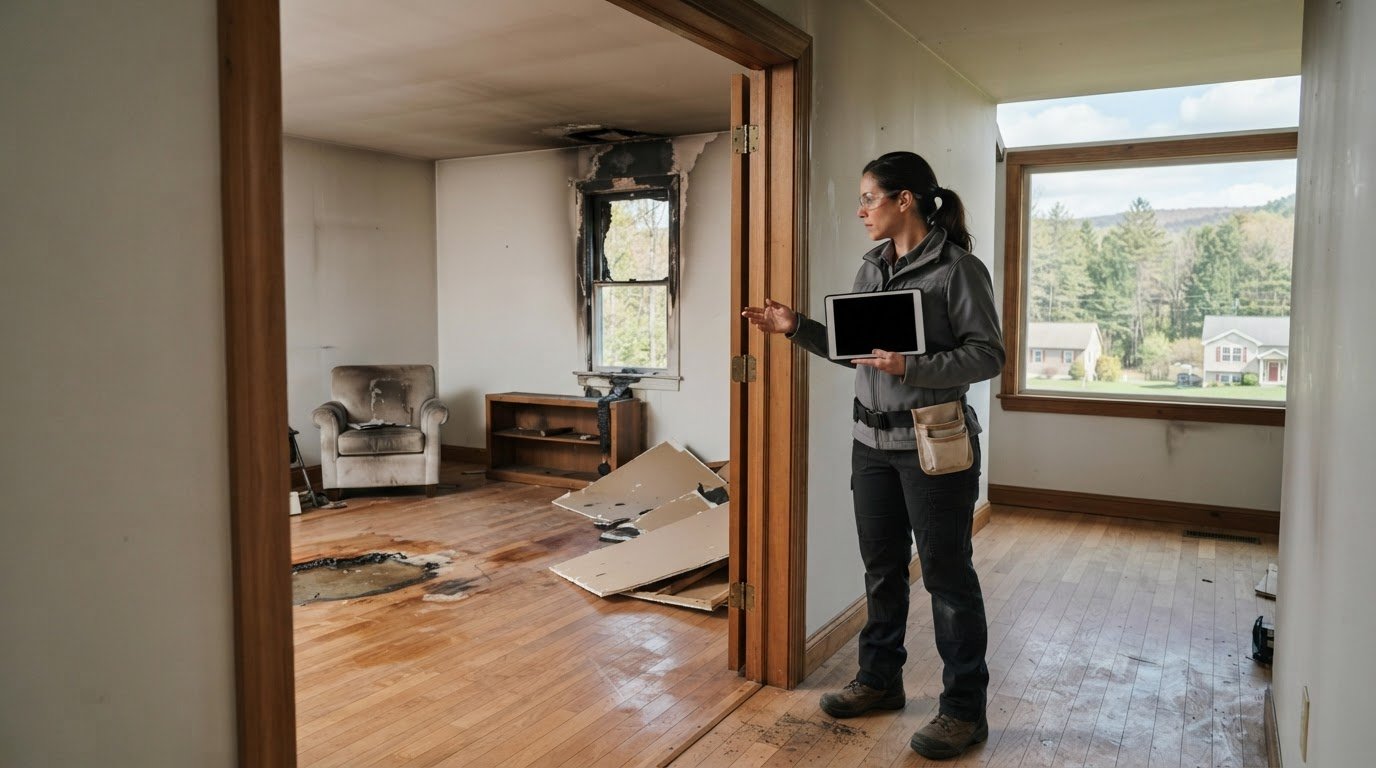
To understand the scope, document the damage consistently:
Photograph each affected room and visible water line before moving items.
Note which surfaces feel wet, including baseboards and flooring edges.
List damaged belongings and record where they were stored.
Keep receipts for emergency purchases and any cleanup already completed.
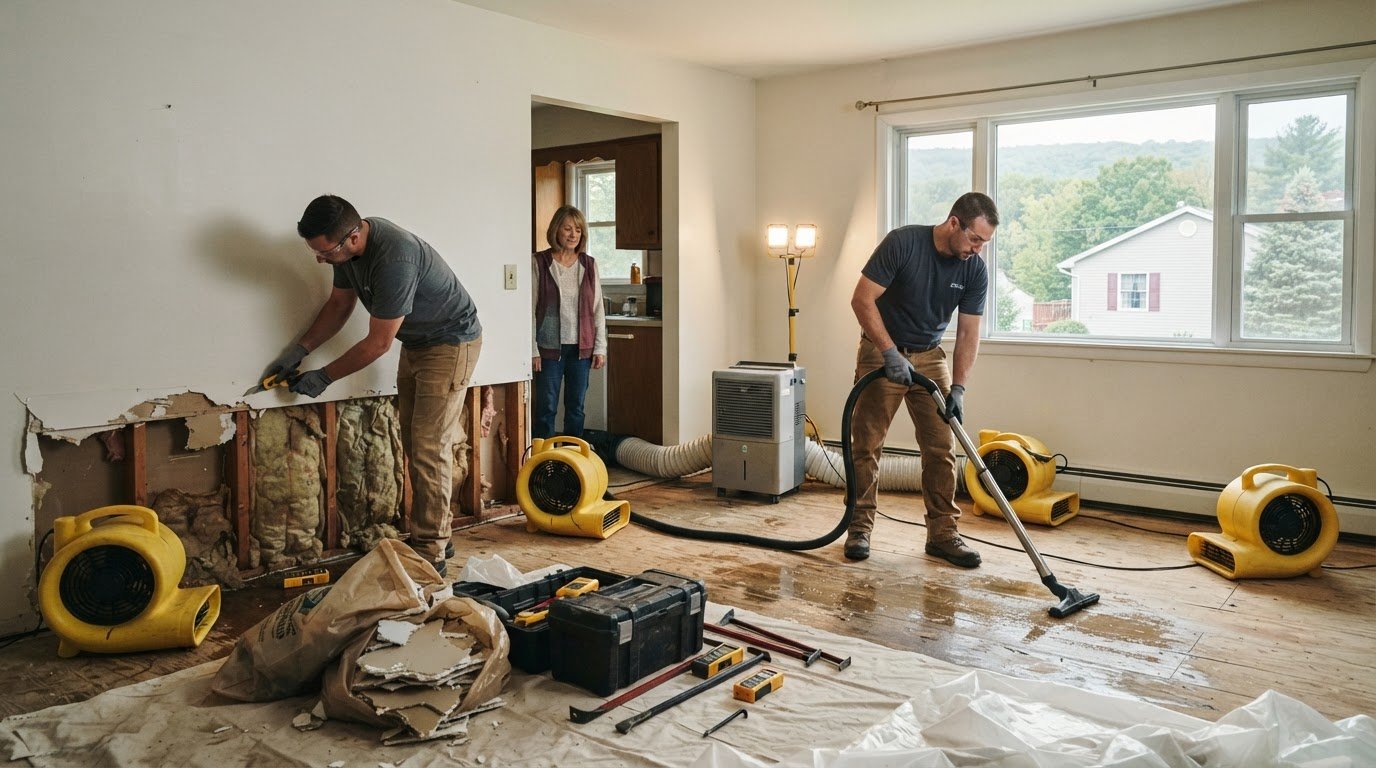
Water removal, drying, and reconstruction are separate stages. Drying and dehumidification usually take three to five days, while full restoration can take two weeks or longer after severe damage. Hidden moisture can extend the work because materials may need inspection before repairs begin. In a basement, water can reach stored goods and flooring beyond the initial leak, so the visible puddle alone doesn’t define the cleanup area.
For frozen pipe water damage in Tannersville, an assessment should distinguish water cleanup and drying from repairs to damaged finishes. The pipe repair itself is a separate issue, and homeowners insurance coverage for it varies by policy. Most standard policies cover sudden and accidental water damage from burst pipes, including drying and repairs to affected areas. Photographs and a timeline of discovery can help document the loss.
The cost depends on the damage and is provided after a quote request. Key factors include the amount of water, affected materials, contamination, access to hidden moisture, drying requirements, and repair scope. An itemized explanation of these stages makes it easier to see what work addresses the damage. If water is still running, turn off the main supply first, then record the affected areas before cleanup changes the scene.
Long-term solutions for recurring frozen pipes
Recurring freezes usually point to a cold pipe location or a gap in winter preparation. Start by noting which faucet loses flow and where its supply line runs. A kitchen line against an exterior wall, for example, may need better insulation or warmer air circulation. Keep the home at least 55 degrees during freezing weather, and include vulnerable rooms in your heating plan.
Insulate exposed plumbing in crawl spaces, attics, garages, and basements. Quality pipe insulation can reduce heat loss by up to 90 percent. Seal openings that let cold air reach pipes, especially around exterior-wall penetrations. Before winter, check outdoor faucets and basement lines, then address damaged or missing insulation. A recurring problem at the same location calls for examining that pipe’s exposure, not only thawing it again.
Use gentle, gradual heat for a frozen pipe you can safely reach. A hair dryer on a low setting can warm the pipe; keep it several inches away and move it along the frozen section. Never use an open flame or blowtorch. Natural thawing can take 24 hours, while gradual warming methods may thaw exposed pipes in up to an hour. Stop if the pipe leaks, bulges, or becomes difficult to reach safely.
Keep the faucet connected to the frozen section open enough to observe whether flow returns.
Warm the pipe gradually, starting near the faucet and moving toward the colder section.
Check nearby joints and surfaces for leaks as water pressure returns.
Never enter water that has reached electrical outlets or light switches.
For a seasonal home or an area that will remain unheated, plan how its plumbing will be protected before leaving. Shutting off the water and draining vulnerable lines can reduce water left in exposed pipes, but the steps must suit the home’s plumbing layout. Don’t assume that turning off one fixture drains the full system. Keep a written winter checklist covering outdoor faucets, basement lines, heating, and areas that repeatedly lose warmth.
If a pipe may have burst, shut off the main water supply to limit further flooding. Move wet valuables to a dry area only if you can do so safely. After thawing, watch for water stains, unexpected puddles, or reduced pressure. If water has reached electrical fixtures, stay clear of the affected area. These steps help limit additional damage while the pipe and surrounding materials are assessed.
Frozen pipe and water-damage costs
The final cost reflects more than the broken pipe. It can include stopping the water supply, removing standing water, drying affected rooms, and repairing damaged materials. A leak contained near an exposed pipe has a different scope from water that spreads through a finished basement. The key takeaway: the longer water runs and the farther it travels, the more areas may need assessment and restoration.
Water volume can rise quickly. A burst pipe can release 10 gallons per minute into a home, turning a plumbing failure into damage across floors, walls, and belongings. Shut off the main water supply immediately when a burst is suspected. Then record which rooms are wet, photograph visible damage, and note the leak’s location. Those details help describe the scope to an insurer and support a clear assessment.
Several factors shape the work required, not just the pipe:
Water spread: Water that runs into a basement or under flooring affects more materials than a leak confined to one surface.
Material condition: Wet drywall, insulation, flooring, and stored belongings each require separate inspection.
Access: Water behind cabinets or inside a wall may require opening materials to locate and dry hidden moisture.
Water source: Clean supply water and contaminated water call for different cleanup precautions.
Repair scope: Pipe repair, water removal, drying, and rebuilding are distinct parts of the recovery.
Temperatures and pipe location also affect how a freeze becomes a costly leak. A pipe exposed to below-freezing temperatures can burst in less than 5 hours. Water may remain trapped behind a wall until thawing reveals the split, so visible damage may not show the full wet area. A careful inspection of nearby rooms and materials helps identify work beyond the first puddle.
Insurance claim figures show the broader financial impact without setting a local repair price. Homeowners nationwide filed over 20,000 frozen-pipe and winter water-damage claims from 2024 through mid-2025. Each property still has its own damage conditions. Most standard homeowner’s policies cover sudden, accidental water damage from burst pipes, while coverage for the pipe repair varies by policy. Keep photos and records to support the claim.
The cost depends on the damage and is provided after a quote request. Scope depends on the amount of water, affected materials, contamination, access, drying needs, and repairs. An itemized assessment should separate cleanup and drying from pipe work and reconstruction. If water is still running, shut off the main supply first, then document the damage before cleanup begins.
TBC Restoration: Water Damage Restoration
TBC Restoration helps property owners address water damage after a frozen or burst pipe. Turn to its Water Damage Restoration service when water has spread beyond the pipe or soaked floors, walls, or belongings. The work focuses on removing water, drying affected areas, and restoring damage. If lingering moisture raises mold concerns, Mold Remediation and Testing can address that part of the recovery. Emergency Restoration Services are available for urgent property damage.
Before cleanup, shut off the main water supply if a pipe has burst, and document visible damage for your insurance claim. Clear details about affected rooms and materials help establish the restoration work needed. For help with water damage recovery, contact TBC Restoration.
Take the Next Step Toward a Dry, Stable Home
Once the immediate leak is under control, focus on restoring your home to a dependable condition. Consider not only the damaged surface, but also how the disruption affects daily routines, stored belongings, and the use of each room. A clear recovery plan can make the process more manageable and help you decide what needs attention first.
If frozen pipe water damage in Tannersville has affected your home, TBC Restoration can help with water damage restoration and related recovery needs. Share what happened and which areas are affected so the next steps can be discussed clearly. You don’t have to sort through the disruption alone. Contact TBC Restoration for help, and take a steady step toward restoring your space.
Frequently Asked Questions
Can I thaw frozen pipes myself?
Yes, if the frozen section is exposed and you can reach it safely. Open the nearest faucet, then apply gentle heat with a hair dryer on low, keeping it several inches from the pipe. Warm the section gradually instead of concentrating heat in one spot. Stop if you see a crack, leak, or bulge, or if the pipe is behind a wall or otherwise inaccessible. Never use a flame or blowtorch.
How do I know if my pipes are frozen or just blocked?
A frozen section is more likely when one faucet or a group of nearby fixtures stops flowing during freezing weather while others still work. A clog usually affects a particular drain or fixture, not the supply flow to several taps. Check whether cold-water flow is reduced as well as hot-water flow, and note which fixtures share a nearby pipe route. Don’t force a faucet handle or apply heat until you’ve identified the affected line.
What should I do immediately if a pipe freezes or bursts in Tannersville, Pennsylvania?
If water is leaking, shut off the home’s main water supply and avoid standing water near outlets, switches, or appliances. Take photos before moving items, then place salvageable belongings in a dry area if it’s safe. Note which rooms and surfaces are wet, and keep receipts for emergency expenses. If the pipe appears frozen but hasn’t burst, leave the faucet open as it warms gradually and watch for leaks as water flow returns.
Which water damage restoration companies serve Tannersville, PA, and offer 24/7 emergency service?
TBC Restoration offers 24/7 Emergency Restoration Services for property damage in Tannersville. Its local service area also includes Stroudsburg, East Stroudsburg, Marshalls Creek, Bushkill, Crescent, Mount Pocono, Bangor, Snydersville, and Saylorsburg. For a frozen-pipe incident, restoration addresses resulting water damage, not plumbing repair. Contact TBC Restoration for emergency restoration support when water has affected your home or business.
How much does frozen pipe water damage cleanup and restoration cost in Tannersville?
The cost depends on the damage and is provided after a quote request. Key factors include how much water escaped, how many rooms were affected, whether water reached concealed spaces, and which materials need drying or repair. Clean and contaminated water also require different handling. A detailed assessment can separate water removal and drying from repairs to damaged finishes, helping you understand what the estimate covers.
Does homeowners insurance cover damage from frozen or burst pipes in Pennsylvania?
Many standard homeowners policies cover sudden, accidental water damage from a burst pipe, but coverage for repairing the pipe itself varies by policy. Review your policy’s water-damage terms and exclusions, and ask your insurer how it treats resulting damage versus the failed pipe. Keep dated photos, a list of affected rooms, and records of steps taken. Those details can help support the claim and clarify what documentation your insurer needs.
How can I prevent pipes from freezing in a Tannersville home during winter?
Keep the home at least 55 degrees during freezing weather, including rooms you use less often. Open sink cabinets on exterior walls so warm indoor air can reach supply lines, and insulate exposed plumbing in garages, attics, basements, and crawl spaces. Before a hard freeze, check outdoor faucets and look for cold drafts near pipe openings. If you’ll be away, arrange for the home’s heat to remain on and have someone check for problems.
How long does frozen pipe water damage cleanup and drying take?
Water cleanup and drying after a burst pipe can take two to five days, while full restoration may take two weeks or longer for severe damage. Drying and dehumidification usually take three to five days. The schedule depends on how far the water spread, the affected materials, and whether moisture is hidden beneath flooring or inside walls. Ask how progress will be assessed before repairs begin, since wet materials may need more drying before they can be restored.
Comments