

Water Damage Cleanup Process Step by Step: What to Expect

A room can look dry while water remains trapped behind walls, beneath flooring, or inside other materials. That’s why the water damage cleanup process step-by-step involves more than removing what you can see. If you’re dealing with water damage, it’s natural to wonder what’s safe to do first and how to tell whether drying is complete.
Stay out of areas where water may have reached electrical systems, and never enter standing water if you suspect an electrical hazard. If it’s safe, stop the water source and move belongings away from the affected area. A restoration assessment can identify visible and hidden moisture and help determine the appropriate cleanup steps.
This guide explains what to expect at each stage, from inspection and water extraction to structural drying and moisture checks. You’ll also learn how restoration teams assess drying progress and when surface cleanup may not be enough. TBC Restoration provides water damage restoration for homes and businesses in Stroudsburg and nearby Poconos communities.
Table of Contents
What the Water Damage Cleanup Process Covers, and Why Surface Drying Is Not Enough
Water Damage Cleanup Step by Step: From Assessment to Drying Verification
DIY Cleanup or Professional Water Damage Restoration: How to Tell the Difference
How TBC Restoration Guides Water Damage Cleanup from First Response to Recovery
What the Water Damage Cleanup Process Covers, and Why Surface Drying Is Not Enough
Mopping up a puddle can improve the appearance of a room, but it won’t show whether water has seeped beneath flooring, into a wall, or into stored belongings. The water damage cleanup process step-by-step addresses visible water and moisture that may be out of sight. That distinction matters after a leak, appliance failure, or storm-related intrusion because different materials can absorb and hold water differently.
Water damage cleanup includes assessing affected areas, removing water, drying and cleaning, and planning any necessary restoration. Water removal is one part of the process, not proof that the property is dry or ready for repairs. The Water Damage Restoration Process also describes restoration as more than removing standing water, with the work shaped by the extent and type of damage.
What counts as water damage cleanup?
Cleanup begins with identifying the apparent water source, which areas it reached, and which materials were affected. A small amount of water on a nonporous surface may call for a different response than water that has soaked into carpet, drywall, or wood. The scope depends on the property and the conditions found. Not every incident requires material removal or the same repair work.
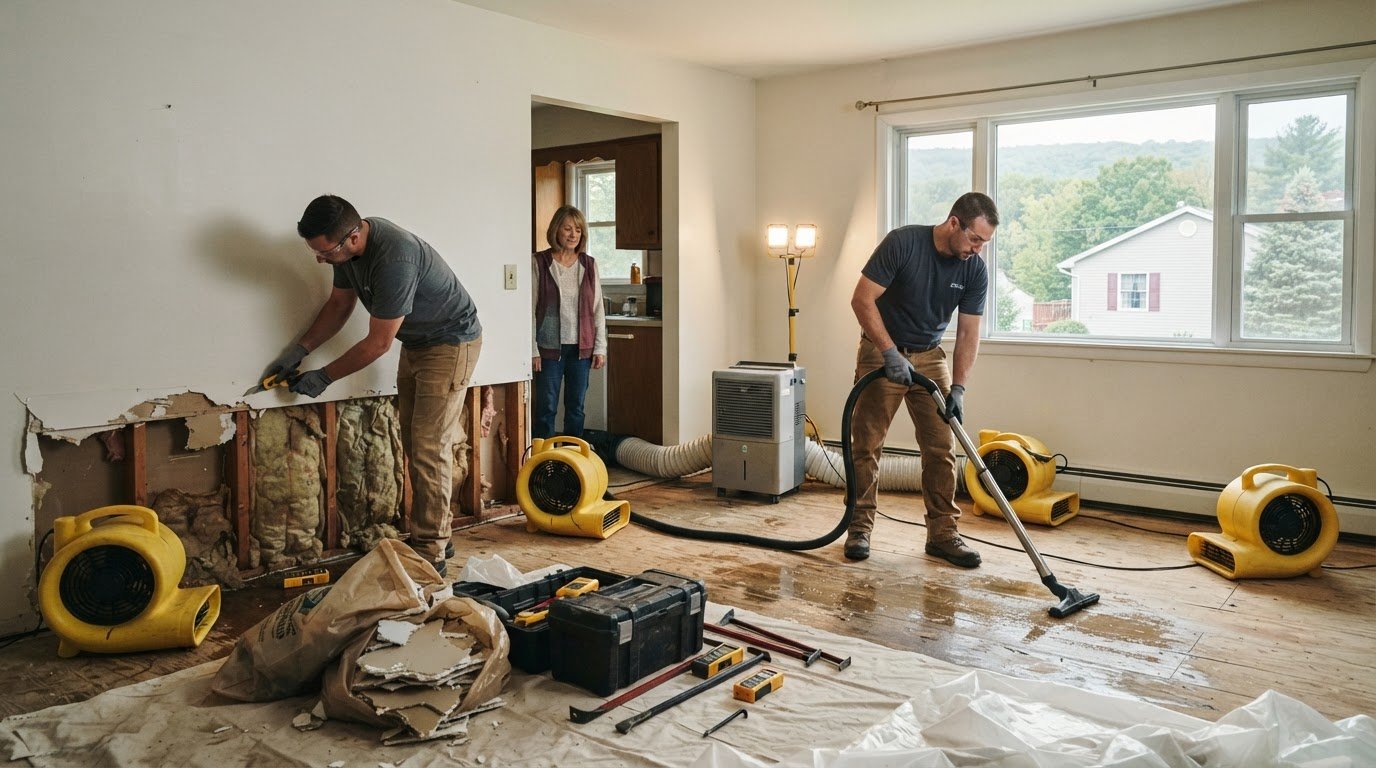
During professional restoration, water extraction removes accessible water, while structural drying and dehumidification address moisture that remains in the building. Cleaning and restoration planning follow according to the assessment. This is broader than mopping or opening windows: the process considers the structure and contents, not just how the room looks.
Why can a room look dry while materials remain wet?
Water can travel under flooring, soak into porous materials, or remain behind finished surfaces. A surface may feel dry before the material beneath it has released its moisture. Fans or open windows may make the air feel less damp, but they can’t confirm what’s happening inside a wall or below a floor covering.
For example, water in a Poconos basement may reach the floor and the bottom of a finished wall. After visible water is removed, the floor may appear dry while moisture remains in the wall material or nearby contents. A restoration team assesses affected areas and uses moisture checks to guide drying, rather than relying on appearance alone. Readings and observations need to be considered in context, including the materials and areas affected.
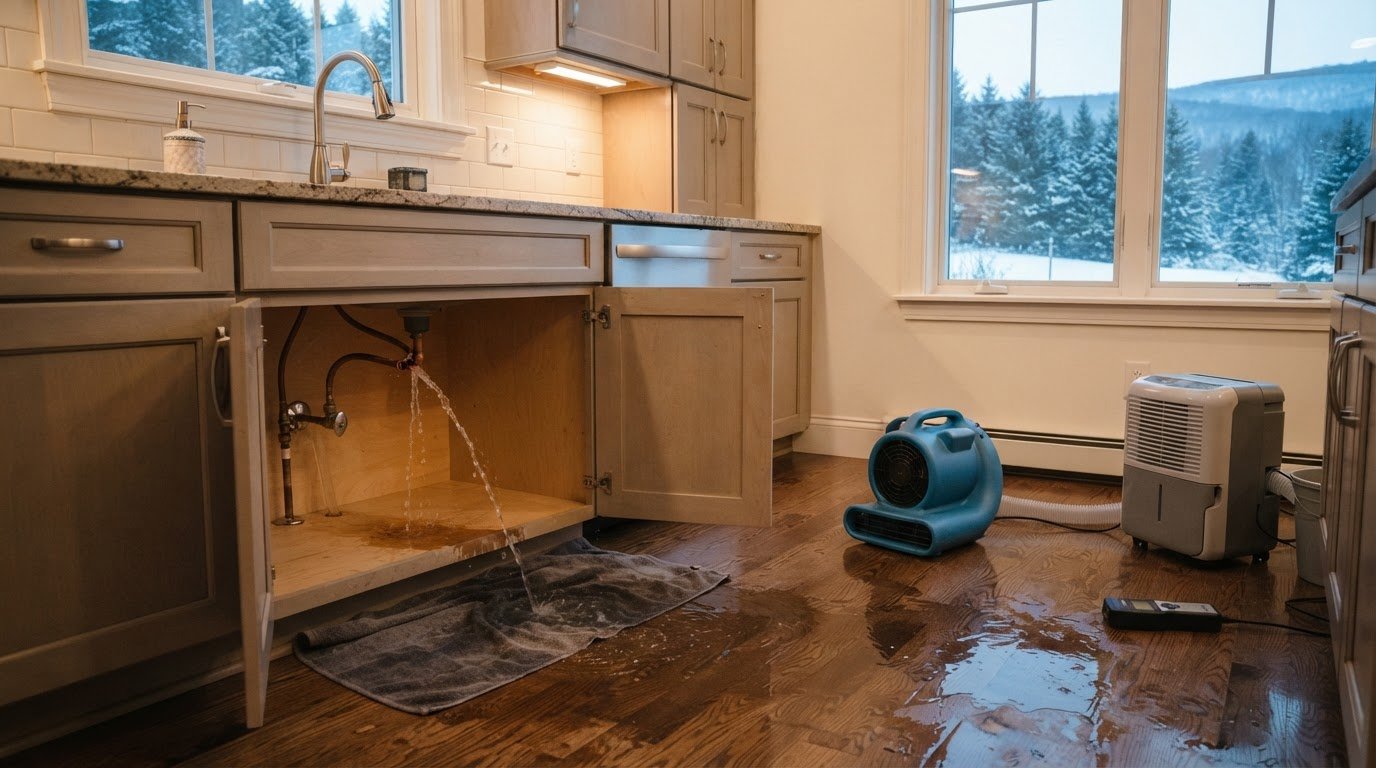
The water source also shapes the assessment. A leaking appliance may wet a concentrated area, while storm-related water can reach a wider section of a basement. Carpet, wood, drywall, and stored items may absorb or hold water differently. A careful assessment connects the source, the water’s path, and the materials involved before setting the next steps. Visible drying is useful to observe, but moisture checks help determine whether the property is ready to move forward.
Water Damage Cleanup Step by Step: From Assessment to Drying Verification
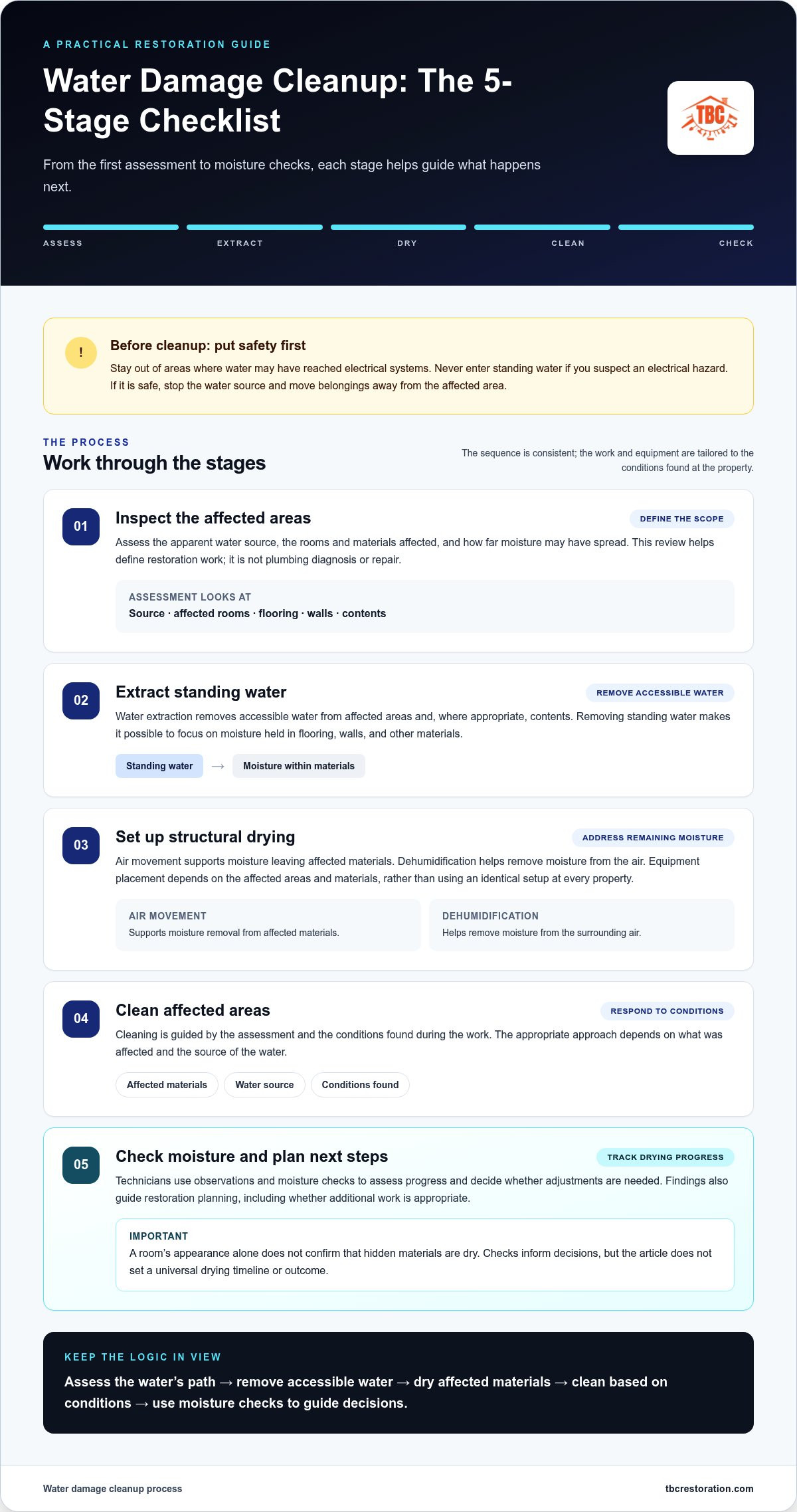
The water damage cleanup process step-by-step follows a sequence, but the work is tailored to the conditions at the property. Each stage answers practical questions: where did water travel, what can be extracted, how should affected materials dry, and what do moisture checks show? Here’s how the stages fit together.
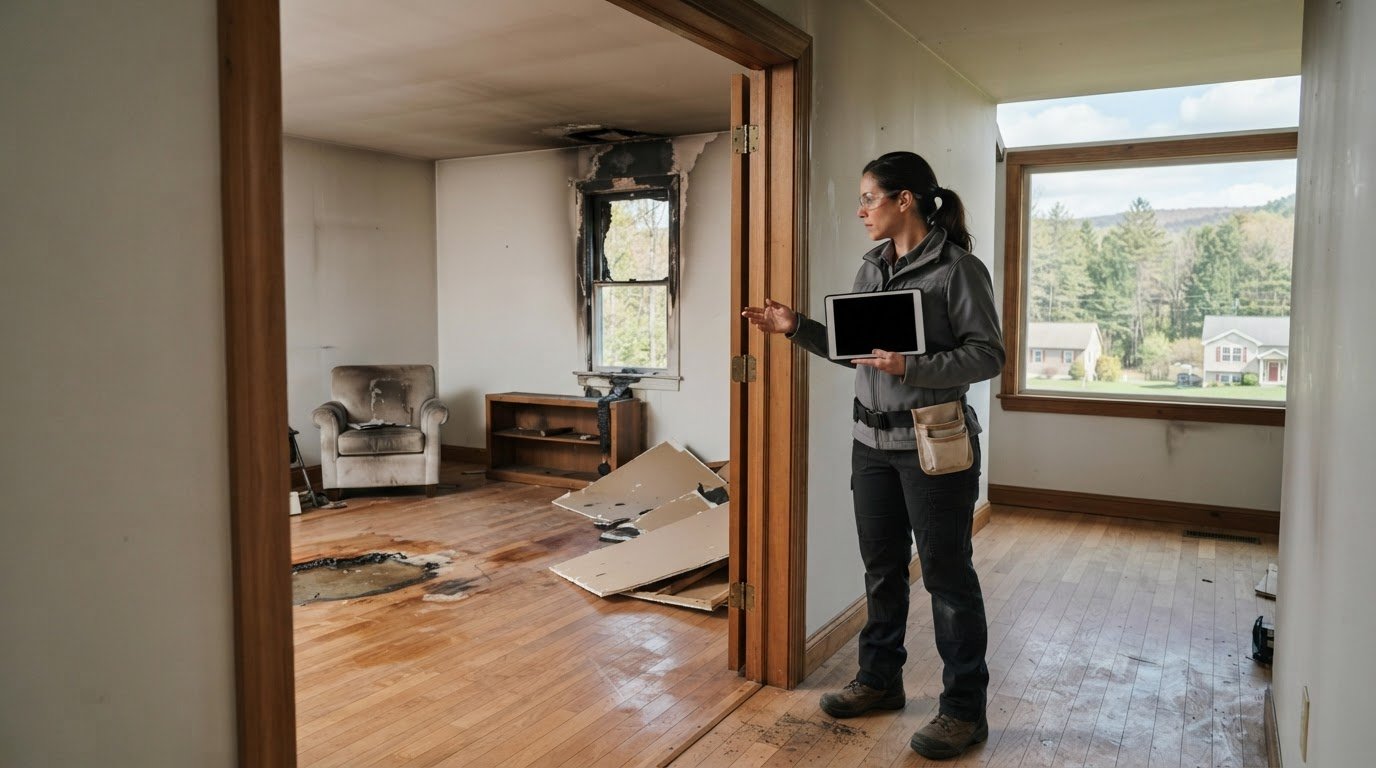
Inspect the affected areas. Restoration technicians assess the apparent water source, which rooms and materials are affected, and how far moisture may have spread. This initial review helps define the restoration work. It is not plumbing diagnosis or repair.
Extract standing water. Water extraction removes accessible water from affected areas and, where appropriate, contents. Removing standing water first allows the team to focus on moisture held in flooring, walls, and other materials.
Set up structural drying. Air movement and dehumidification support moisture removal from the structure and surrounding air. Equipment placement depends on the affected areas and materials, rather than following an identical setup at every property.
Clean affected areas. Cleaning is guided by the assessment and the conditions found during the work. The appropriate approach depends on what was affected and the source of the water.
Check moisture and plan next steps. Technicians use observations and moisture checks to track drying progress and decide whether adjustments are needed. Findings also guide restoration planning, including whether additional work is appropriate.
How assessment and water extraction set the scope
The initial assessment connects the apparent source with the areas and materials water may have reached. Affected rooms, flooring, walls, and contents each help establish the scope. Extraction removes standing water before detailed drying work begins. Together, these steps help direct equipment and attention to affected areas, while keeping the restoration plan tied to observed conditions rather than assumptions.
How structural drying and final checks fit together
Air movement helps moisture leave affected materials, while dehumidification helps remove moisture from the air. As drying proceeds, technicians observe conditions and use moisture checks to assess progress and guide equipment adjustments. These checks inform decisions, but don’t establish a universal timeline or outcome. Cleaning and restoration planning also depend on what the assessment shows and how materials respond during drying.
Drying is assessed by the condition of affected materials, not by how dry a room looks. A surface can feel dry while moisture remains in a less visible area, so a visual check alone can’t establish that drying is complete. The findings help determine whether the property is ready for the next recovery steps or needs continued attention.
For property owners in Stroudsburg and across the Poconos, TBC Restoration provides water damage restoration, including water extraction, structural drying, and dehumidification. If water has affected multiple areas or materials, professional water damage restoration can help establish a response based on the conditions at your property.
DIY Cleanup or Professional Water Damage Restoration: How to Tell the Difference
Not every wet surface needs the same response. A small, accessible spill on a hard floor may be manageable if there’s no safety concern. Water that spreads, reaches building materials, or disappears behind a finish is different. The key question isn’t only how much water you can see, but whether you can safely identify the affected area and tell what has absorbed moisture.
The water damage cleanup process step-by-step shows why some incidents need more than household cleanup. A fan can move air, but it can’t show whether a wall or floor is dry inside. Professional assessment, extraction, and structural drying can help when moisture may be concealed or the affected area extends beyond the visible puddle.
When might basic surface cleanup be limited to a small area?
Basic cleanup may be reasonable when a small area is accessible, the water is confined to a surface, and there’s no apparent electrical or other safety concern. Keep your efforts within what you can safely see and reach. Don’t enter standing water if electrical systems may be affected, and don’t attempt electrical work or remove building materials.
Stop and reassess if water spreads, returns, or affects porous or concealed materials such as carpet, flooring, or walls. The source matters too: an appliance leak and storm-related water may create different conditions. If you’re unsure where water came from or what it reached, surface appearance alone isn’t enough to judge the scope.
What signs point toward professional restoration?
Professional water damage restoration is appropriate to consider when water affects multiple areas, keeps returning, soaks building materials, or may have traveled out of sight. It’s also the safer choice if the area seems unstable or there may be an electrical hazard. Don’t enter or handle water when conditions are unsafe or its source raises concerns about contamination.
Restoration equipment supports work beyond wiping up puddles. Water extraction removes accessible water, while structural drying and dehumidification address moisture in affected materials and the surrounding air. Assessment and moisture checks help guide the response as conditions change. A dry-looking floor or a room that feels less damp doesn’t confirm that concealed materials are dry.
Area: A contained surface spill differs from water affecting several rooms or levels.
Materials: Water on a hard surface is easier to observe than moisture absorbed by carpet, wood, or drywall.
Visibility: If water may have traveled behind finishes or beneath flooring, a visual check can’t establish how far it spread.
Safety: Electrical hazards, unstable conditions, or uncertainty about the water source are reasons to stay clear.
If the damage extends beyond a small, safe, visible area, TBC Restoration can help with water damage through assessment, extraction, structural drying, and dehumidification tailored to the conditions found.
What to Do Before Water Damage Cleanup in the Poconos
Water in a basement after heavy rain or a leak inside the home can be stressful, but you don’t need to investigate every affected area before help begins. Focus first on safety, note what you can see from a safe location, and share what you know. Don’t enter standing water or an area that looks unstable to retrieve belongings or inspect damage.
Which immediate actions are sensible and low risk?
Put safety first. Stay clear of standing water near electrical equipment, outlets, or wiring. If you suspect an electrical hazard, don’t enter the area or try to operate equipment there. If the water source is obvious and an accessible shutoff can be reached safely without entering an affected area, you may turn it off. Don’t attempt plumbing repairs.
From a safe location, take photos or video of visible water and affected belongings for your records and claim discussions. Note what you see, but don’t delay an emergency response to gather documentation. Move unaffected belongings only if the route is clear and you can carry them safely. Leave items in place if moving them would require walking through water, reaching into a damaged area, or lifting something heavy.
For the water damage cleanup process step-by-step, these observations can help document what was visible before restoration work begins. They don’t replace an assessment, and you don’t need to determine how far moisture has traveled on your own.
What information helps restoration teams assess the situation?
A few clear details can help the restoration team understand what you’ve noticed and where to begin. You don’t need technical terms or a complete explanation. Share what you can observe safely and be clear about anything you’re unsure of.
When you noticed the damage: Record the approximate time or circumstances, such as discovering water in the basement after returning home.
Which areas appear affected: List visible rooms, floors, or contents, and mention if water seems to have spread or returned.
What may have caused it: Describe the suspected source, such as heavy rain or an appliance issue, without attempting a repair or entering an unsafe area to investigate.
What has changed: Note whether visible water has increased, receded, or appeared in another location since you first noticed it.
Where the property is: Share whether it’s in Stroudsburg, East Stroudsburg, Marshall's Creek, Bushkill, Crescent, Mount Pocono, Bangor, Tannersville, Snydersville, or Saylorsburg.
Keep your notes and photographs together so you can refer to them during the assessment and later claim discussions. If water has affected your property and you need restoration support, contact TBC Restoration for water damage cleanup.
How TBC Restoration Guides Water Damage Cleanup from First Response to Recovery
Water damage can leave property owners unsure what needs attention first. TBC Restoration provides water damage restoration for homes and businesses across the Poconos, connecting emergency response with water extraction, structural drying, and dehumidification. The work is guided by the affected property and the moisture conditions found there, not by a one-size-fits-all checklist.
What should property owners expect from TBC Restoration?
TBC Restoration provides 24/7 emergency restoration services. The team assesses affected areas and uses its findings to shape the response. Water extraction addresses accessible standing water, while structural drying and dehumidification support moisture removal from affected materials and the surrounding air. The goal is to base decisions on what the property needs at each stage.
The assessment also helps clarify what comes next. The team can explain which areas are affected, what drying work is underway, and how moisture observations inform adjustments. Conditions may vary between rooms or materials, so the water damage cleanup process step-by-step is guided by what’s observed, not by a fixed timeline or identical treatment for every property.
Clear communication matters during recovery. Property owners should understand what the team has found and why the next steps make sense. Moisture checks and ongoing observations help inform drying decisions; they don’t create a universal schedule or guarantee a particular result. As conditions change, the restoration approach can be adjusted to reflect those findings.
How can a local response help move recovery forward?
TBC Restoration serves Stroudsburg, East Stroudsburg, Marshall's Creek, Bushkill, Crescent, Mount Pocono, Bangor, Tannersville, Snydersville, and Saylorsburg. Whether water has reached a basement, living area, or business space, a property-specific assessment helps connect visible damage with moisture conditions that may need attention. This gives property owners a clearer basis for understanding the restoration work ahead.
Water extraction and drying are important early parts of the response, but recovery decisions depend on more than the first visible change. The team’s observations help guide moisture control and clarify when further attention may be needed. This practical sequence helps property owners understand the status of their space without assuming one drying setup or timeline fits every situation.
If water damage has affected your property in Stroudsburg, East Stroudsburg, or elsewhere in the Poconos, contact TBC Restoration for water damage help. The team can assess the affected property and guide the response through extraction, structural drying, and dehumidification based on the conditions found.
Take the Next Step Toward a Steadier Recovery
After water damage, it can be hard to know which decisions need attention first. Use the water damage cleanup process step-by-step as a guide, but let conditions at your property shape the path forward. Understanding what’s affected can help you make informed choices, keep useful records, and focus on recovery rather than guesswork.
You don’t have to resolve every uncertainty on your own. TBC Restoration can assess water damage and guide the work based on conditions at your property. For support in Stroudsburg and the Poconos, get help with water damage cleanup from TBC Restoration.
Taking a practical next step can make a difficult situation feel more manageable. With clear information and restoration support, you can move toward a safer, more settled space.
Frequently Asked Questions
Can water-damaged drywall be saved, or does it always need to be removed?
Water-damaged drywall doesn’t always need to be removed; the decision depends on how wet it is, how long it stayed wet, and what the assessment finds. A small damp area may respond differently from drywall that’s swollen, soft, crumbling, or wet through its thickness. Don’t cut into a wall to investigate on your own. A restoration professional can assess the material and determine whether drying or removal is appropriate.
Is water damage cleanup different after a storm than after an appliance leak?
Yes. The water source and path can change the cleanup plan. A storm may bring water through more than one entry point or affect several parts of a home, while an appliance leak may be concentrated near the appliance. In either case, avoid handling water if its source is uncertain or conditions seem unsafe. In Stroudsburg and nearby Poconos communities, an assessment of the property helps clarify what was affected.
Can I stay in my home during water damage cleanup?
Sometimes, but it depends on the affected areas and whether the home remains safe to occupy. Consider whether essential rooms and safe paths through the home are available, and follow guidance from the restoration team if conditions change. If water has reached electrical equipment, the structure seems unstable, or you can’t safely access the areas you need, leave the affected space and seek appropriate help before returning.
Will a household fan dry water-damaged floors and walls?
A household fan may move air across an exposed surface, but it can’t confirm or reliably address moisture inside a wall, beneath flooring, or in other concealed spaces. Airflow in a room, for example, won’t show whether water remains under a floor covering. Don’t treat a cooler or drier-feeling surface as proof that materials are dry. Hidden moisture may require a professional assessment and restoration drying equipment.
How can I tell whether hidden moisture remains after cleanup?
You can’t reliably confirm hidden moisture by sight or touch alone. Staining, a musty odor, changes in flooring, or renewed dampness can be reasons to request another assessment, but their absence doesn’t prove concealed areas are dry. In the water damage cleanup process step-by-step, moisture checks help guide decisions about affected materials. Keep track of new changes and share them with the restoration team for follow-up.
Does homeowners insurance cover water damage cleanup?
Coverage depends on your policy, the cause of the damage, and the specific circumstances. Sudden damage from an accidental event may be treated differently from long-term seepage, and flood coverage may be handled separately from a standard homeowners policy. Review your policy and contact your insurer to understand your coverage and claim steps. Photos, notes, and records of observed damage can help you describe what happened.
What should I do if water comes back after cleanup starts?
Stay clear of the water if it’s near electrical equipment or the area seems unsafe. Don’t attempt repairs or enter a hazardous space to find the source. From a safe location, note where water has returned and whether the affected area has changed, then promptly update the restoration team. If you’re in Stroudsburg, East Stroudsburg, or another Poconos community, sharing those details can help the team reassess conditions and next steps.
Comments