

Sump pump failure cleanup in Marshall's Creek: when to call a restoration crew

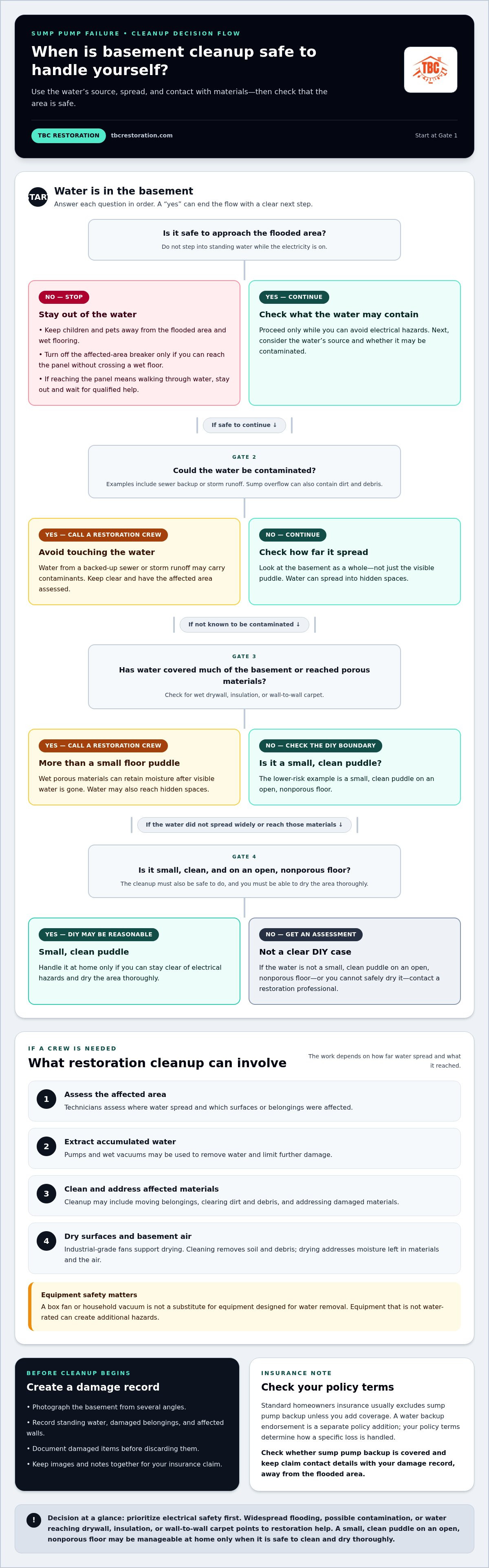
A small, clean sump pump puddle may be manageable at home if you can keep clear of electrical hazards and dry the area thoroughly. For sump pump failure cleanup in Marshall's Creek, call a restoration crew if water covers much of the basement, may be contaminated, or has reached drywall, insulation, or wall-to-wall carpet. Don’t step into standing water while the electricity is on.
It’s understandable to want to handle a pump failure quickly and avoid unnecessary work. The right choice depends on how much water entered, what it touched, and whether the area is safe to clean and dry.
This guide explains when DIY cleanup is reasonable, what restoration crews do, and which pump problems can lead to flooding. You’ll also learn practical safety steps and what affects cleanup costs, so you can decide what to do next.
Table of Contents
1. What happens when the restoration crew arrives after a sump pump failure?
Call a water damage restoration professional when flooding covers much of the basement, the water may be contaminated, or it has soaked drywall, insulation, or wall-to-wall carpet. Water can spread into hidden spaces, and porous materials can retain moisture after visible water is gone. A small, clean puddle on an open, nonporous floor is a different task. Consider how far the water spread, what it touched, and whether you can remove it safely.
Before cleanup, photograph the basement from several angles and record standing water, damaged belongings, and affected walls. Keep the images for your insurance claim. Stop the water source only if it’s safe. For example, if the pump has lost power, don’t walk through water to reach a plug or breaker. Turn off the affected-area breaker only if you can access the electrical panel without crossing a wet floor.
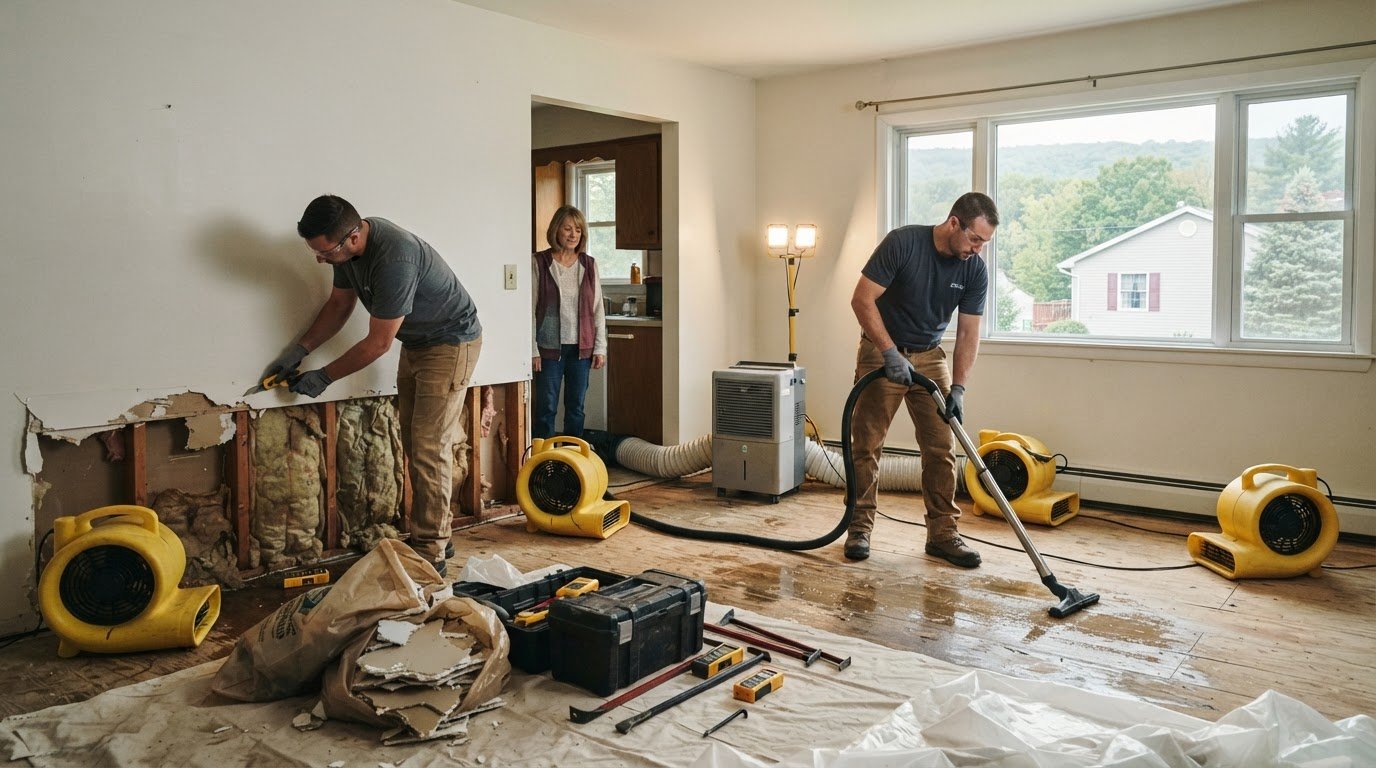
Restoration technicians assess the affected area and promptly extract accumulated water to limit further damage. They may use pumps and wet vacuums, followed by industrial-grade fans to support drying. Cleanup can also include moving belongings, clearing dirt and debris, and addressing damaged materials. A box fan or household vacuum isn’t a substitute for equipment designed for water removal. Using equipment that isn’t water-rated can create additional hazards.
After extraction, the crew focuses on the surfaces and belongings the water reached. Wet carpet and drywall, for example, need more than a wipe-down of a hard floor. Cleaning removes soil and debris; drying addresses moisture left in materials and the basement air. Keep photos and notes of affected rooms and belongings together, and document damaged items before discarding them. This creates a clearer record of the damage and cleanup.
Review your homeowners policy for water backup coverage. Standard homeowners insurance usually excludes sump pump backup unless you add coverage; a water backup endorsement is a separate policy addition. Your policy terms determine how a specific loss is handled. Check whether sump pump backup is covered and record your claim contact details. Keep policy information with your damage photos, away from the flooded area.
Backup equipment can reduce the risk that one outage disables every pump. A battery-operated backup pump can operate during a household power failure, while a generator can help keep the primary pump running. A water-powered backup pump is another option, and a flood alarm near the sump pit can alert you to rising water. These measures help with prevention, but once water enters the basement, prompt extraction and thorough drying are priorities.
2. Stuck float switches and debris
A sump pump can have power and still fail if its float switch can’t move. The float rises with water in the pit and activates the pump. If it catches on the basin wall, a pipe, or debris, the switch may not trigger. A tangled or jammed float can also hold the pump in the wrong position, allowing water to rise unnoticed. Check that the float has clearance around the pit and moves freely.
Debris can cause another common failure. Dirt, gravel, and small objects may collect in the sump pit or block the pump intake, while a clogged discharge pipe can stop pumped water from leaving the home. Clear loose debris from the pit only when it’s safe, and check the visible discharge route for blockages. A protective mesh or grate can help keep debris out of the discharge pipe while allowing water to flow.
You can manually test a sump pump’s float to see whether its movement activates the pump, but don’t reach into standing water or handle electrical equipment in a wet area. First, make sure the area is safe. Then observe whether the float moves freely and whether the pump responds. If the float moves freely but the pump doesn’t run, the cause may be a power problem, pump failure, or another electrical fault rather than debris.
When cleaning a sump pump, check the float’s position before returning the unit to service. Movement in the basin can shift or jam the float, so leave enough room for it to rise and fall without hitting the pump or pit wall. A fitted sump pit cover can help keep dirt and debris out of the basin. Don’t force a stuck switch. Identify what blocks its travel and remove the obstruction only when it’s safe.
If it’s safe, follow the discharge pipe beyond the foundation and inspect it for clogs, ice, or debris. A clog can trap water in the line, and a frozen discharge line can prevent drainage in winter. Check for visible kinks and keep the outlet directed away from the foundation. A clear route matters because water may flow back toward the home if it can’t discharge properly.
Test the sump pump quarterly to help spot a stuck float or clogged line before a storm. Watch the float rise, listen for the pump to start, and confirm that water exits the discharge line. If the float repeatedly jams, the pump cycles without clearing water, or the discharge remains blocked, don’t rely on the setup until the cause is addressed. A major storm can overwhelm a pump that already has a switch or drainage problem.
4. Immediate safety steps after basement flooding
Put personal safety ahead of cleanup. Don’t step into standing basement water while the electricity is on. Submerged outlets, cords, and appliances can create shock hazards. If you can reach the affected-area breaker without crossing a wet floor, switch it off. If reaching the electrical panel means walking through water, stay out and wait for qualified help. Keep children and pets away from the flooded area and wet flooring.
Next, consider where the water came from. Sump overflow may contain dirt and debris, while sewer backup or storm runoff can carry contaminants. Avoid touching water from a backed-up sewer or storm runoff, and keep wet clothing away from clean areas. The Red Cross urges homeowners to avoid floodwater that may conceal electrical or contamination hazards. Don’t use household vacuums or equipment that isn’t rated for water removal.
Once it’s safe to approach, document the damage before moving items. Photograph waterlines, wet flooring, damaged belongings, and affected walls. Record video from the basement entrance through the flooded area. List wet items, such as stored boxes or a rug, and note visible changes as water is removed. This record can help you describe the damage accurately.
Prompt extraction and drying matter because moisture doesn’t disappear when visible water is gone. Moisture trapped in a flooded basement can contribute to mold growth and permanent structural damage within 24 to 48 hours. The EPA recommends starting extraction and drying within 24 to 48 hours to limit mold growth. That timing is especially important when water reached carpet, drywall, or other materials that hold moisture.
After safe water removal, clean and decontaminate affected surfaces, taking particular care if black water contamination is possible. Dry the basement thoroughly, since lingering dampness can allow mold to continue spreading after extraction. Open doors and windows when conditions allow, improve airflow with a fan, and use a dehumidifier to remove remaining moisture. A dry-looking floor doesn’t mean nearby walls, carpet backing, or stored items are dry.
Drying time depends on how much water entered, which materials became wet, and the airflow and dehumidification available. Most basements take 3 to 5 days to dry after a sump flood when commercial dehumidifiers are used. A finished basement with wet carpet and drywall can require more involved drying than a bare concrete floor. If materials remain damp or develop a musty smell, continue treating the moisture as an active concern.
5. Sump pump failure cleanup costs
Cleanup costs depend on how far the water spread, how long it remained, and which materials absorbed moisture. A shallow puddle on bare concrete requires different work from flooding that reaches finished walls, carpet, or stored belongings. The cause matters, too: a brief pump interruption may leave limited damage, while a storm-related power outage can allow water to keep entering. The main cost factors are the scope of extraction, cleaning, material removal, and drying.
Identify every affected area, not just the visible pool around the sump pit. Check adjoining rooms, carpet edges, the base of drywall, and items stored on the floor. Water may wick into carpet backing or reach insulation behind a wall. Each wet material can affect the restoration plan: some items can be cleaned and dried, while others may need removal.
Time affects the work required. Moisture trapped in a flooded basement can contribute to mold growth and structural damage within 24 to 48 hours. The EPA recommends starting extraction and drying within 24 to 48 hours to limit mold growth. A basement may take 3 to 5 days to dry after a sump flood when commercial dehumidifiers are used. More widespread moisture can require additional drying and monitoring.
Water depth is only one part of an estimate. The crew also considers affected square footage, whether water reached porous materials, the amount of debris, and possible contamination. A contained puddle on concrete is a simpler job than standing water across a finished basement with wet drywall and carpet. Safe access and the amount of furniture or belongings that must be moved also shape the work.
Ask for a written scope that separates water extraction, cleaning, drying equipment, and material removal. It should identify affected rooms and explain which surfaces or belongings need attention. If water reached a wall, ask whether the scope addresses moisture behind it, not just visible staining. Keep photos and a room-by-room list with the scope so you can compare the documented damage with the proposed work.
Insurance terms can affect what portion of a loss is covered. Standard homeowners insurance usually excludes sump pump backup unless additional coverage is added, and a water backup endorsement is a separate policy addition. Review your policy’s specific coverage language and document the damage before cleanup changes the scene. For water damage restoration, the price depends on the case and is provided after a quote request. Key factors include water volume, affected materials, contamination, and drying needs.
5. When to contact a plumber or restoration company
Separate the pump problem from the water damage when deciding what help is needed. A plumber handles pump, discharge-line, check-valve, or installation problems. A restoration crew addresses water already inside the basement, including extraction, cleaning, and drying. If the pump failed and the basement flooded, the equipment issue and property damage may need separate attention.
Focus on the pump or plumbing system if the problem continues after the water is removed. Examples include a discharge line that stays blocked, a pump that won’t activate, or water flowing back into the sump pit. A stuck float switch, clogged pipe, tripped breaker, accidental unplugging, or failed backup battery can interrupt operation. Don’t reach into a wet pit or handle electrical components while standing in water.
Contact a restoration crew when water covers much of the basement, may be contaminated, or has reached drywall, insulation, or wall-to-wall carpet. These materials can hold moisture beyond the visible flood. A small, clean puddle on an open concrete floor is different from water spread across a finished basement. The amount of water, its source, and the affected materials help determine the cleanup needed.
Some events can exceed a single pump’s capacity. A major storm, natural disaster, or pipe leak may bring in more water than one sump pump can remove. In that situation, stopping or managing the source matters alongside cleanup. Don’t assume a running pump has solved the problem if water continues entering or remains in adjoining rooms.
Keep the work focused and documented. Photograph affected rooms and belongings before cleanup, note where water reached, and record whether the pump runs or the discharge line drains. Share those observations with the professional handling each part of the problem. The pump’s operating symptoms help explain the failure, while waterlines and damp materials show the scope of basement damage.
Act promptly if standing water remains or porous materials are wet. Moisture trapped in a basement can contribute to mold growth and structural damage within 24 to 48 hours. If the water may be contaminated or the electrical area is unsafe, stay out and wait for appropriate help.
For help addressing flooded rooms, wet materials, and the drying process, request basement flood cleanup help.
TBC Restoration: Water Damage Restoration
TBC Restoration provides Water Damage Restoration when a failed sump pump leaves water in your basement. Turn to the team when flooding affects flooring, walls, stored belongings, or other areas that need professional cleanup and drying. Prompt attention to moisture can also help limit the conditions that contribute to mold growth.
If water damage has left concerns about mold, TBC Restoration also offers Mold Remediation and Testing. Emergency Restoration Services are available 24/7 for property damage emergencies. The next step is simple: share what happened and which areas were affected so the restoration process can address the damage.
Contact TBC Restoration to discuss your sump pump flooding, or visit tbcrestoration.com.
Take the Next Step Toward a Dry, Usable Basement
Once the immediate disruption settles, focus your next decision on restoring the basement so you can use it with confidence. Consider not only what is visibly wet, but also how the space needs to function afterward. A basement used for storage has different priorities from one used as a family room or workspace.
For sump pump failure cleanup in Marshall's Creek, focus on assessing the damaged space and developing a practical recovery plan. TBC Restoration can help restore your home after flooding. You don’t have to sort out the next step alone. Share what happened and which parts of the basement were affected.
Contact TBC Restoration for help, and take the next step toward making your basement usable again.
Frequently Asked Questions
Can I clean up sump pump flooding myself?
Yes, if the water is limited to a small, clean puddle on a hard floor and the area is safe. Keep children and pets away, and don’t use a household vacuum to remove water. DIY cleanup isn’t appropriate if the water may contain sewage or storm runoff, or if it reached carpet, drywall, or insulation. Those conditions call for a more thorough assessment and cleanup.
Does homeowners insurance cover a sump pump failure?
Standard homeowners insurance usually excludes sump pump backup unless additional coverage has been added. A water backup endorsement is a separate policy addition that may provide coverage for this type of loss. Read your policy’s coverage terms, limits, and exclusions. When reporting a claim, describe how the water entered, when you noticed it, and which rooms or belongings were affected.
How fast can mold grow after a sump pump failure?
Mold growth can become a concern when moisture remains in a flooded basement. The EPA recommends starting water extraction and drying within 24 to 48 hours to limit mold growth. Pay particular attention to damp carpet backing, stored cardboard, and the lower edges of drywall, where moisture can persist after the floor looks dry. Keep the area drying and watch for lingering dampness or musty odors.
What happens when the restoration crew arrives after a sump pump failure?
For sump pump failure cleanup in Marshall's Creek, a restoration crew assesses affected rooms, identifies wet materials, and plans extraction and drying. The same process applies in nearby Stroudsburg, East Stroudsburg, Bushkill, Crescent, Mount Pocono, Bangor, Tannersville, Snydersville, and Saylorsburg. Technicians may use pumps or wet vacuums to remove water, then clean dirt and debris and address materials that need further attention.
Why did my pump fail during the storm?
A power outage is one possible cause because a standard sump pump needs household electricity to run. Storm inflow may also exceed an undersized pump’s capacity. Other common causes include a stuck float switch, a clogged discharge pipe, an old or neglected pump, or a failed backup battery. Note whether the pump stopped, ran continuously, or had no power; those clues help identify the likely failure.
What should I do immediately after a sump pump fails and causes flooding?
Keep people and pets out of the basement, especially if standing water may be near outlets or appliances. Turn off the affected breaker only if you can reach the electrical panel without crossing a wet floor. Photograph the damage before moving items, then note where water reached and whether it came from the sump pit, sewer backup, or storm runoff. Don’t touch potentially contaminated water.
How do I safely remove water after a sump pump failure?
Begin water removal only if the source and electrical conditions are safe. Use a pump or wet vacuum designed for water cleanup, never a household vacuum or equipment not rated for water. Move dry belongings away from the affected area without walking through unsafe water. After extraction, dry damp surfaces and materials, since removing visible water alone doesn’t address moisture held in carpet or walls.
What are the health risks of basement floodwater and sewage contamination?
Floodwater from sewage backup or storm runoff may be contaminated, so avoid direct contact and keep children and pets away. The Red Cross urges homeowners to avoid floodwater that may conceal contamination or electrical hazards. Don’t track wet debris into clean areas or handle soaked belongings without considering their source. If water may be contaminated, leave cleanup to professionals equipped to address the affected materials safely.
Comments