

Refrigerator Leak Water Damage Cleanup in Mount Pocono

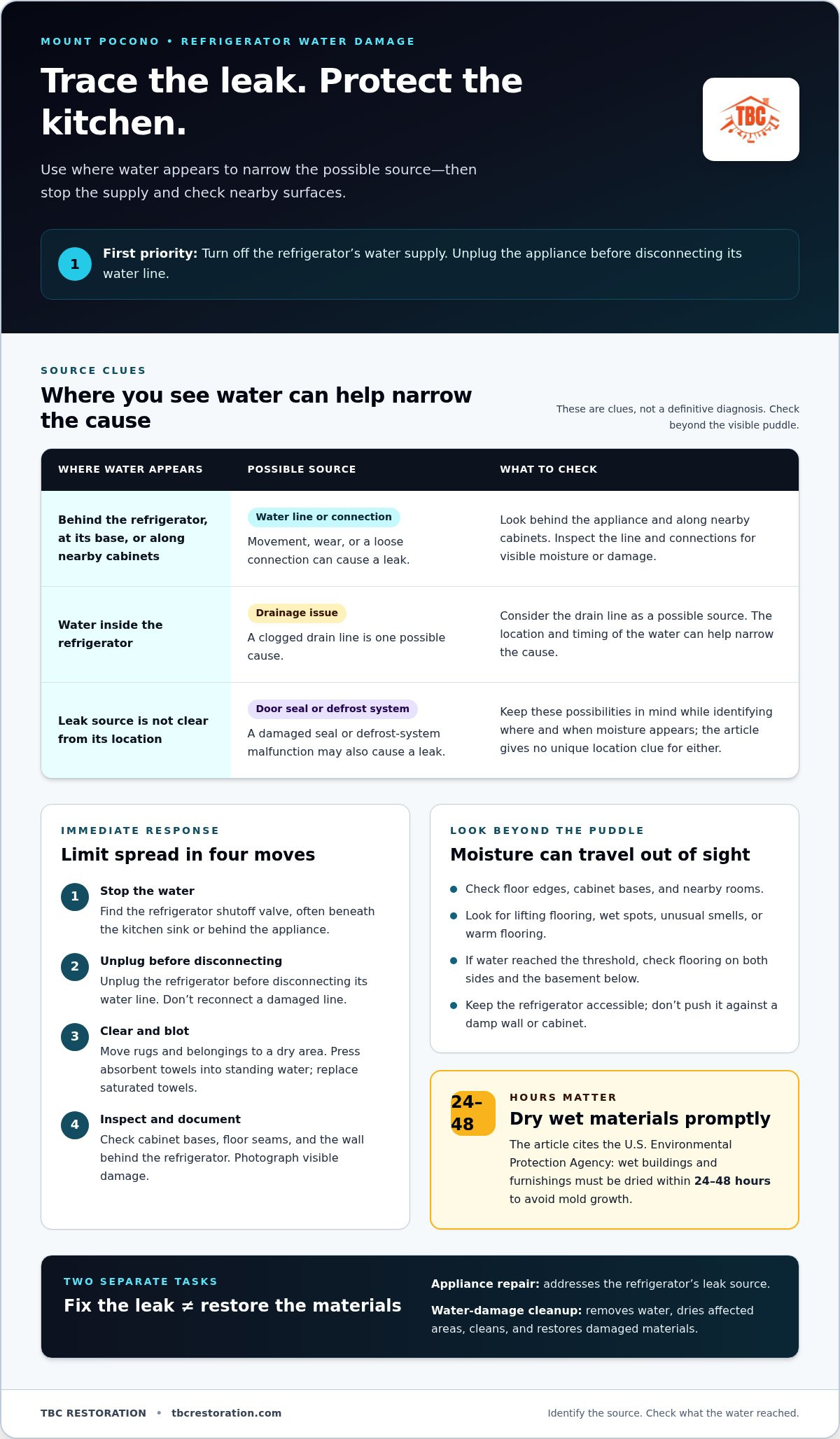
A refrigerator leak can soak flooring and spread beneath cabinets before you spot the source. For refrigerator leak water damage in Mount Pocono, stop the water first: turn off the refrigerator’s supply valve, then unplug the appliance before disconnecting its water line. The shutoff is often beneath the kitchen sink or behind the refrigerator.
It’s easy to focus on the puddle, but water can also affect materials out of sight. Acting promptly and identifying where the leak started helps you protect nearby surfaces and decide how to address the damage.
This guide covers common causes, including a damaged water line, clogged drain, worn door seal, or defrost system problem. You’ll learn what to do when a leak appears, how cleanup and drying work, what affects the time required, and how the extent of the damage can shape repair choices. Understanding the process helps you take practical next steps toward restoring your kitchen.
Table of Contents
Common causes of household water leaks
Leaks can start at an appliance connection, drain, pipe joint, or worn fixture. Finding the source quickly can limit how far moisture travels through a Mount Pocono home.
Refrigerator and Appliance Water Leaks
A refrigerator’s water line connects the household supply to an ice maker or dispenser. It usually runs behind the appliance, where movement, wear, or a loose connection can cause a leak. Washing machines and other appliances can also leak from supply hoses or connections. Look for water at the appliance base, behind the unit, and along nearby cabinets.
Diagnosing Refrigerator Water Leaks
Find the refrigerator’s water shutoff valve, often beneath the kitchen sink or behind the appliance. Turn off the supply and unplug the refrigerator before disconnecting its water line. Inspect the line and connections for visible moisture or damage. After shutting off the source, check whether water continues to appear, but don’t reconnect a damaged line.
Other household leaks can come from worn pipes and taps, weak pipe joints, clogged drains, corrosion in old pipes, or pipe damage from tree roots. A refrigerator leak may instead involve its supply line, clogged drain line, damaged door seal, or defrost system malfunction. The location and timing of the water can help narrow the cause. For example, moisture behind the refrigerator points toward the line or connections, while water inside the appliance may indicate a drainage issue.
Look beyond visible puddles. Unusual smells, lifting flooring, wet spots, high water bills, and warm or hot flooring can signal hidden moisture. A damp cabinet base or a floor edge that starts to rise may reveal water spreading beneath finished surfaces. Check nearby rooms and the basement below the kitchen, since water can travel through openings and along building materials.
Homeowners insurance coverage depends on the policy and the circumstances of the leak. Review your policy’s water-damage wording and document the source, affected materials, and visible damage for a claim.
Mold growth is a health concern when damp materials remain wet, so avoid disturbing visibly affected areas while assessing them. According to the U.S. Environmental Protection Agency, wet buildings and furnishings must be dried within 24-48 hours to avoid mold growth. Promptly identifying the leak and drying affected materials helps address the conditions mold needs to grow.
Preventing water damage to surrounding surfaces
Act quickly to limit how far refrigerator water spreads across floors, cabinets, and nearby belongings. Once you’ve stopped the leak, remove standing water and check adjacent surfaces for dampness.
Immediate Leak Response
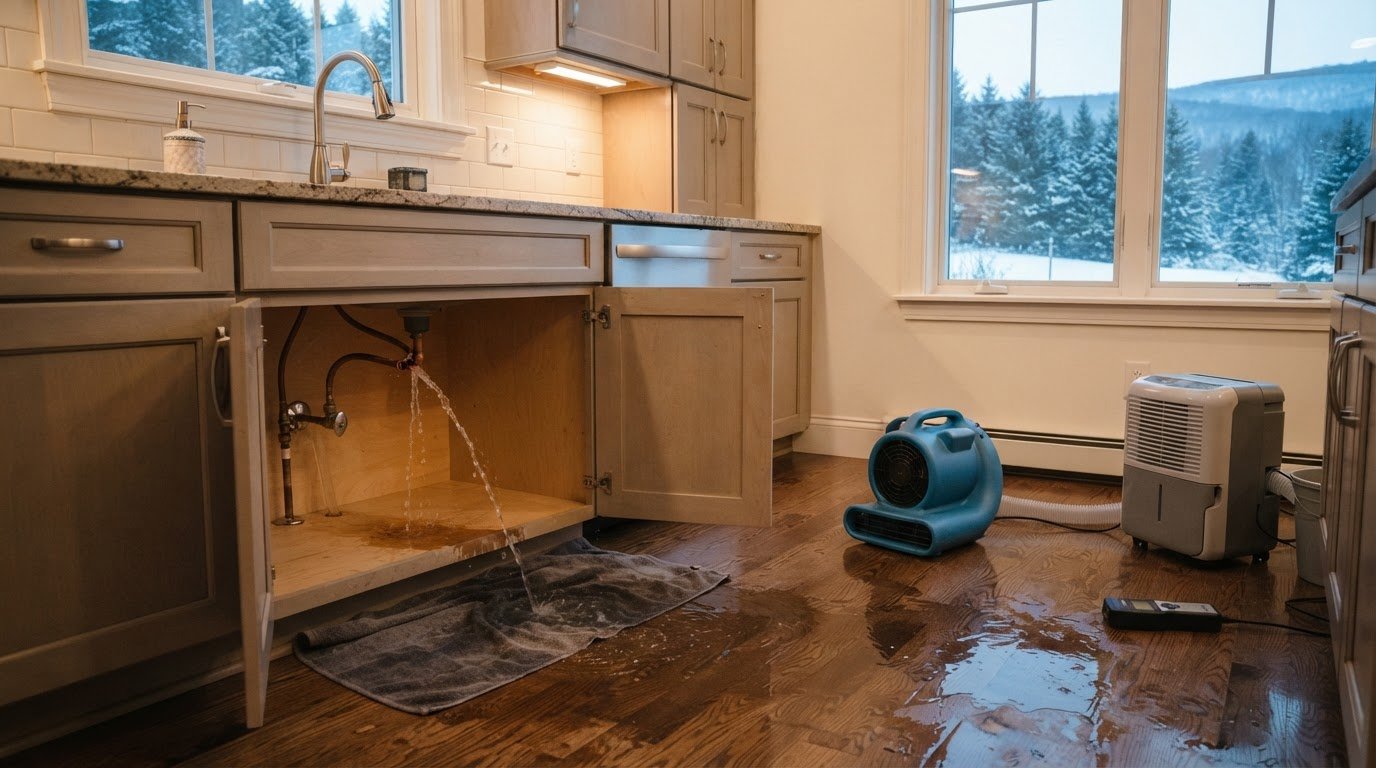
Turn off the refrigerator’s water supply and unplug it before disconnecting the line. Move rugs, stored items, and anything else resting in water to a dry area. Use absorbent towels to collect surface water, then inspect floor edges and cabinet bases. Photograph visible damage before moving or removing affected materials.
Work from the wettest area outward to avoid tracking water into dry rooms. If water reached the kitchen threshold, check the flooring on both sides. On wood floors, look for raised edges or changes between boards. On tile, inspect grout lines and the cabinet toe-kick for dampness. These checks can help show whether moisture has spread beyond the visible puddle.
Clear the area. Remove food, mats, and objects from wet flooring so you can reach the full affected surface.
Blot, don’t spread. Press towels into standing water and replace them as they become saturated.
Inspect nearby materials. Check cabinet bases, floor seams, and the wall behind the refrigerator for visible moisture.
Keep a record. Photograph the leak area and affected belongings before cleanup changes their appearance.
Don’t push the refrigerator back against a damp wall or cabinet. Keep the area accessible so you can see whether moisture remains around the appliance opening. If water reached flooring beneath fixed cabinets, wiping the surface alone may not address moisture trapped at the edges.
Preventing Future Refrigerator Leaks
Inspect appliance hoses, water-heater connections, and supply lines regularly for visible wear. Check the refrigerator’s water line and fittings for kinks, cracks, or moisture, especially after moving the appliance. Keep the shutoff valve accessible, and learn where your home’s main water shutoff is so you can stop a leak quickly.
After replacing a refrigerator water line, turn on the water and check each connection for leaks. Inspect the door seals, clean the condenser coils, and monitor the refrigerator’s temperature settings to help prevent appliance problems. Don’t pull the refrigerator by its water line. Move it carefully, then check behind it for pinching or strain.
Use a simple routine: inspect visible hoses during household maintenance, check the floor behind the refrigerator after moving it, and respond to small wet spots promptly. These steps can catch a loose connection before water reaches flooring or cabinet materials. For water that has spread into building materials, water-damage cleanup support can help address affected areas.
Repair duration and repair-versus-replacement decisions
Refrigerator repair and water-damage cleanup are separate tasks. Appliance repair addresses the leak source; cleanup removes water, dries affected materials, and supports property recovery. Each has its own timeline, so treat them as connected but distinct decisions.
For the refrigerator, start with the cause. A loose water-line connection requires a different repair than a clogged drain or failing defrost system. An isolated problem in a relatively modern refrigerator may favor repair. If several components fail, replacement may make more sense, especially when repair costs exceed the appliance’s value.
Before deciding, note the symptoms and when they occur. A puddle behind the refrigerator may point to its supply line or connection, while water collecting inside suggests a different diagnostic path. Record whether the refrigerator still cools consistently and whether the leak returns after you shut off the water supply. These details can help distinguish one fault from multiple problems.
Consider repair when the fault is isolated and the refrigerator is relatively modern.
Weigh replacement when several components are failing or repair costs exceed the appliance’s value.
Keep cleanup separate from the appliance decision, since wet flooring or cabinetry needs attention regardless.
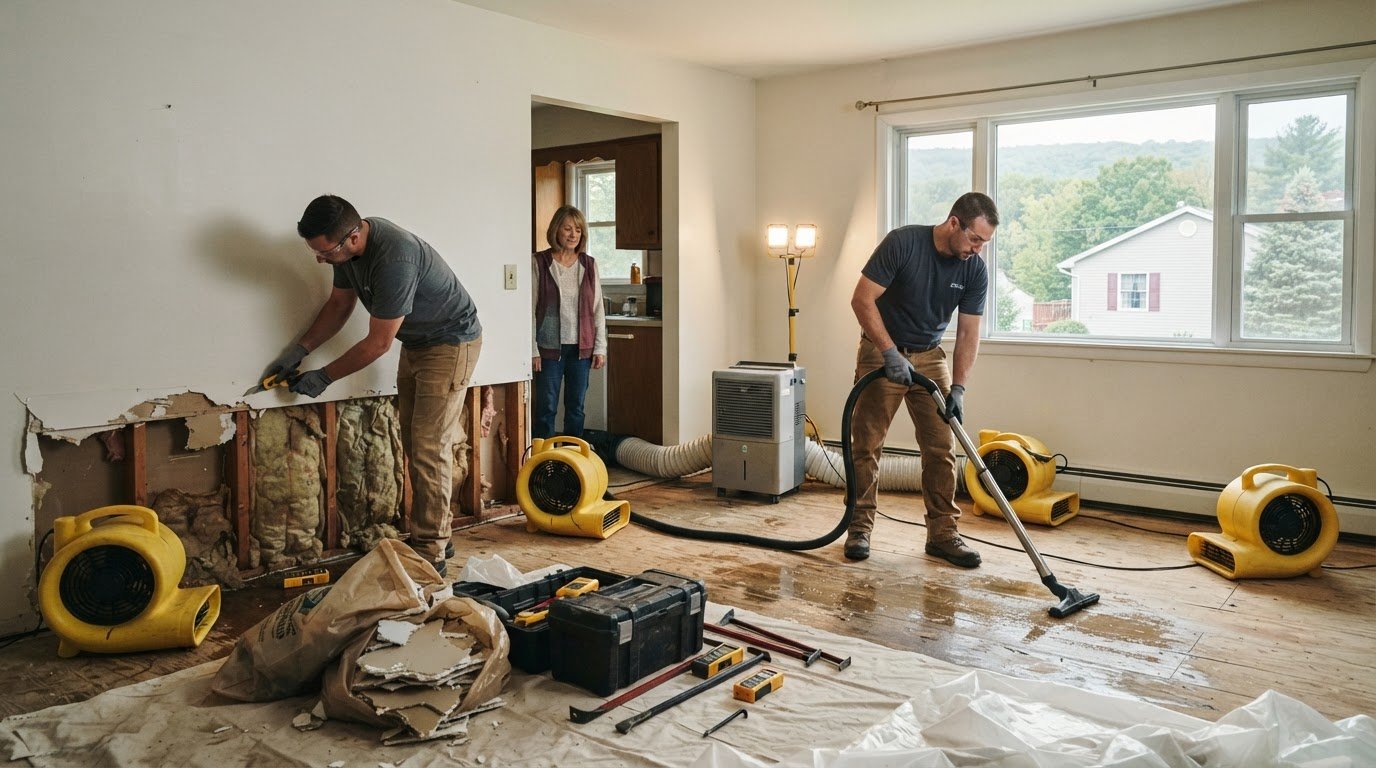
Cleanup time depends on how far water traveled and which materials became wet. Water confined to an exposed, hard surface presents a different task from moisture reaching flooring edges, cabinet bases, or materials beneath the visible puddle. Drying and restoration may continue after the refrigerator is repaired. Fixing the appliance alone does not dry surrounding building materials.
Follow a practical sequence: stop the leak and identify its source, note the affected surfaces, then remove standing water. Next, determine whether the refrigerator has one repairable fault or several failing components. Finally, address wet building materials according to their condition and the extent of the moisture. This way, the repair decision doesn’t delay cleanup.
In Mount Pocono, a leak that reaches hidden surfaces needs more than a wiped floor. Look for moisture at seams, cabinet edges, and nearby walls, even after the appliance stops leaking. The visible puddle shows where water collected, not necessarily the full extent of the damage. These conditions, along with the appliance’s age and repair needs, guide the next steps.
There’s no single timeline for every refrigerator leak. Diagnosis, the number of appliance faults, and how far water spread all affect the work involved. Separate these factors to make a clearer plan: resolve the leak source, decide whether repair or replacement suits the appliance, and address affected materials.
Clogged drain lines and defrost system malfunctions
A refrigerator can leak even when its water-supply line looks intact. A clogged drain or a problem with the defrost system can also leave water inside or beneath the appliance. Where moisture appears and whether it returns can offer useful clues.
During normal operation, defrosting produces water that should flow through a drain and away from the refrigerator interior. If the drain becomes clogged, water may collect inside, overflow, or appear near the appliance base. A puddle that returns after cleanup deserves attention, especially if the supply line and connections appear dry.
A defrost system malfunction can disrupt how the appliance handles frost and meltwater. Look for water inside the refrigerator, recurring wetness beneath the unit, or ice buildup alongside signs of leaking. These clues can help distinguish an internal drainage issue from water escaping a supply connection. They don’t identify the exact fault on their own, but they help describe the problem clearly.
Start with a careful visual check. Note where water first appears, whether it is inside or outside the refrigerator, and whether the pattern changes after the appliance runs. Inspect accessible areas for visible moisture, but don’t force tools into a drain opening or remove internal panels. A blocked passage and a malfunctioning component require different repairs.
Water inside the compartment: Check for recurring pooling and nearby frost or ice.
Water beneath the refrigerator: Note whether the supply line and visible connections look wet.
Repeated puddles: Record where they form and whether they return after cleanup.
Keep these observations separate from property cleanup. A technician addresses the refrigerator’s drain or defrost fault; drying addresses water that has reached flooring, cabinets, or other building materials. Correcting a clogged drain, for example, won’t remove moisture trapped along a cabinet base. Both issues need attention, since the appliance can leak again if its cause remains unresolved.
Don’t assume every puddle means the drain is clogged. A damaged water line, loose connection, or door-seal issue can also cause moisture around a refrigerator. Compare the wet area with visible appliance components, and note whether water appears inside, behind, or beneath the unit. Its location helps narrow the likely source without mistaking a symptom for a diagnosis.
If the leak continues or a visual inspection doesn’t reveal the cause, avoid dismantling the appliance. Keep the area accessible and note where water collects. A clear description, such as “water pools inside, then appears under the front edge,” gives repair personnel a useful starting point while you monitor affected surfaces.
Damaged door seals and gaskets
A refrigerator door gasket forms a flexible barrier around the door. If it’s torn, dirty, or no longer lies flat, the door may not seal properly. Warm, humid air can enter, contributing to condensation or frost that later melts into water. A compromised gasket is one possible cause of moisture near the refrigerator.
Inspect the full seal, including the corners and the area beside the hinges. Look for splits, flattened sections, loose edges, or food residue that prevents the gasket from meeting the frame. A gap at the lower corner, for example, may let air in even when the rest of the seal looks intact. Check that stored containers aren’t keeping the door from closing completely.
Water near the appliance doesn’t automatically mean the gasket is damaged. Compare where moisture appears with the door edges, refrigerator interior, and area beneath the unit. A wet spot directly beside the door may warrant a closer seal inspection; water behind the refrigerator may point to its supply line or connections. Note whether moisture returns after the door closes fully.
Check the whole perimeter. Inspect the gasket’s top, sides, bottom, and corners for visible damage.
Clear the door path. Move containers or shelves that stop the door from closing flush.
Look for residue. Food debris along the gasket can interfere with contact against the frame.
Track the moisture. Record whether water appears inside, beside, or behind the appliance.
Clean and dry the gasket gently, then check that it lies evenly against the refrigerator frame. Don’t pull hard on loose material or use sharp tools that could damage the seal further. If a tear or persistent gap remains, appliance repair should address the gasket rather than treating recurring water as a cleanup-only problem.
Regular checks can help catch seal wear before moisture reaches nearby surfaces. Inspect the door gasket along with appliance hoses, supply lines, and connections. Clean the condenser coils and monitor the refrigerator’s temperature settings as part of routine appliance care. These steps don’t replace attention to an active leak, but they can help you spot developing issues.
If water from a refrigerator leak has spread into flooring or cabinetry, drying and property recovery address a different problem than replacing a gasket. Arrange water damage restoration for affected building materials while the appliance issue is handled separately.
TBC Restoration: Water Damage Restoration
TBC Restoration helps Mount Pocono property owners recover when a refrigerator leak affects floors, cabinets, or other building materials. Water Damage Restoration addresses water intrusion through water removal, drying, cleaning, and property recovery. It’s a practical next step when moisture has spread beyond the appliance or remains in surrounding materials after the leak is stopped.
If damp areas persist or mold is a concern, Mold Remediation and Testing can address that part of the recovery. TBC Restoration also provides Emergency Restoration Services for urgent property damage. Restoration focuses on affected materials and cleanup, while the refrigerator’s leak source must be handled separately.
Contact TBC Restoration to discuss water damage in your home.
Take the Next Step Toward a Dry, Restored Home
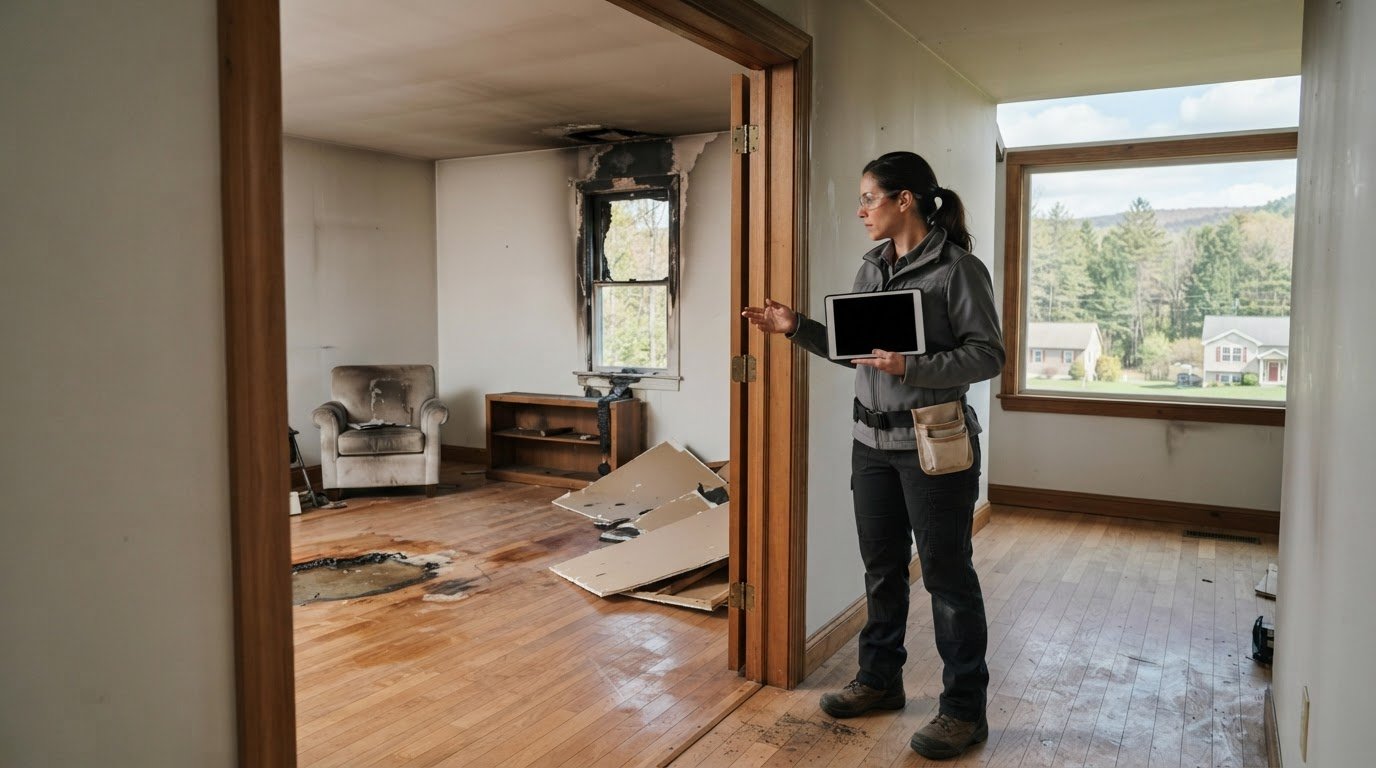
If a refrigerator leak has caused water damage in Mount Pocono, start by clarifying the situation. Note which rooms or surfaces were affected, whether moisture remains, and what you’ve already done to stop the leak. These details help organize the recovery process and explain what your home needs.
Water Damage Restoration can address damage to building materials beyond the appliance itself. If you’re concerned about lingering dampness or mold, ask about Mold Remediation and Testing as part of your recovery plan. The aim is to move from an active disruption toward a clean, usable space, focusing on the areas that need attention.
You don’t have to sort through the next steps alone. Contact TBC Restoration for help and discuss the water damage affecting your home. A clear plan can help you move forward with confidence and get closer to restoring comfort in your space.
Frequently Asked Questions
Who handles refrigerator water damage cleanup and restoration in Mount Pocono, PA?
TBC Restoration handles refrigerator leak water damage in Mount Pocono, PA, through Water Damage Restoration. Its local service area also includes Stroudsburg, East Stroudsburg, Marshall’s Creek, Bushkill, Crescent, Bangor, Tannersville, Snydersville, and Saylorsburg. When describing the damage, share which rooms and materials were affected, whether water reached another floor, and what remains visibly wet. These details help clarify the restoration work needed.
How can I tell whether a refrigerator leak has damaged flooring, cabinets, or walls?
Changes in nearby materials can reveal damage beyond the puddle. Look for raised laminate seams, swollen or softened cabinet toe-kicks, and paint bubbling near the floor. A musty odor inside a cabinet can also point to trapped dampness. Compare the affected area with an untouched section of the same material, and note whether the changes extend beyond the refrigerator’s footprint.
How long does water damage restoration from a refrigerator leak take?
Restoration time depends on how far the water traveled, which materials became wet, and how much drying and repair they need. A leak limited to an exposed surface differs from water beneath cabinets or behind a wall. Water removal and drying come before decisions about damaged finishes. Flooring that remains sound, for example, may need different work than material that has swollen or separated.
Which local Mount Pocono water damage companies offer 24/7 emergency service?
TBC Restoration offers 24/7 Emergency Restoration Services for urgent property damage. For refrigerator leak water damage around Mount Pocono, explain whether water is still spreading and identify the rooms involved. This helps communicate the urgency and affected areas. TBC Restoration focuses on restoration and cleaning; stopping a refrigerator’s plumbing leak itself is separate from restoring water-damaged property.
How do restoration companies detect hidden moisture after a refrigerator leak?
Restoration teams assess visible damage and inspect connected areas, including flooring edges, cabinet bases, and nearby walls. Non-invasive leak-detection methods can help locate moisture without unnecessary damage to floors, walls, or yards. If water appeared beside a refrigerator, for example, the inspection can extend to the adjoining cabinet and floor boundary. Findings help clarify which materials need drying or further attention.
Does homeowners insurance cover water damage from a leaking refrigerator in Pennsylvania?
Coverage depends on your policy and the circumstances of the leak. Review your policy’s water-damage wording and document the leak source, affected materials, and visible damage.
Comments