

Is My House Safe After a Small Fire? A Practical Safety Checklist

What if the room where a small fire started looks fine, but smoke, soot, or damage has spread somewhere you can’t see? If you’re asking, “is my house safe after a small fire,” don’t rely on appearances alone. Wait for the fire department to clear the home before going back inside. A contained fire can still leave hazards in other rooms, inside walls, or around electrical systems.
It’s understandable to want to check your home and get life back to normal quickly. But entering too soon or touching damaged materials can put your family at risk and make cleanup harder. First, learn which warning signs mean you should stay outside and seek help.
This checklist explains what to look for from a safe distance, what to avoid disturbing, and when professional fire and smoke restoration may help. You’ll also learn how soot, odors, and water from firefighting can affect areas beyond the visible damage. TBC Restoration provides fire and smoke damage restoration to help homeowners address affected structures and contents and plan practical next steps.
Table of Contents
Is My House Safe After a Small Fire? Start With Immediate Safety
A small fire doesn’t automatically mean every part of your home is safe to enter. Follow the fire department’s instructions, including any official restriction on access. If responders haven’t cleared the home or have told you to stay out, don’t go inside to inspect damage or collect belongings.
Post-fire safety means considering people, the structure, utilities, and air before normal use resumes. Some situations call for immediate emergency help. Others may not look urgent but still need careful attention before you settle back in, use affected rooms, or begin cleanup. A quick look from the doorway can’t confirm that the home is safe.
When should you stay outside after a small house fire?
Stay outside if you see flames or lingering smoke, notice unusual heat, or smell something burning. These signs may indicate that a hazard remains, even if the fire appeared contained. Keep family members and pets away from the building, and don’t enter if responders have restricted access or conditions feel unsafe.
If there’s immediate danger, call emergency services rather than investigating or cleaning. Don’t let the desire to retrieve belongings override a safety instruction. If there’s no obvious emergency sign but you’re unsure about re-entry, wait for clear guidance instead of treating the absence of visible flames as clearance.
What does a small fire leave behind?
Smoke can move beyond the room or item where the fire started, while soot may remain on surfaces and belongings after the flames are out. Depending on the event, concerns may extend to nearby rooms, electrical systems, or indoor air. The type and extent of damage vary, so not every small fire affects a home in the same way.
Fire-related damage can involve more than burned materials. Smoke, soot, and water used to put out the fire may all affect a property, as the overview of fire damage describes. Visible marks alone don’t tell the whole story. Avoid touching residue or switching on equipment that appears damaged; wait for appropriate guidance.
Separate urgent danger from damage that needs a closer look:
Stay out: There are active flames, lingering smoke, unusual heat, a burning smell, visible structural damage, or an official access restriction.
Seek assessment before normal use: You notice soot, smoke odor, or affected belongings, but there’s no immediate emergency and responders haven’t restricted access.
The second situation isn’t proof of safety. It’s a reason to proceed carefully and consider professional fire and smoke restoration if damage or odor persists. TBC Restoration provides fire and smoke damage restoration, including structural cleaning and odor neutralization. Keep safety decisions first and leave cleanup until it’s appropriate to begin.
Hidden Fire, Smoke, and Soot Hazards That a Quick Look Can Miss
A room can look mostly untouched and still show signs of smoke or soot. Air can carry smoke through connected rooms and building pathways, while soot may settle on surfaces or belongings away from the fire’s starting point. The direction and extent of spread depend on the property and the fire, so don’t assume a predictable room-by-room pattern.
Visible flames show where fire burned; smoke and soot can affect other areas that need assessment. If you’re asking, “is my house safe after a small fire,” remember that the smell, or the lack of one, can’t confirm whether a home is safe or fully cleaned. Odors may linger, fade, or be more noticeable in some areas. Treat odor as a clue to document, not a clearance test.
Can smoke and soot reach rooms the fire never touched?
They can. Smoke may move through open doorways, hallways, and other connected spaces, and residue may be easier to spot on nearby surfaces or belongings. From a safe position, note where you see deposits or notice an odor. Don’t wipe, brush, or vacuum residue to check how far it goes; disturbing it can spread material and obscure what needs attention.
Compare what you can observe in different rooms rather than trying to infer a precise route. You might notice an odor in a hallway or residue on a surface outside the room where the fire began. These observations help describe the impact, but they can’t establish its full extent. Restoration can address affected structures and contents beyond what’s obvious at a glance.
Why can electrical and structural concerns matter after a small fire?
Heat and flames can affect materials or systems near the fire, while smoke and soot may leave residue beyond it. Avoid areas with visible damage, unusual heat, or exposed wiring. Don’t switch on equipment or open walls, ceilings, or other concealed spaces to investigate. If damage could involve wiring, structural materials, walls, or ceilings, arrange a professional assessment before treating those areas as ready for normal use.
Record what you can observe without disturbing the scene. Note which areas appear affected, whether residue is visible, and where odor is noticeable. These notes, a brief visual check, or a photo can’t prove that hidden spaces or electrical systems are safe. Use them to describe your concerns during a closer evaluation.
Persistent odor, visible soot, or signs of damage beyond the burned item are sensible reasons to consider professional fire and smoke restoration. TBC Restoration provides restoration that includes structural cleaning, soot removal, and odor neutralization. If these signs are present, fire and smoke damage restoration can help address affected areas without relying on guesswork.
Can I Stay in My Home After a Small Fire? Assess the Warning Signs
Whether to remain in your home depends on what responders have said and what you can safely observe. This comparison can help you distinguish urgent warning signs from concerns that need attention before you return to normal use. It isn’t a clearance tool: a checklist, photo, or quick visual check can’t certify that a home is safe or replace the fire department’s instructions.
Leave or stay out
Active flames or smoke are present.
You notice unusual heat or visible damage to the building.
Responders have restricted access or told you not to enter.
Conditions feel unsafe, even if you can’t identify the cause.
Seek assessment before normal use
Soot or smoke odor remains after the fire is out.
Belongings or surfaces appear affected beyond the obvious burn area.
You have concerns about damage to walls, ceilings, wiring, or other building materials.
You’re unsure whether an affected room is ready to use.
Which warning signs mean you should leave or stay out?
Active smoke, flame, unusual heat, visible damage, or responder instructions are reasons to stay out. Keep children and pets away from areas where damage may be present. If you face an immediate threat, move away and contact emergency services. Restoration can address property damage, but it doesn’t replace emergency response or official access guidance.
Take the cautious path if conditions change. If smoke appears, heat becomes noticeable, or damage looks more serious than it first seemed, don’t go closer to investigate. Keep others at a safe distance and follow responder instructions. If you’re already inside and notice a danger, leave rather than checking rooms, equipment, or building materials yourself.
What if there are no obvious warning signs?
No visible smoke or damage doesn’t prove that concealed areas or indoor air are unaffected. If you can observe the property safely, note where you see residue, odor, or damage without touching or cleaning it. Photos from a safe position can document visible concerns, but they can’t confirm that hidden areas are clear.
If signs of smoke, soot, odor, or building damage remain, arrange a professional assessment before resuming normal use of affected areas. For anyone asking, “is my house safe after a small fire,” the answer may depend on what an assessment finds, not just what’s visible. A fire and smoke restoration professional can evaluate affected structures and contents and help determine appropriate next steps. Keep urgent safety decisions separate from cleanup decisions, and don’t treat the absence of obvious warning signs as permission to ignore lingering concerns.
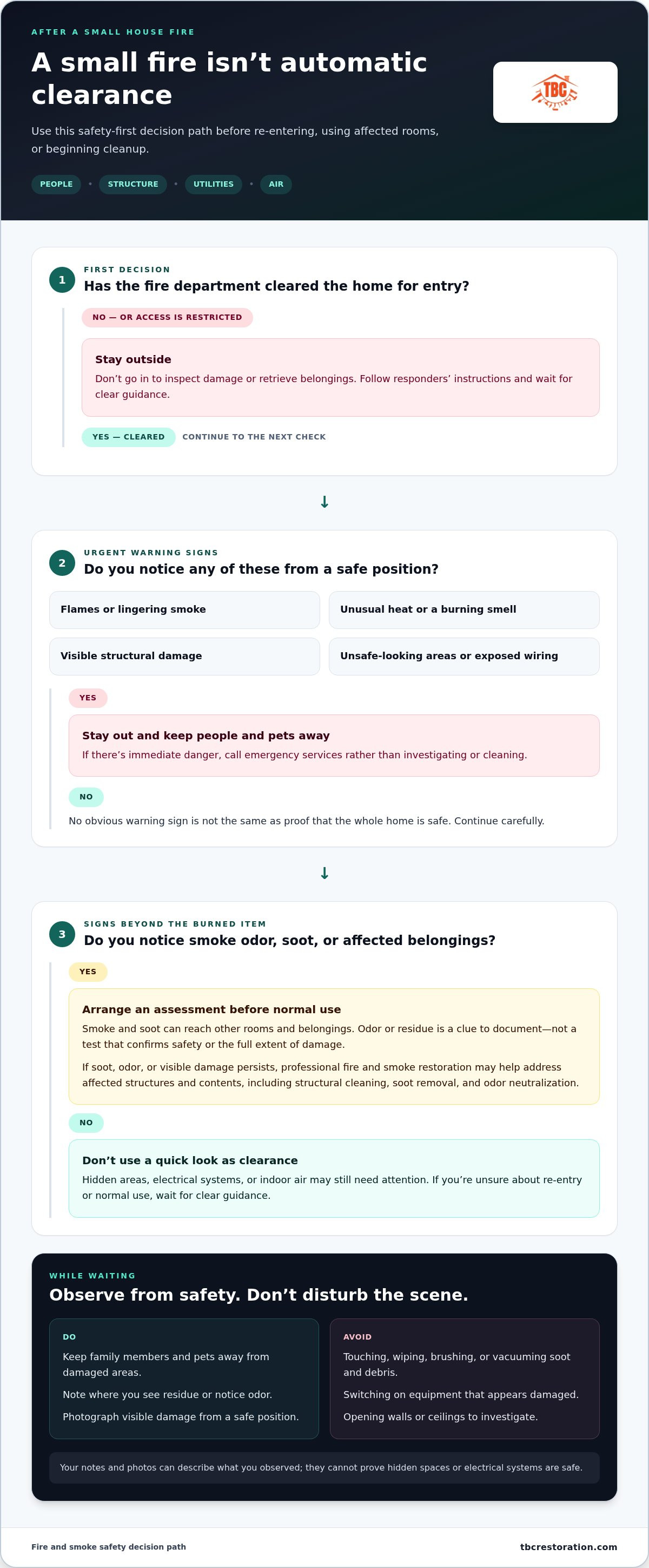
Small-Fire Home Safety Checklist: What to Do Before Cleanup
Once immediate danger has passed, it can be tempting to start cleaning or move damaged items. Pause first. Follow responder guidance, keep people clear of affected areas, and leave residue and debris undisturbed until it’s appropriate to begin cleanup. If you’re still wondering, “is my house safe after a small fire,” don’t use this checklist as clearance. It’s a practical way to protect people and preserve useful information while you decide what to do next.
The safest sequence is simple: follow responder guidance, avoid disturbance, document visible damage, then arrange an assessment.
Follow responder instructions. Respect any access restrictions, and don’t enter until responders have cleared access.
Keep people away from hazards. Keep children and pets clear of fire-damaged areas, soot, debris, and equipment that may be affected.
Don’t disturb damaged materials. Avoid touching soot or debris, and don’t start cleaning while the extent of the damage is unclear.
Record what you can safely see. From an area considered safe to access, photograph visible damage and affected rooms without approaching or handling anything.
Keep notes and images together. Save observations and photos in one place for later conversations with your insurer or restoration professionals.
Arrange an assessment. If visible damage, soot, or smoke odor remains, seek professional guidance before returning affected areas to normal use.
How can you document fire damage without disturbing it?
Take photos only from areas considered safe to access. Capture the overall room and visible damage without stepping closer to residue, damaged materials, or equipment. Add brief notes about which rooms appear affected and what you observed. Keep the records together for conversations with your insurer or a restoration professional. Photos document visible conditions; they don’t establish that hidden areas are safe.
What should you avoid doing before assessment?
Don’t dry-wipe or scrub soot, apply household chemicals, or remove debris. These actions can disturb residue or affect damaged materials before their condition has been assessed. Keep clear of damaged utilities and equipment, and don’t operate anything that may have been affected by fire, heat, or smoke. If you’re uncertain whether an area or item is safe to approach, leave it alone and seek guidance.
If damage or residue makes do-it-yourself cleanup inappropriate, TBC Restoration provides fire and smoke damage restoration, including structural cleaning and soot removal. Request fire and smoke damage restoration to discuss appropriate next steps.
When Professional Fire and Smoke Restoration Can Help in the Poconos
Lingering smoke odor, visible soot, or damage beyond the item that burned can make professional restoration a sensible next step. These signs don’t automatically mean the entire home is unsafe, but they can point to affected surfaces, belongings, or building materials that need more than a quick household cleanup. If you’re still asking, “is my house safe after a small fire,” professional fire and smoke restoration can help address visible impacts and determine appropriate cleanup.
Keep emergency decisions separate from restoration planning. Follow fire department instructions and any access restrictions first. Restoration work doesn’t replace emergency response or certify that a home is safe to occupy. If you see active flames or smoke, or another immediate threat, contact emergency services rather than focusing on cleanup.
What can a fire and smoke restoration assessment address?
Fire and smoke restoration can address visible fire, smoke, and soot impacts across affected structures and contents, including areas beyond the obvious burn mark. The cleaning approach depends on what’s affected and the property’s needs. Structural cleaning, soot removal, and odor neutralization may be part of the work, but no single observation or assessment should be treated as proof that every hazard has been resolved.
How can Poconos homeowners take the next step?
When arranging restoration support, describe where the fire started and what you can safely observe, such as visible soot, persistent odor, or damage to a nearby surface. Share any notes or photographs taken from a safe position. Don’t enter a restricted area to gather details. Responders’ directions take priority over restoration planning or returning to the property.
TBC Restoration provides fire and smoke damage restoration for homes in Stroudsburg, East Stroudsburg, Marshall’s Creek, Bushkill, Crescent, Mount Pocono, Bangor, Tannersville, Snydersville, and Saylorsburg. The work can include structural cleaning, soot removal, and odor neutralization, shaped around the affected areas and contents. If cleanup isn’t appropriate to handle yourself, local restoration support can help you plan the next steps.
For practical help with fire and smoke damage, explore TBC Restoration’s fire and smoke damage services. Keep following responder instructions while restoration needs are addressed.
Take the Next Step With Confidence
After a fire, it’s natural to want a clear yes-or-no answer. But “is my house safe after a small fire” can’t be settled by appearance alone. Pause, follow official guidance, and get help understanding what the damage may require before making decisions about affected spaces.
You don’t have to manage restoration on your own. TBC Restoration provides fire and smoke damage restoration for Poconos homeowners, including work to restore affected areas and contents. Restoration can inform cleanup decisions, but it isn’t a substitute for emergency responders or an occupancy clearance.
Explore TBC Restoration’s fire and smoke damage services and take a practical next step toward recovery. Keep following responder guidance as you plan cleanup and restoration.
Frequently Asked Questions
Is my house safe after a small kitchen fire if the flames are out?
Not necessarily. Extinguished flames don’t confirm that heat, smoke, or damage has cleared. A pan fire, for example, may leave residue on nearby cabinets or affect a range hood. Follow the fire department’s re-entry instructions, and don’t use appliances that appear damaged or behave unusually. If you’re asking “is my house safe after a small fire,” wait for appropriate guidance rather than relying on the size of the fire or the fact that it’s out.
Can smoke damage affect rooms that were not touched by the fire?
Yes. Smoke may travel into other parts of the home, including hallways or rooms connected by open doors and shared pathways. For example, you might notice an odor in a bedroom even though the fire started in the kitchen. The amount and location of impact vary by home and fire. Note what you observe and include it when discussing the damage with a restoration professional.
How do I know if smoke or soot in my home needs professional cleanup?
Consider professional cleanup if you see residue on walls, ceilings, furnishings, or belongings, or if smoke odor persists after the incident. Soot on a lampshade or a lingering smell in a room can indicate that affected areas need closer attention. Don’t use odor alone to judge safety or cleanliness. A fire and smoke restoration professional can assess visible impacts and help determine an appropriate cleaning approach for affected structures and contents.
What should I do before cleaning soot after a small fire?
Before cleaning, make sure responders have allowed access and keep others away from affected areas. Avoid wiping or scrubbing soot, applying household cleaners, or moving debris, since these actions may disturb residue or change the condition of affected materials. Photograph visible damage only from a safe location, and keep those images with notes about where you noticed soot. Arrange professional guidance if residue remains or you’re unsure how to proceed.
Can I sleep in my house after a small fire?
Only consider sleeping at home after following the fire department’s instructions and resolving concerns about access or conditions. If there’s lingering smoke, unusual heat, visible building damage, or uncertainty about affected rooms, don’t assume an overnight stay is safe. Ask responders for guidance if you’re unsure, and arrange restoration for remaining smoke, soot, or damage before using affected areas as usual. Prioritize a safe place to stay while you get clear direction.
Who should I call if my home still smells like smoke after a fire?
If there’s active smoke, fire, or another immediate threat, contact emergency services. For persistent odor after the emergency has passed, a fire and smoke restoration company can address affected areas through cleaning and odor neutralization. TBC Restoration serves Poconos communities including Stroudsburg, East Stroudsburg, Marshall’s Creek, Bushkill, Crescent, Mount Pocono, Bangor, Tannersville, Snydersville, and Saylorsburg. Describe where the odor remains and any visible concerns when requesting restoration support.
Does homeowners insurance cover cleanup after a small fire?
Coverage depends on your policy, the cause of the fire, applicable limits, and other terms. Contact your insurer to ask how your policy applies before assuming cleanup is covered or excluded. Keep photos, notes, and incident information together for that conversation, and save relevant communications. A restoration professional can document observed property impacts, but can’t determine your coverage or guarantee a claim outcome. Your insurer can explain the terms that apply to your policy.
Comments