

How to Clean Up and Sanitize a Toilet Overflow in Bushkill

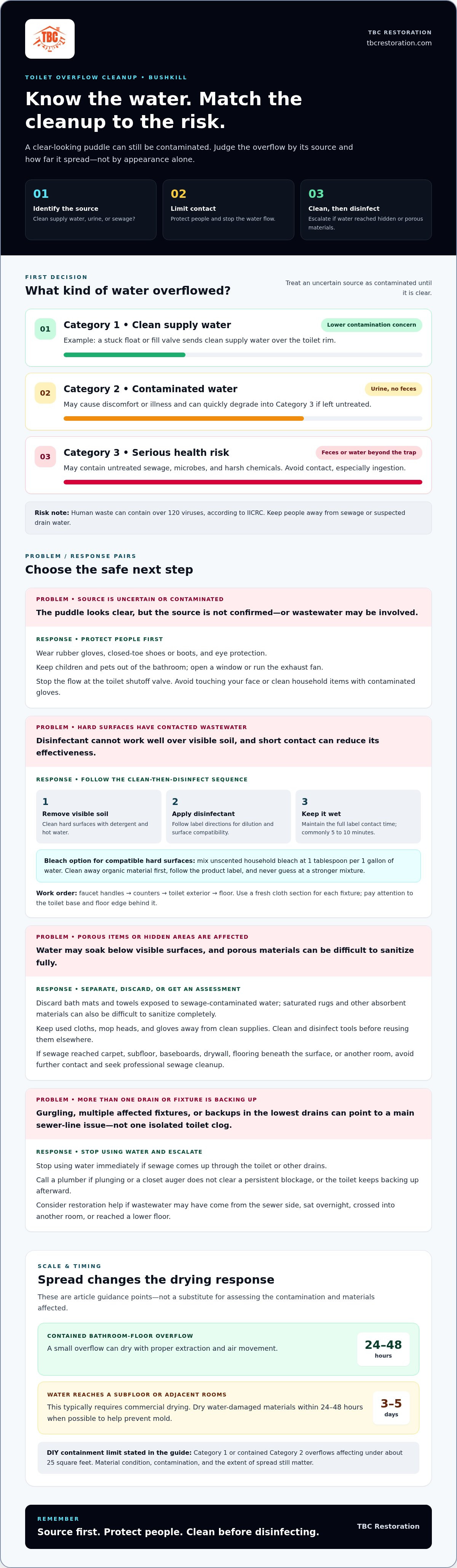
A toilet overflow isn’t automatically clean water. Effective toilet overflow cleanup in Bushkill starts by treating the water as contaminated until its source is clear: a stuck fill valve spilling clean supply water is Category 1, while overflow containing feces or water from beyond the toilet trap is Category 3 and can pose a serious health risk. Water with urine but no feces falls into Category 2.
It’s understandable to want to mop up quickly and get the bathroom back to normal. But the source of the overflow, how far the water traveled, and whether other drains are affected all matter when deciding what’s safe to clean yourself. This guide explains how to stop the flow, protect yourself, clean and disinfect affected surfaces, and recognize signs of a possible sewer-line backup. You’ll also learn when water that reaches flooring, walls, or nearby rooms calls for more than surface cleanup, so you can take a careful next step without guessing about the risks.
Table of Contents
Is toilet overflow water dangerous?
Judge the risk by the water’s source and spread, not its appearance. A clear-looking puddle can still be contaminated, and water damage may extend beyond the visible bathroom floor.
Identify the overflow source before cleanup. A stuck float or fill valve that sends clean supply water over the rim is Category 1 clean water. Toilet overflow with some urine but no feces is Category 2, which is contaminated and could cause discomfort or illness. Category 3 includes water from beyond the toilet trap or bowl water containing feces. Treat an uncertain source as contaminated rather than assuming it is clean.
Keep people away from sewage or suspected drain water. Sewage backup is an emergency because wastewater may contain microbes that cause serious illness. Category 3 water may contain untreated sewage, harsh chemicals, and microbes; avoid contact, especially ingestion. According to IICRC, human waste can contain over 120 viruses. Category 2 water may also contain bacteria and viruses, and it can quickly degrade into Category 3 if left untreated.
Call a plumber for a persistent toilet blockage. If plunging or using a closet auger doesn’t clear the clog, or the toilet keeps backing up afterward, the plumbing problem needs attention. Stop using water immediately if sewage comes up through the toilet or other drains. Multiple affected fixtures, gurgling, or backups in the lowest drains may indicate a main sewer-line issue rather than one isolated toilet clog.
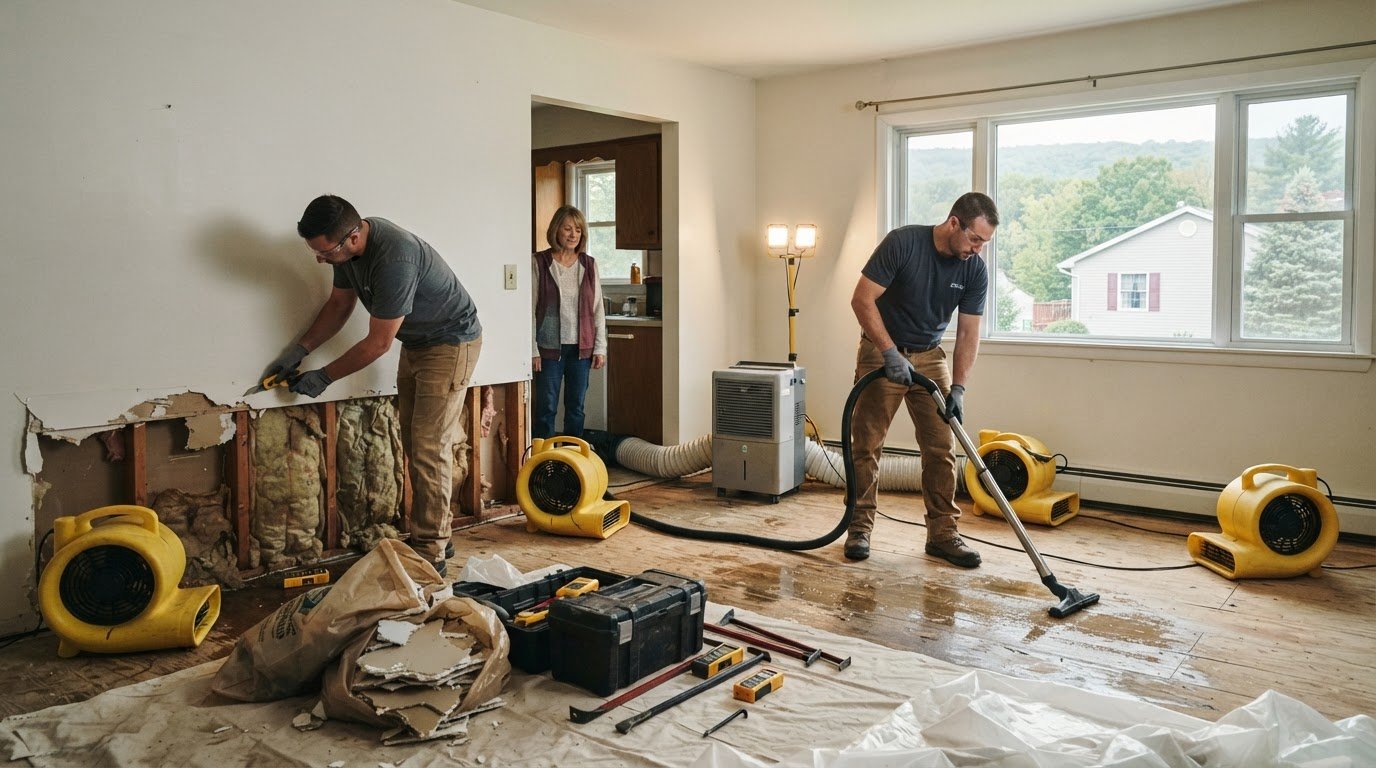
Bring in restoration help when contamination spreads. Call a water damage restoration professional if wastewater may have come from the sewer side, sat overnight, crossed into another room, or reached a lower floor. Porous materials such as carpet, subfloor, baseboards, and drywall can hold moisture below the visible surface. In homes and commercial buildings, the affected materials and extent of the spread determine the cleanup needed. Surface mopping alone won’t reveal what has soaked underneath.
Dry materials promptly and assess what can be restored. A small overflow contained to a bathroom floor can dry in 24 to 48 hours with proper extraction and air movement. Water reaching a subfloor or adjacent rooms typically requires 3 to 5 days of commercial drying. Dry water-damaged materials within 24-48 hours when possible to help prevent mold. Flooring replacement depends on the water amount, contamination level, and material condition; some floors can be dried and restored, while heavily damaged or contaminated flooring may need replacement.
Sanitizing affected bathroom surfaces and equipment
Clean hard surfaces first, then disinfect those that contacted wastewater. Wear protective equipment and follow the disinfectant label, including its required contact time.
Put on Protective EquipmentBefore touching affected surfaces, put on rubber gloves, closed-toe shoes or boots, and eye protection. These barriers reduce direct contact with wastewater while wiping and rinsing. Keep children and pets out of the bathroom, and open a window or run the exhaust fan for ventilation. Replace torn gloves before continuing, and avoid touching your face or clean household items with contaminated gloves.
Disinfect Affected AreasAfter removing visible soil, clean the bathroom floor and hard fixtures with detergent and hot water. Then apply a suitable disinfectant, following its label for dilution and surface compatibility. Keep the cleaned floor wet for the full contact time stated on the label, commonly 5 to 10 minutes. Wear gloves while wiping, and don’t shorten the contact time by drying the surface early.
Prepare a bleach solution carefully. For hard surfaces, mix unscented household bleach at 1 tablespoon per 1 gallon of water. Use the solution on compatible surfaces, such as tile, after cleaning away organic material. Apply it with a cloth or mop, and keep the area wet for the product’s stated contact time. Never guess at a stronger mixture or use bleach on a surface the product label excludes.
Work from cleaner areas toward contaminated spots. Wipe bathroom surfaces in a controlled order, such as faucet handles, counters, the toilet exterior, and finally the floor. Use a fresh section of cloth for each fixture, or change cloths between areas, to avoid spreading wastewater. Pay attention to seams around the toilet base and the floor edge behind the toilet, where residue may remain after a quick wipe.
Separate contaminated tools and porous items. Keep used cloths, mop heads, and gloves away from clean supplies. Discard bath mats and towels exposed to sewage-contaminated water because porous fabric cannot be fully disinfected. Saturated rugs and other soft, absorbent materials can also be difficult to sanitize completely. Don’t reuse a mop or cloth elsewhere in the home until it has been cleaned and disinfected.
Stop if wastewater reached hidden or difficult areas. Water can travel under flooring or behind bathroom fixtures, where surface disinfection won’t reach it. If sewage contaminated porous materials, or the affected area extends beyond surfaces you can safely clean, avoid further contact and seek professional sewage cleanup. A careful assessment can identify moisture and contamination that ordinary household cleaning may miss.
Cleaning and sanitizing contaminated areas
Work from water removal to cleaning, then disinfection. DIY containment is limited to Category 1 or contained Category 2 overflows affecting under about 25 square feet.
Contain and Extract Contaminated WaterStop the water supply first, then contain standing water with absorbent towels or a mop. Extract only if the overflow is Category 1 or contained Category 2, stays under about 25 square feet, and hasn’t reached hidden spaces. Don’t handle suspected sewage yourself. Wring towels into the toilet bowl only after confirming its drain is flowing and not backing up. Collected wastewater can be flushed only when the drain is flowing freely.Remove visible water promptly, since untreated Category 2 water can quickly degrade into Category 3. Keep wet towels and tools separate from clean household items. If water has crossed into another room or reached porous materials, stop DIY extraction and avoid spreading it through the home.
Remove Contaminated Porous MaterialsDiscard porous items exposed to sewage-contaminated water, including bath mats and towels. Their fibers can trap wastewater, bacteria, and other contaminants that ordinary washing may not fully remove. Saturated rugs, cardboard, and other soft, absorbent materials can also be difficult to sanitize completely after exposure to sewage or cloudy wastewater.Keep contaminated items separate from clean belongings as you remove them. Don’t shake rugs or fabrics, since this can spread debris onto nearby surfaces. If water has soaked into carpet, subfloor, or other building materials, surface cleaning won’t address the moisture underneath. Avoid pulling apart affected construction materials when sewage contamination is present.
Apply Disinfectant to Affected AreasClean hard surfaces with detergent and hot water before applying disinfectant. This first wash removes organic material that can interfere with disinfection. Clean the affected floor and nearby hard surfaces, such as tile, using a clean cloth or mop. Wear rubber gloves while wiping, and change or rinse the cleaning tool before moving to another surface.Choose a disinfectant labeled for the surface and follow its dilution instructions. Don’t combine cleaning products or apply a solution to materials excluded by the label. Clean from less contaminated areas toward the spot where wastewater pooled, so the same cloth doesn’t spread residue across the bathroom.
Allow Disinfectant Contact TimeKeep the disinfectant visibly wet for the full contact time on its label, commonly 5 to 10 minutes. Start timing after the surface is evenly covered, not while you’re still applying the product. If the floor dries before the stated time, apply more disinfectant according to the label.Don’t rinse or wipe the surface dry too early. After the contact time, follow the label’s directions for rinsing or air-drying. Keep people and pets away during application and contact time. If standing water returns, wastewater continues flowing, or contamination reaches porous materials, stop and seek professional cleanup.
Distinguishing a local clog from a sewer-line backup
After an overflow, stop the toilet’s water flow and stop using water if sewage is backing up from any drain. Remove dirty water promptly; drying water-damaged materials within 24-48 hours when possible helps prevent mold.
Identify the Source of the BackupCheck whether the problem is limited to one toilet or affects several fixtures. A single toilet that overflows while sinks and tubs drain normally may have a local clog. Gurgling drains, wastewater coming from multiple fixtures, or backups in the lowest drains can indicate a main sewer-line problem.Grease, hair, tree roots, and inappropriate flushed materials can block a main line. Don’t keep flushing or run sinks and showers to test the plumbing if wastewater is rising elsewhere. Water returning through multiple drains is a warning that the blockage may extend beyond the toilet.
Respond to a Sewage BackupStop using water immediately if sewage comes up through a toilet, sink, tub, or other drain. Keep people away from the affected area and avoid contact with standing wastewater. A sewage backup is an emergency because contaminated water can expose occupants to microbes and spread into flooring or nearby rooms.Contact a plumber when the toilet keeps backing up after plunging or augering, or when several fixtures show symptoms. A plumber addresses the blockage; restoration help is appropriate when contaminated water reaches porous building materials. Don’t treat a sewer-side backup as a routine toilet spill or keep flushing while waiting for the water to recede.
Consider recurring causes, not just the visible overflow. Grease, hair, tree roots, and inappropriate materials can contribute to main-line blockages. If backups recur, note which fixtures are affected and whether gurgling or low-drain backups occur. Those details can help distinguish an isolated toilet clog from a recurring sewer-line issue. Avoid flushing items that don’t belong in the toilet, since unsuitable materials can contribute to clogs.
Review the insurance distinction. Homeowners insurance may cover damage from sudden and accidental plumbing issues, but coverage varies by policy. Sewer-line backups into a toilet usually require a separate sewer backup endorsement. Record the affected rooms and damaged materials, and keep policy documents available when reporting the loss. Don’t assume a sewer backup and a sudden toilet malfunction have identical coverage.
Protect the property while the cause is addressed. Promptly mop up dirty toilet water once the flow stops, but don’t handle suspected sewage without appropriate protection. Water can travel beneath flooring or behind walls, so a dry-looking surface doesn’t rule out hidden moisture. Dry affected materials within 24-48 hours when possible, and arrange professional cleanup when contaminated water reaches porous materials.
Toilet overflow cleanup
For toilet overflow cleanup Bushkill homeowners should follow these steps in order: stop the water source, protect yourself, remove standing water, then assess surfaces and hidden moisture. If the water may be sewage, avoid DIY cleanup.
Stop additional water from entering the bowl. Lift the toilet tank lid and press down the rubber flapper to stop water flowing into the bowl. Lift the float to stop the tank from filling while someone turns the water supply valve behind the toilet clockwise until it stops. If the valve won’t turn, don’t force it; avoid flushing again.
Protect people and nearby electrical fixtures. Treat the water as contaminated until its source is clear. Wear gloves, closed-toe shoes or boots, and eye protection before entering the wet area. If an upper-floor toilet overflow soaked a ceiling below, shut off power to affected light fixtures at the breaker, not near wet surfaces. Inspect the ceiling below within an hour for new stains or sagging.
Decide whether cleanup is safe to handle yourself. DIY containment and extraction is limited to Category 1 water or contained Category 2 water affecting under about 25 square feet. Don’t attempt sewage cleanup without professional help. Call for cleanup if water came from the sewer side, sat overnight, crossed into another room, or reached porous building materials such as carpet or drywall.
Remove surface water without spreading it. Mop or blot dirty water promptly after stopping the overflow, and keep used towels separate from clean items. Wring towels into the toilet bowl only after confirming the drain is flowing and not backing up. If the bowl or another drain is still backing up, stop using water and don’t flush collected wastewater into the plumbing.
Check what the flooding reached. Look along the bathroom floor, toilet base, baseboards, cabinets, and nearby room thresholds. Moisture can remain under flooring or behind walls even when surfaces look dry. If an upper-floor overflow has reached the ceiling below, keep the area clear and watch for changes while arranging appropriate cleanup.
Dry and restore affected materials. Dry water-damaged materials within 24-48 hours when possible to help prevent mold. A small bathroom-floor overflow can dry in 24 to 48 hours with proper extraction and air movement; water reaching the subfloor or adjacent rooms typically requires 3 to 5 days of commercial drying. Reliable toilet overflow cleanup Bushkill support can address water damage beyond surface cleanup. Get professional restoration support.
TBC Restoration: Water Damage Restoration
TBC Restoration provides water damage restoration when a toilet overflow affects flooring, subfloors, walls, or nearby rooms. Restoration is a practical next step when water has moved beyond surfaces you can clean, or hidden moisture may remain in building materials. The team also provides Mold Remediation and Testing when mold concerns follow water damage.
For a contained spill, careful cleanup may be enough. For contaminated water, spreading moisture, or damage across multiple rooms, professional restoration can address affected materials and support recovery. TBC Restoration provides Emergency Restoration Services for urgent property damage situations.
Contact TBC Restoration to discuss restoration for your property.
Take the Next Step Toward Recovery
After cleanup, focus on what the incident left behind, not only what’s visible. Note which rooms were affected, which materials contacted water, and whether dampness or staining changes over time. These observations can help guide follow-up restoration and identify areas that may need more than surface cleaning.
For toilet overflow cleanup in Bushkill, recovery means addressing the property damage so affected spaces can return to normal use. If lingering moisture, odor, or surface changes concern you, don’t simply cover them up. TBC Restoration provides water damage restoration and mold remediation and testing for property recovery.
Share the areas involved and the conditions you observed when you reach out. Contact TBC Restoration for cleanup help and take a clear next step toward restoring your space.
Frequently Asked Questions
How do you disinfect a floor after a toilet overflow?
First remove visible residue, then clean the floor before disinfecting it. Pay attention to edges around the toilet, grout lines, and the threshold where water may have spread. Apply a disinfectant labeled for that flooring, and follow its directions for coverage and contact time. Keep children and pets away until the treated surface is ready for use. Don’t mix cleaning products or use a solution that could damage the floor.
Toilet Overflow or Sewer Backup?
A problem confined to one toilet often points to a local clog; wastewater appearing at several fixtures suggests a sewer-line backup. For example, a toilet that overflows while the nearby sink drains normally differs from a toilet and tub backing up together. Stop using water if sewage is emerging from multiple drains. Note which fixtures are affected and when symptoms occur, then share those observations with a plumber.
What should you throw away, and what can you keep?
Discard porous belongings contaminated by sewage, such as bath mats, towels, cardboard, and saturated rugs. Hard, nonporous items may be cleaned and disinfected if wastewater hasn’t entered seams, hollow sections, or electrical components. For example, a plastic wastebasket may be cleanable, while a soaked fabric hamper may not be. Separate affected items from clean belongings, and don’t donate or reuse anything that still holds contamination or odor.
Will insurance cover a toilet overflow?
Coverage depends on what caused the overflow and the terms of your homeowners policy. Sudden, accidental damage from a working toilet may be covered, while sewer-line backup damage usually requires a separate sewer backup endorsement. Photograph affected rooms and damaged belongings before moving or discarding them, and note when the problem began. Review your policy’s wording for exclusions, limits, and reporting instructions.
How can you prevent a sewer backup from happening again?
Keep inappropriate materials out of toilets, since they can contribute to main sewer-line clogs. Watch for early warning signs, such as gurgling drains or more than one fixture draining poorly. If a backup returns, stop running water and record which drains are affected. Recurring symptoms can point to an ongoing blockage, so arrange plumbing attention rather than relying on repeated plunging or temporary clearing.
Need Emergency Restoration Right Now?
If contaminated water has entered flooring, walls, or other building materials, contact TBC Restoration for emergency restoration services. While arranging help, keep people away from the affected area and avoid carrying wet items through clean rooms. If sewage continues rising from drains, stop using water and address the plumbing blockage separately. Restoration addresses property damage; a persistent drain obstruction needs plumbing attention.
What if the water reached the floor below?
Treat water reaching a lower floor as a spread beyond the original bathroom. Keep people away from wet ceiling areas, especially if a light fixture or other electrical fitting is affected. Look for new stains, bubbling paint, or sagging, and note where changes appear. Don’t puncture a ceiling or touch a wet fixture. Water trapped between floors can damage materials even when the lower room’s floor looks dry.
Comments