

Hardwood Floor Water Damage Repair in Saylorsburg, PA

What if your hardwood floor looks dry, but moisture is still trapped beneath the boards? If you’re searching for hardwood floor water damage repair Saylorsburg, you may be wondering whether the boards, finish, or material underneath can be saved. A dry-looking surface does not confirm that the floor and surrounding structure are dry.
If you can do so safely, stop the water source and keep people away from swollen or buckling boards. Prompt water extraction and structural drying can help limit further damage. The restoration plan depends on the affected areas and materials, so address the moisture first and make flooring decisions once the conditions are understood.
This article covers practical first steps, how an assessment guides drying, and why appearance alone can’t show whether a floor is dry. TBC Restoration provides 24/7 water damage restoration in Saylorsburg, including water extraction, structural drying, and dehumidification.
Table of Contents
Hardwood Floor Water Damage in Saylorsburg: What Is Happening?
Hardwood floor water damage occurs when water reaches the wood or materials beneath it, changing how they look or behave. You might notice dark patches, a cloudy finish, raised board edges, gaps, or uneven boards. These changes are clues, not a complete diagnosis. A floor can look mostly normal while moisture remains in less visible areas.
Water damage restoration addresses the affected property, not just the mark on the floor. Water damage restoration is the process of assessing water-affected materials, removing water, drying the structure, and determining appropriate next steps. The water damage restoration process involves more than surface cleanup, so the floor and nearby building materials both matter.
What water can change in a hardwood floor
Wood absorbs water, then responds to the amount and duration of exposure and the surrounding conditions. The finish may discolor or lose its sheen. Boards may swell, cup, buckle, or separate as moisture affects the wood. These signs can point to water exposure, but none confirms how far moisture has traveled or whether the floor can be restored. That requires an assessment.
Different parts of the same floor may show different symptoms. Water can collect along seams or edges, while a stain appears elsewhere as moisture moves through or beneath the flooring. Use visible changes to identify areas that need attention, not as a complete map of affected materials.
Why Saylorsburg homeowners should look beyond the surface
The visible wet area may not match the full area affected. Water can pass through gaps and reach underlayment, subflooring, or nearby parts of the structure. It may also spread beyond the place where a leak or spill first appeared. In Saylorsburg and throughout Monroe County, Pennsylvania, checking only the visible boards may miss moisture in concealed materials.
Hardwood floor water damage repair Saylorsburg should begin with understanding the moisture problem, not assuming the visible floor tells the whole story. Water extraction removes standing water; structural drying addresses moisture in affected building materials. TBC Restoration provides water extraction, structural drying, and dehumidification for water-affected properties. The condition of the flooring and the materials underneath guides what happens next.
For example, a kitchen spill may spread under cabinets, or water from an upstairs room may affect the ceiling and floor below. The apparent source area may be only part of the picture. An assessment helps identify whether moisture has reached concealed materials, so restoration decisions reflect the property’s condition rather than appearance alone.
How Water Damage Restoration and Hardwood Floor Drying Work
Restoration responds to the conditions found in the property. The work generally moves from assessment to water removal, drying, and a review of next steps. Each serves a different purpose: removing accessible water does not automatically dry the materials it reached, and a dry-looking floor does not establish that the structure is dry.
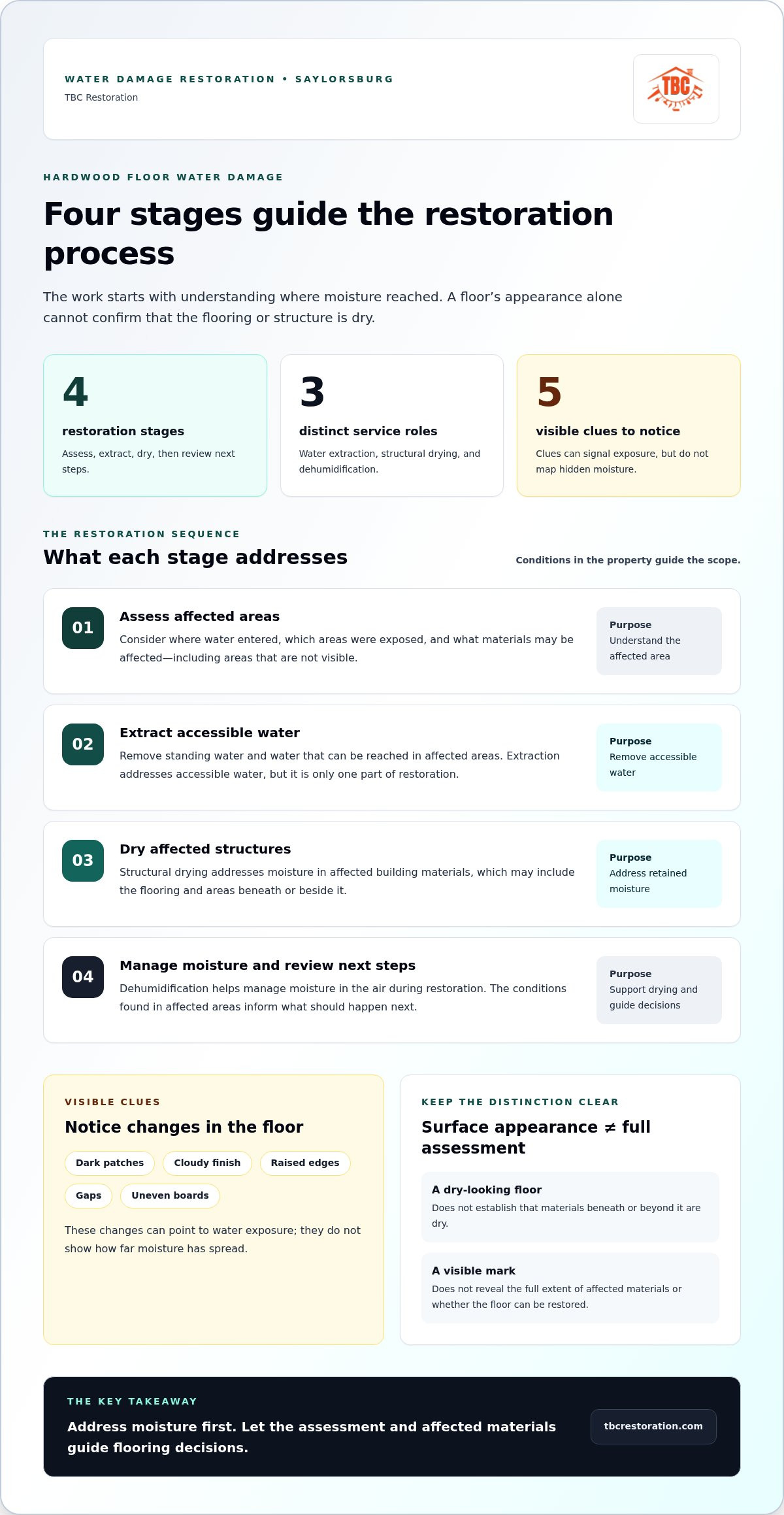
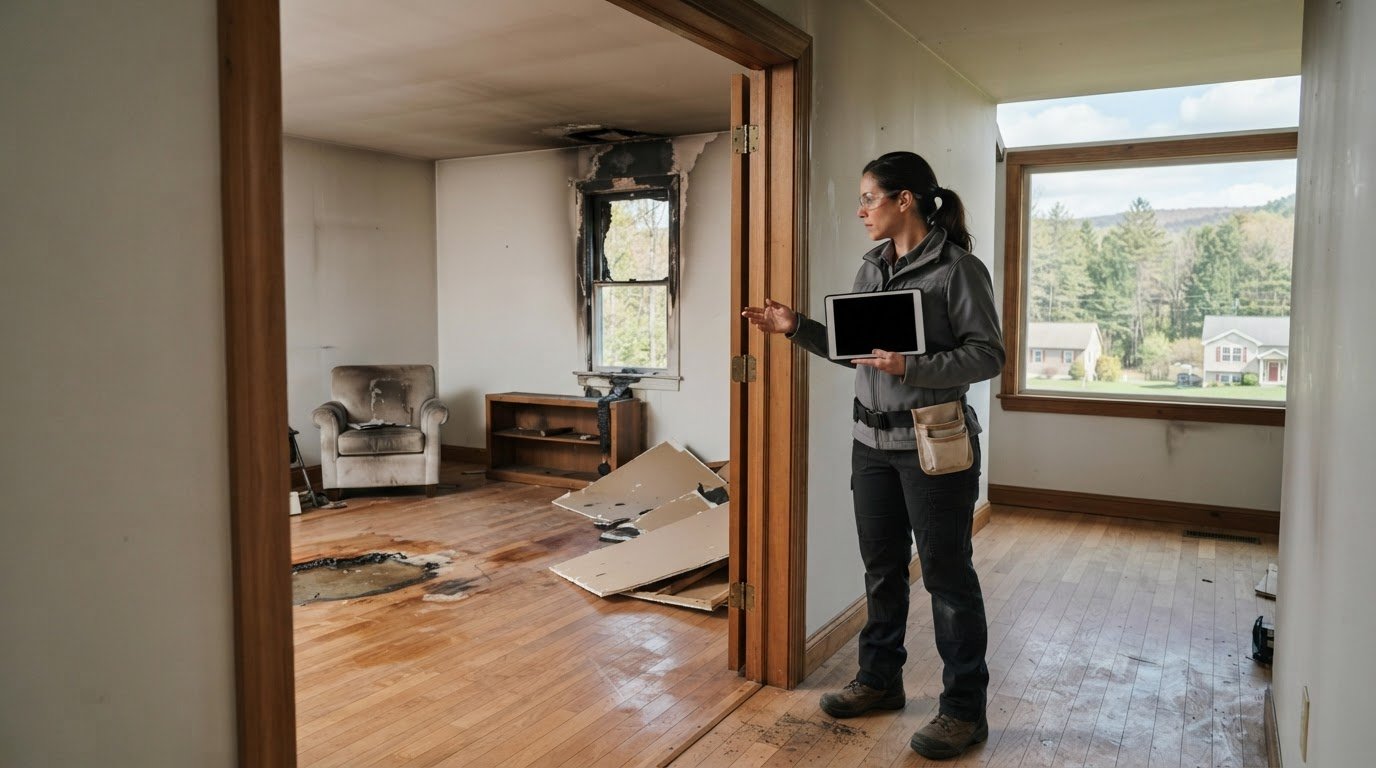
Assess affected areas. The restoration team considers where water entered, which areas were exposed, and what materials may be affected. This helps distinguish visible surface concerns from moisture that may have reached other parts of the property.
Extract accessible water. Water extraction removes standing water and water that can be reached in affected areas. It addresses the immediate water, but is only one part of restoration.
Dry affected structures. Structural drying focuses on moisture in building materials, which may include flooring and areas beneath or beside it. The scope depends on the observed conditions.
Manage moisture and review next steps. Dehumidification helps manage moisture in the air during restoration. The assessment and conditions in the affected areas inform what should happen next.
What happens during water extraction and structural drying
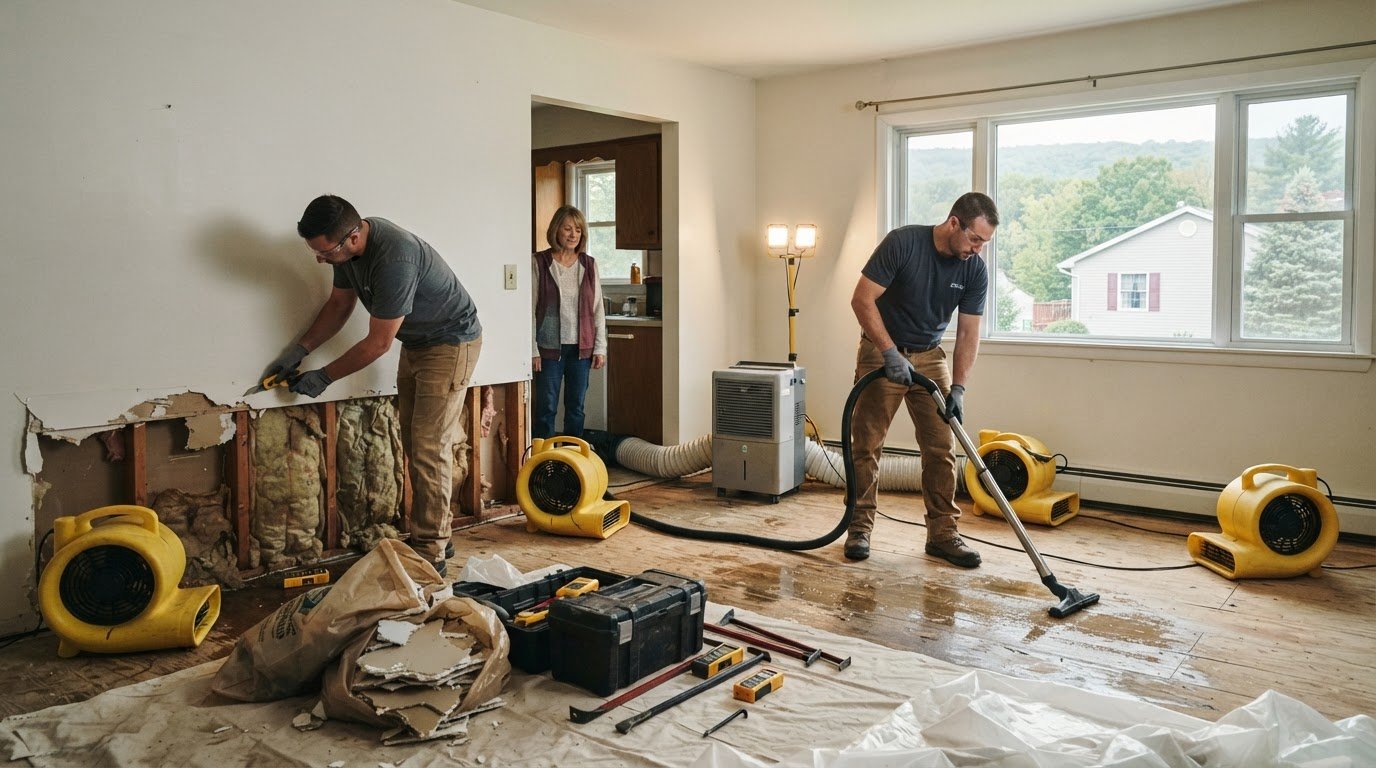
Extraction and drying are different steps. Extraction removes accessible water; structural drying addresses moisture retained in affected materials. Dehumidification supports the drying process by managing moisture in the surrounding air. Together, these services address more than the floor’s surface, with the approach guided by the property’s conditions.
After water extraction, structural drying works to address moisture that remains in affected building materials, not just water visible on the floor. This distinction matters with hardwood because water can affect flooring and nearby materials differently. TBC Restoration provides water extraction, structural drying, and dehumidification as part of water damage restoration in Saylorsburg and Monroe County, Pennsylvania.
Why a floor's appearance does not set the drying plan
A surface may appear dry while moisture remains below or beyond it. A visible mark also doesn’t establish how much of the surrounding structure is affected. An assessment helps guide where restoration work is needed and what conditions should inform the next decision. It doesn’t determine the floor’s outcome from appearance alone.
Hardwood floor water damage repair Saylorsburg starts with addressing the moisture and understanding the affected area before deciding what the floor needs. The materials involved and how water reached them shape the restoration plan. If water has affected your property, TBC Restoration’s water damage restoration provides local support with extraction and structural drying.
Can Water-Damaged Hardwood Be Saved? Factors That Guide the Decision
Water-affected hardwood may sometimes be restorable, but appearance alone can’t provide a reliable yes-or-no answer. The next step depends on what an assessment finds: which areas were exposed, how the boards and finish have changed, and whether moisture reached materials below or beside the floor. No single stain, raised edge, or dry-looking patch determines the outcome.
Separate the immediate restoration work from the later flooring decision. Water damage restoration addresses water and moisture in the affected property. The flooring decision concerns what the hardwood needs once its condition has been assessed. Drying the structure doesn’t automatically mean the floor needs replacement, and it doesn’t guarantee that the boards can be saved.
What an assessment can help establish
An assessment helps identify areas that need attention and the materials that may be involved. Discoloration, finish changes, or shifted boards are useful clues to share, but they don’t replace an evaluation of the floor and surrounding structure. Findings help guide water extraction and structural drying.
Note where water appeared and what changes you’ve seen, but don’t treat a visual checklist as a diagnosis. A small visible mark may not show whether moisture reached the subfloor. A pronounced surface change also doesn’t determine the floor’s final condition. The broader assessment provides context.
Locations: Where water was first noticed and which areas appear affected.
Visible changes: Stains, finish changes, gaps, or boards that look raised or uneven.
Nearby materials: Whether surrounding or underlying building materials may also need attention.
These observations help frame the assessment; they don’t settle whether restoration or replacement is appropriate. The aim is to understand the conditions before making a floor-specific decision.
When repair or replacement becomes a separate flooring question
Once the water and moisture concerns have been assessed, choices such as refinishing, repairing, or replacing boards depend on the floor’s condition. Those are flooring-specific decisions and can’t be made in advance from a general description of water damage. Avoid pulling up boards or attempting repairs while the affected materials and conditions remain uncertain.
TBC Restoration addresses water-affected property through water damage restoration, including water extraction and structural drying. These services address the moisture problem. The condition of the hardwood informs any later flooring decision.
For hardwood floor water damage repair Saylorsburg, a professional assessment offers a grounded starting point. It helps clarify what restoration work is needed and what remains a separate question about the hardwood, without guessing at whether it can be saved.
What to Do for Water on Hardwood Floors in Saylorsburg
Water on hardwood can create pressure to act quickly, but avoid actions that could spread water or disturb flooring that may have absorbed moisture. Focus first on safety, limiting further exposure, and arranging an assessment. A surface that looks dry doesn’t prove that the floor or nearby materials are dry underneath.
First actions before restoration begins
Use these steps to protect yourself and make it easier to understand what happened:
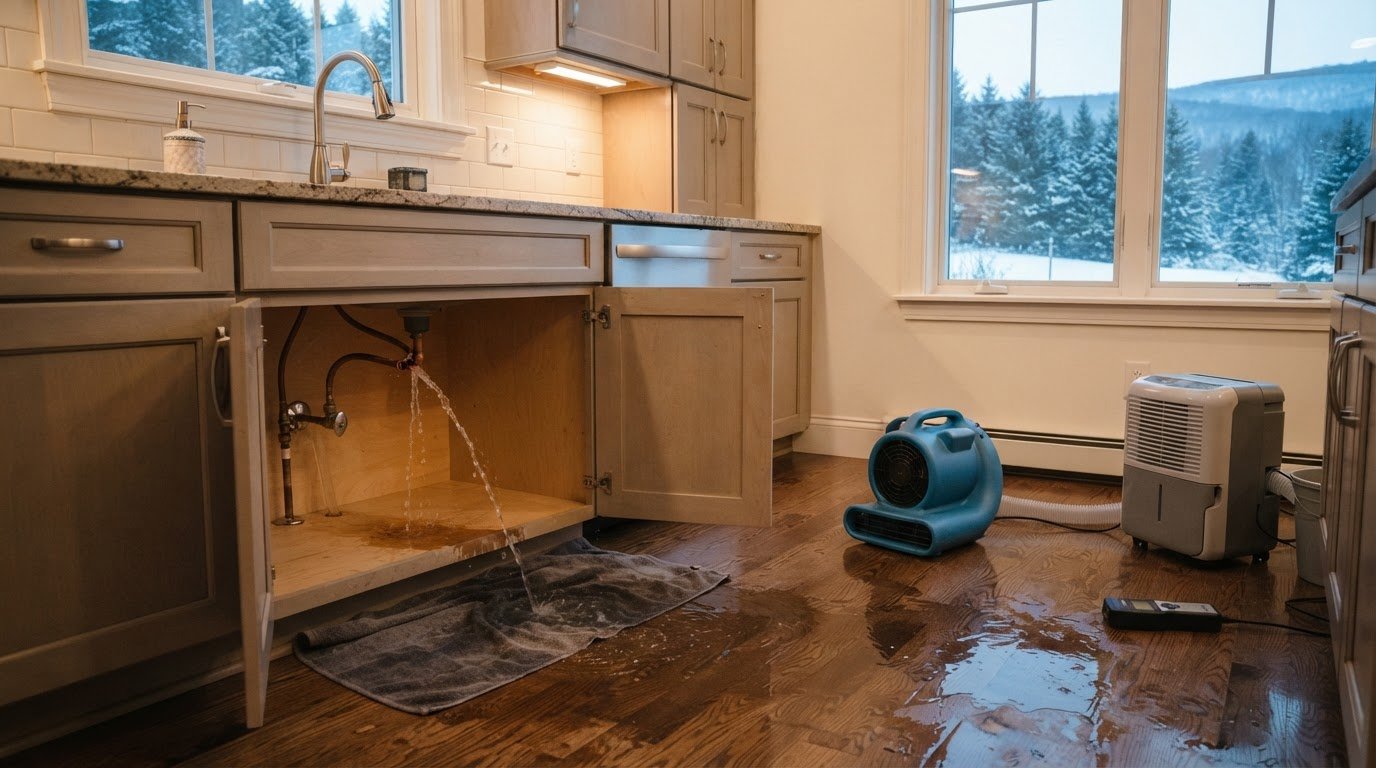
Stop the water source if it’s safe. If you can safely shut off the source, do so. Don’t enter an area with a potential electrical hazard or put yourself at risk to reach it.
Keep people and pets away from the affected area. Wet, swollen, or uneven boards may be unstable. Avoid walking across them, lifting boards, or pulling up trim while conditions are uncertain.
Move unaffected belongings if practical. Relocate items only if you can do so safely. Don’t drag furniture across damp flooring or handle items that are wet or difficult to move.
Record what you can see. Take photos or notes of affected areas and visible changes for your records. Don’t move materials just to capture a better view.
Arrange professional water damage help. Contact TBC Restoration for water damage restoration in Saylorsburg. Sharing where water appeared and what you’ve noticed helps describe the situation.
When to request professional water damage restoration
Request an assessment if moisture persists, water has spread beyond the first visible area, or the hardwood shows staining, finish changes, raised edges, gaps, or uneven boards. These signs don’t establish the full extent of the damage, but they indicate that the floor and surrounding materials need attention. Don’t assume the issue has passed just because the top feels dry.
Moisture may remain below the surface or in nearby building materials. Wiping the floor or ventilating the room may not address those areas. Avoid applying heat or using equipment in a way that could damage the finish or create a safety concern. An assessment helps identify which parts of the property are affected and what restoration steps are appropriate.
TBC Restoration provides 24/7 emergency restoration services, including water extraction, structural drying, and dehumidification. The assessment guides the work and any later flooring decisions. For hardwood floor water damage repair Saylorsburg, contact TBC Restoration for water damage help.
Hardwood Floor Water Damage Repair in Saylorsburg: How TBC Restoration Helps
Water on hardwood can affect more than the visible boards. TBC Restoration helps Saylorsburg property owners address water damage across affected areas with water removal, drying, and cleanup. The first priority is understanding the conditions in the property and responding to the moisture. The floor’s condition guides later decisions about refinishing or replacement.
A local restoration response for Saylorsburg properties
Whether water is limited to one room or has reached nearby areas, the observed conditions guide the response. Share where water appeared and what changes you’ve noticed, such as staining or uneven boards. Those details help explain the situation, while an assessment informs the next steps.
What to expect when you contact TBC Restoration
TBC Restoration provides water extraction to remove accessible water, structural drying to address moisture in affected materials, dehumidification to manage moisture during restoration, and water damage cleanup. The work is guided by the affected areas and materials, rather than by the floor’s appearance alone.
These services address water and moisture in the property. The condition of the hardwood informs any separate decision about refinishing, repair, or replacement. Addressing the water damage first gives homeowners a clearer understanding of the conditions affecting the floor.
Water extraction addresses standing or accessible water in affected areas.
Structural drying focuses on moisture in affected building materials.
Dehumidification helps manage moisture in the surrounding environment during restoration.
Water damage cleanup supports cleanup of water-affected property.
If you’re looking for hardwood floor water damage repair Saylorsburg, TBC Restoration can help address the water damage and guide restoration based on the property’s needs. You don’t have to decide the floor’s final outcome before the moisture concerns are assessed. Request 24/7 water damage restoration help from TBC Restoration for your Saylorsburg property.
Take the Next Step Toward a Clear Restoration Plan
Water damage can leave homeowners facing two questions: what needs attention now, and what will happen to the hardwood later? You don’t have to settle the flooring decision before the affected property is assessed. Share what you observed and where water reached the floor. This gives the restoration process a practical starting point and keeps decisions focused on your home’s condition.
If you’re seeking hardwood floor water damage repair Saylorsburg, start by addressing the moisture concern. A professional assessment informs restoration needs; flooring choices can follow with a clearer picture of the affected materials. TBC Restoration is available to help local property owners begin that process.
Contact TBC Restoration for water damage restoration help to take the next step toward restoring your property.
Frequently Asked Questions
Can water-damaged hardwood floors be saved?
Sometimes, but an assessment is needed to determine whether the hardwood may be restored or needs a different approach. The outcome depends on how far water reached and the condition of the boards and nearby materials. Water extraction and structural drying address moisture, while the floor’s condition informs any later flooring decision.
How do professionals dry hardwood floors after water damage?
Professionals generally assess affected areas, then remove accessible water through extraction. Structural drying addresses moisture in affected building materials, while dehumidification helps manage moisture during restoration. The approach depends on the property and what the assessment finds, including whether water is limited to one room or has spread nearby. The response is guided by observed conditions.
How long does hardwood floor water damage repair take?
There’s no single timeline for hardwood floor water damage repair Saylorsburg because affected areas, materials, and conditions vary. Water extraction and structural drying address the moisture problem; any later refinishing or board replacement is a separate flooring decision. A surface that looks dry doesn’t establish that restoration is complete. An assessment is the useful starting point for understanding the work involved.
What should I do first if water gets on my hardwood floor?
Stop the water source only if you can do so safely, and keep people away if the floor or surrounding conditions are uncertain. Move unaffected belongings only when practical, without disturbing wet flooring. Take photos or notes of visible changes for your records, then arrange professional water damage restoration. In Saylorsburg, sharing where water appeared and what you noticed helps explain the situation.
Can water damage affect the subfloor beneath hardwood?
Yes, water can reach materials beneath hardwood, including the subfloor, though it doesn’t happen in every incident. The visible floor alone can’t confirm what lies underneath. An assessment considers the affected area and surrounding materials, while structural drying addresses moisture in building materials as needed. Water near a floor seam may warrant attention beyond the board surface, but an assessment establishes which materials are affected.
Does water damage restoration include hardwood floor replacement?
Water damage restoration addresses water and moisture in the property; it doesn’t automatically mean the hardwood will be replaced. TBC Restoration provides water extraction, structural drying, dehumidification, and water damage cleanup. The floor’s condition informs any separate repair or replacement decision. A stain or swollen board alone doesn’t determine what the floor needs.
Is TBC Restoration available for water damage in Saylorsburg?
Yes. TBC Restoration serves Saylorsburg and provides 24/7 emergency restoration services. Water damage work includes water extraction, structural drying, dehumidification, and water damage cleanup. The local service area also includes Monroe County communities such as Stroudsburg, East Stroudsburg, Marshalls Creek, Bushkill, Crescent, Mount Pocono, Bangor, Tannersville, and Snydersville.
Comments