

Documenting Fire Damage for Insurance: Step-by-Step Guide

The first cleanup step after a fire can erase details you may need for your insurance claim. Before anything is moved or cleaned, documenting fire damage for insurance helps create a clear record of what happened, from visible soot and structural damage to belongings affected by smoke or water. Safety comes first: don’t re-enter until authorities say it’s safe.
It’s easy to miss damage or lose track of receipts and conversations during the disruption of a fire. A dated, organized record helps you explain what you found and share supporting evidence with your insurer. Your policy and insurer guide coverage decisions.
This step-by-step guide covers how to photograph and record damage, build a room-by-room inventory, and keep claim communications and expenses together. You’ll also see how restoration observations and work records can complement your own documentation. A consistent process helps preserve details before cleanup or repairs begin and gives you a more complete file for your next insurance conversation.
Table of Contents
After a Fire, What Should You Document for an Insurance Claim?
Start with a calm sequence: make sure everyone is safe, contact emergency services if help is still needed, follow fire officials’ instructions, and begin documenting only when it’s safe. Don’t enter an unsafe or restricted area to take photos or retrieve belongings. Once you can proceed safely, start a claim file that brings together property conditions, affected belongings, insurer communications, and related expenses.
For documenting fire damage for insurance, begin with what you can directly observe. Your policy and insurer determine what information is needed for your claim. Photos, notes, and receipts can help explain the loss, but they don’t guarantee coverage or payment. A general overview of fire insurance provides background; your policy and insurer’s instructions are the relevant references for your claim.
Dated records made early help clarify what changed, when it changed, and what you observed before cleanup or repairs. Keep descriptions factual. If you’re unsure whether damage is hidden or what caused it, record that uncertainty rather than guessing.
What to do before entering or moving anything
Follow fire officials’ instructions and stay out of areas they’ve restricted. Don’t touch unstable structures, exposed electrical components, or debris that may be contaminated. Safety takes priority over a complete record. You can add information later when the area is safe to access.
Write down the incident date and property address. If available, note fire department incident details, such as a reference number or report information you’ve received. Don’t delay safety measures or necessary emergency action to gather paperwork or photograph the scene.
Which first records to create
Open a dated incident log as soon as practical. Use a notebook or digital document, and make each entry easy to scan. Record what you observed, what immediate steps you took, and who was present. For example, note that smoke odor was noticeable in a particular room or that a window was opened for access. Avoid drawing conclusions about the fire’s cause or damage you can’t see.
Incident details: Record the date, address, and available fire department incident information.
People and actions: Note who was present and when, plus steps taken to protect people or property.
Claim records: Keep insurer contact details, claim reference information, and policy documents together.
Early observations: Describe visible conditions in plain language and separate observations from unanswered questions.
Save copies of messages and documents in the same claim file, even if you also keep paper versions. A folder labeled with the property address can hold these first records. Later, add separate sections for photos, belongings, and expenses. The goal is a reliable starting point, not a perfect report completed all at once.
How to Photograph and Record Fire and Smoke Damage Clearly
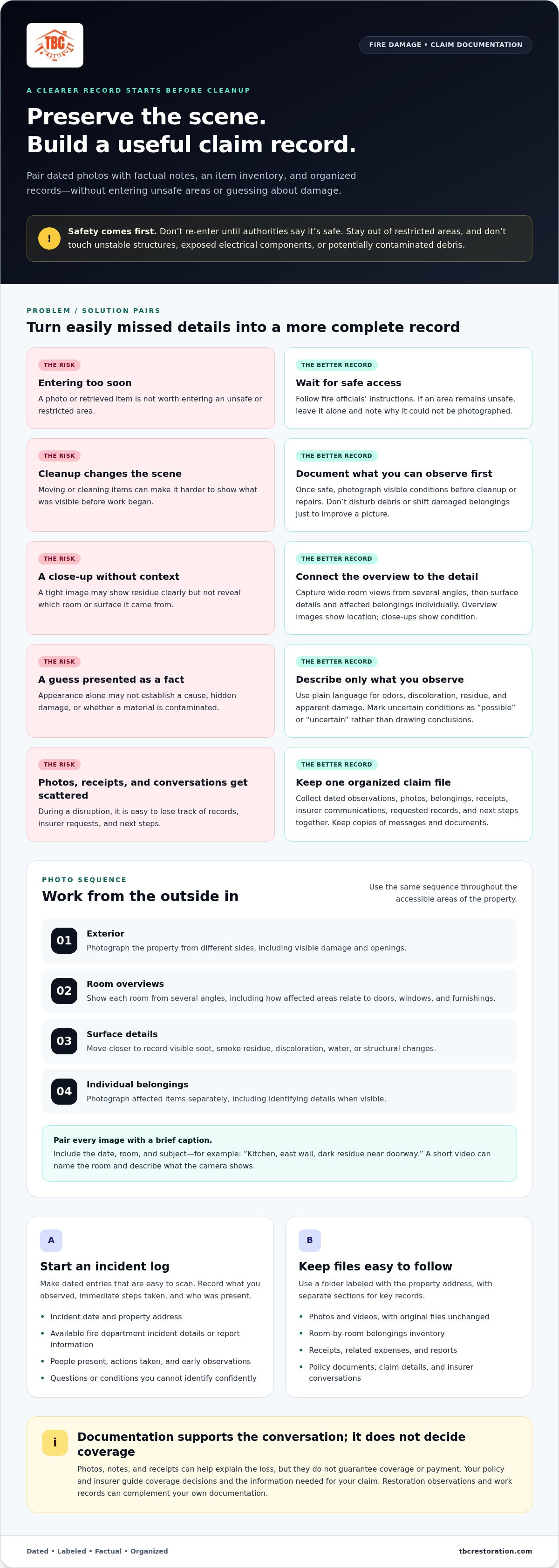
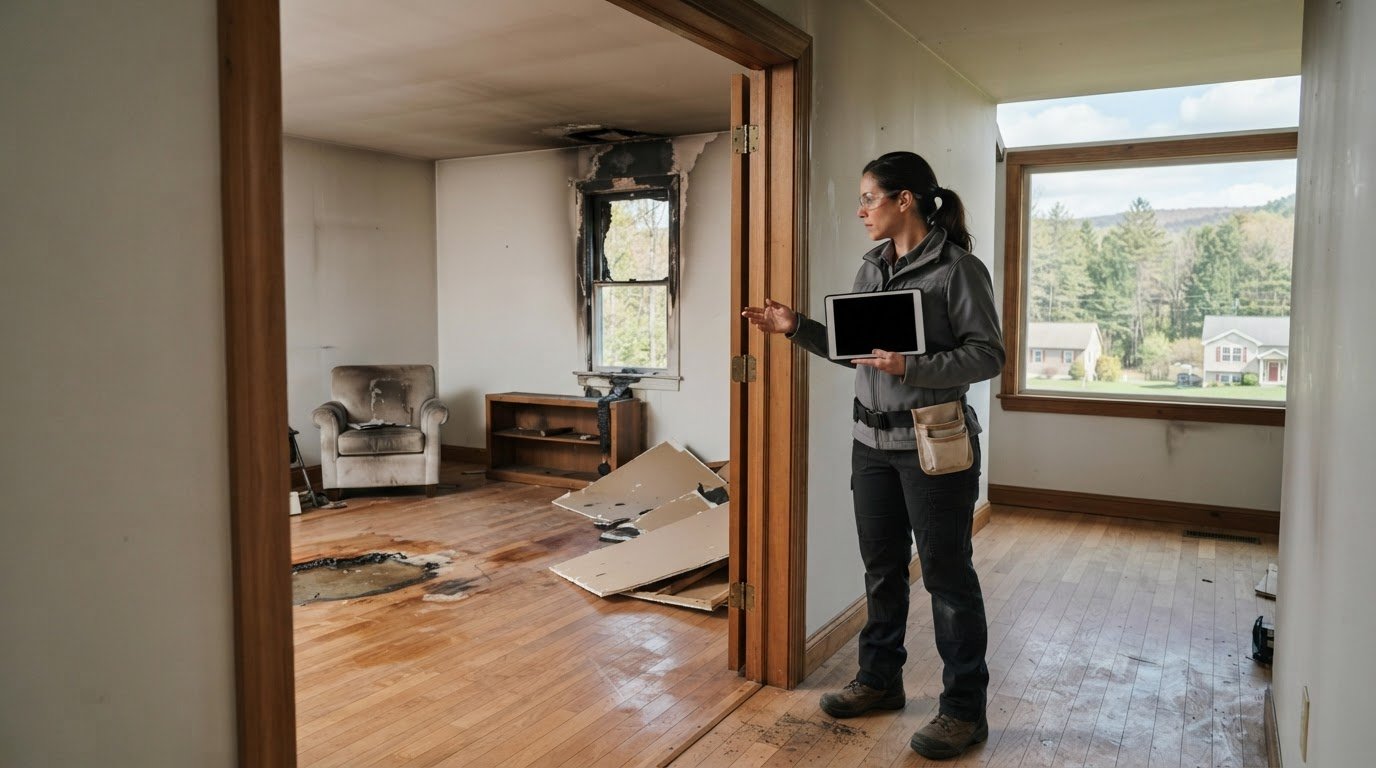
Once the property is safe to enter, use the same photo sequence throughout the home so the record is easy to follow. When documenting fire damage for insurance, capture the overall setting before moving closer to individual marks or belongings. Don’t disturb debris or shift damaged items just to improve a picture. If an area remains unsafe or restricted, leave it alone and note why you couldn’t photograph it.
A room-by-room photo and video method
Begin outside, then work through each accessible room. Take wide views from several angles before close-ups, and photograph affected belongings individually. Include visible soot, smoke residue, heat effects, firefighting water, and changes to walls, ceilings, floors, or other structures. A short video can connect these images: name the room and describe what the camera shows without guessing about the cause or unseen damage.
Exterior: Photograph the property from different sides, including visible damage and openings.
Room overviews: Capture each room from several angles to show where damage appears in relation to doors, windows, and furnishings.
Surface details: Move closer to document residue, discoloration, water, or visible structural changes.
Individual belongings: Photograph affected items separately, including identifying details when visible.
Overview images show where damage is located; close-ups reveal the condition of a specific surface or item. Both views matter. A tight photo of soot may show its texture, while a wider frame helps identify the room and area it came from.
Writing damage notes without overstating what you see
Pair images with brief captions that identify the date, room, and subject, such as “Kitchen, east wall, dark residue near doorway.” Describe what you can see or smell, and separate that observation from any question about what caused it. Don’t label a mark as hidden structural damage or claim a material is contaminated based only on appearance.
Record odors, discoloration, residue, and apparent damage in plain language.
Note where the condition appears and when you observed it.
Use “possible” or “uncertain” when you can’t identify a condition confidently.
Keep original photo and video files unchanged. If you create labeled copies, use a consistent format such as “date_room_subject” so files stay easy to sort. When practical, keep a separate backup in a secure cloud folder or on another storage device. Don’t rely on a single phone or folder as your only copy.
Clear images can help restoration professionals understand what you observed before cleanup begins. After recording urgent evidence, fire and smoke damage restoration can address soot removal, structural and contents cleaning, and odor neutralization in Poconos properties. Keep your original files and notes with your claim records. Restoration observations document conditions and work, while your insurer and policy guide coverage decisions.
Photos, Inventory, Receipts, or Reports: Which Claim Evidence Helps?
No single record has to tell the whole story. For documenting fire damage for insurance, combine evidence that shows the property’s condition with details about affected belongings and related expenses. Photographs show visible conditions and where they appeared. A written inventory identifies items and describes their condition. Receipts, manuals, warranties, or older personal photos may help support ownership or purchase details. Fire department information and restoration records can add context about the incident or observed conditions.
Think of these records as pieces that complement one another, not substitutes. Your insurer may request additional information based on your policy and claim. If you don’t know an item’s purchase date, value, or exact ownership details, say so. Use “approximate,” “estimated,” or “unknown” rather than filling gaps with invented precision.
Building a damaged belongings inventory
List affected items by room so you can connect each entry to your photos. Include a clear description, approximate age, observed condition, and any available proof of ownership. For example, record “wood dining table, dining room, approximately eight years old, heat discoloration on one edge” rather than guessing at a precise purchase date or replacement value.
Describe the item: Include the type, brand, model, or other identifying details when known.
Mark uncertainty: Label dates and values as estimates, or write “unknown” if you can’t verify them.
Attach supporting records: Keep relevant receipts, manuals, warranties, and existing personal photographs with the entry.
Preserve evidence: Photograph damaged belongings before disposal, and don’t discard them until you’ve received safety guidance and your insurer’s instructions.
A consistent inventory makes it easier to see which entries have supporting documents and which still need details. Don’t delay recording an item just because you can’t locate a receipt. Note what you know and identify what remains uncertain.
Using reports, receipts, and restoration records
Keep any fire department incident information you’ve received and insurer correspondence in the same claim folder. Save receipts for temporary expenses, too. Add the date, purpose, and related property need, such as a purchase made because an area of the home can’t be used. Your policy and insurer determine which information is relevant to the claim.
Incident information: File available fire department details alongside your own notes.
Expense records: Keep receipts together and add a brief note explaining the expense and date.
Restoration records: Retain documentation of observed conditions and work performed.
Restoration professionals’ observations and work records can supplement your photos and inventory by describing conditions encountered during fire and smoke cleanup. They don’t replace your personal records or the insurer’s review, and they don’t determine coverage or reimbursement. Label each type of evidence clearly so you can provide relevant records if your insurer asks for more information.
How to Organize Your Fire Insurance Claim Records and Follow Up
A clear system makes it easier to find a document when your insurer asks about a particular room, item, or expense. Keep one main claim folder, digital or paper, and use matching labels to connect photos, notes, and messages. As you continue documenting fire damage for insurance, keep a copy of every record you send and note when and how you submitted it.
A practical claim-file workflow
Set up separate folders for photos and videos, the belongings inventory, policy documents, insurer messages, receipts, and reports. Use consistent filenames that include the date, room, and evidence type, such as “2026-10-12_Kitchen_Photo.” Choose a date format and use it throughout the file. For paper records, labeled dividers can serve the same purpose.
Keep a communication log alongside the folders. Add an entry after each call, email, or message so you can track what was discussed and what remains open.
Date and contact: Record when you communicated and the person or department you spoke with.
Topic: Summarize the question, update, or part of the property discussed.
Requested records: List any documents or images the insurer asked you to provide.
Next action: Note what you plan to send or follow up on without assuming what the claim decision will be.
Ask your insurer which records it needs and how to submit them. Save the submitted files and your delivery confirmation or message in the claim folder. Policy requirements and deadlines vary, so use your policy and insurer’s instructions rather than relying on a general timeline. If you’re waiting for a response or have an open question, add it to the log and record any follow-up communication.
What to do when new damage appears
Conditions may become visible as the property is assessed or cleanup progresses. Record the date you noticed a new condition, where it appeared, and what you can directly observe. Take photographs if it’s safe to do so. For example, note a newly visible area of discoloration on a ceiling without stating what caused it unless a qualified assessment supports that conclusion.
Tell your insurer about the new observation and follow its instructions for additional documentation or an inspection. Keep related messages and updated records together, but preserve earlier files too. A dated record of what you noticed and when helps distinguish an initial observation from a later change.
Organized claim records support clear conversations, but they don’t decide coverage. For Poconos property owners arranging fire and smoke cleanup, contact TBC Restoration about fire damage restoration. Restoration observations and work records can complement your personal file, while your insurer and policy guide claim requirements and coverage decisions.
How Fire Restoration Documentation Fits Into Recovery in the Poconos
Your photos and notes capture what you observed. Restoration documentation adds another perspective by recording conditions professionals encounter and work completed during cleanup. Together, these records can help create a clearer timeline of recovery. They serve different purposes: restoration records supplement your personal claim file, while your insurer reviews the evidence and applies the terms of your policy.
What restoration records can add to your file
Depending on the work performed, restoration records may include dated observations, descriptions of affected areas, and notes on cleaning or other completed work. For example, a record may describe soot observed on a surface before it was cleaned. Keep these materials with your own photos and inventory, and note when you received them. They provide context, but don’t replace your documentation or the insurer’s assessment.
Use each record for what it can show. Your photos document your view of the property; work records describe professional observations and actions. Neither determines whether a loss is covered. Policy interpretation, claim decisions, and coverage determinations remain with the insurer.
Getting local restoration help after a fire
After recording urgent evidence and following fire officials’ safety instructions, property owners can turn to restoration work to address fire and smoke impacts. TBC Restoration provides fire and smoke damage restoration, including structural and contents cleaning, soot removal, and odor neutralization. Its emergency restoration services are available 24/7.
TBC Restoration serves property owners in Stroudsburg, East Stroudsburg, Marshall’s Creek, Bushkill, Crescent, Mount Pocono, Bangor, Tannersville, Snydersville, and Saylorsburg. As work proceeds, keep relevant observations and records with your claim materials. Note which areas or belongings the records describe, and retain copies for your own file. These documents can complement your photos and the insurer’s review without guaranteeing reimbursement or approval.
Structural cleaning: Records can describe affected building areas and work performed.
Contents cleaning: Documentation can identify belongings addressed during restoration.
Soot removal and odor neutralization: Work records can note these services as part of the cleanup process.
There’s no need to sort out every claim question before taking a practical recovery step. Keep your personal records organized, follow the insurer’s instructions, and use restoration documentation as an additional source of context. If you’re in Stroudsburg, East Stroudsburg, Marshall’s Creek, Bushkill, Crescent, Mount Pocono, Bangor, Tannersville, Snydersville, or Saylorsburg and need fire or smoke cleanup, contact TBC Restoration for fire and smoke restoration help. Clear records and careful restoration work can support an orderly recovery, while coverage decisions remain between you and your insurer.
Take the Next Step Toward Recovery
A fire can leave you facing decisions before you feel ready to make them. Focus on the next practical step, not the entire claim at once. Keep your records accessible, follow your insurer’s instructions, and add new information as the situation develops. A clear file can help you track what you know, what you’ve submitted, and what still needs attention.
Remember, documenting fire damage for insurance supports communication with your insurer, but your policy and insurer guide coverage decisions. Restoration is a separate part of moving forward. You don’t have to resolve every question before beginning cleanup planning. If fire or smoke damage has affected your property, get help with fire and smoke damage restoration from TBC Restoration.
Take recovery one step at a time. With steady documentation and the right support, you can begin bringing order back to your property and your next decisions.
Frequently Asked Questions
What should I document after a house fire for insurance?
After a fire, start a dated incident log, photograph each room you can safely access, list affected belongings, and save receipts and insurer messages. Record observable details, such as soot on a hallway wall, rather than guessing what caused them. Follow fire officials’ directions, then ask your insurer which claim-specific documents it needs. This practical approach to documenting fire damage for insurance supports your file, but no single record guarantees coverage or approval.
Should I take pictures before fire damage cleanup begins?
Yes, if you can photograph the property safely and fire officials allow access. Photos and video can preserve visible conditions before cleanup changes the scene, but don’t enter an unsafe or restricted area to take them. Follow officials’ and your insurer’s instructions, and document only what you can safely observe. Keep original image files with dates and room labels so you can distinguish them from edited or renamed copies.
Can I throw away belongings damaged in a fire before the insurance adjuster sees them?
Don’t assume damaged belongings can be discarded before the insurer has reviewed them. Instructions can depend on the situation, and fire debris may also present safety or sanitation concerns. If it’s safe, photograph and list affected items, then ask your insurer what to do before disposal. If an item creates an immediate hazard, follow guidance from fire officials and record its condition and any action taken as soon as practical.
How do I make a fire damage inventory for an insurance claim?
List each affected item by room, with a description, approximate age, condition, and any available evidence of ownership. Attach a receipt, manual, warranty, or older personal photo when you have one. Mark uncertain details clearly, such as “age estimated” or “purchase date unknown,” rather than supplying a precise guess. A spreadsheet or handwritten list can work; date it and keep entries consistent with what you actually know.
What if I discover more fire or smoke damage after filing my claim?
Record the newly observed condition with the date and location, and take clear photographs if it’s safe. Notify your insurer and ask how to provide the additional information or arrange any review it requires. Describe what you can see, such as residue on a surface that wasn’t previously visible, without assigning a cause. The insurer evaluates new information through the applicable policy and claim process, so avoid predicting coverage or the claim outcome.
Does a restoration company document fire damage for an insurance claim?
Restoration professionals may document conditions they encounter and work they perform, creating records that add context to an owner’s photos and inventory. Those records don’t replace the insurer’s assessment or determine coverage. TBC Restoration provides fire and smoke damage restoration in the Poconos, including service for properties in Stroudsburg, East Stroudsburg, Marshall’s Creek, Bushkill, Crescent, Mount Pocono, Bangor, Tannersville, Snydersville, and Saylorsburg. Keep restoration records with your own claim documents, and direct policy or coverage questions to your insurer.
How long should I keep fire insurance claim documents?
Keep claim records together throughout the claim and recovery process, including policy communications, submitted evidence, receipts, inventories, and restoration records. Retaining copies of what you sent can help you answer later questions without reconstructing the file. There isn’t one retention period that fits every policy or circumstance. Review your policy and ask your insurer about specific recordkeeping requirements before discarding claim-related documents, especially while questions or restoration work remain open.
Comments